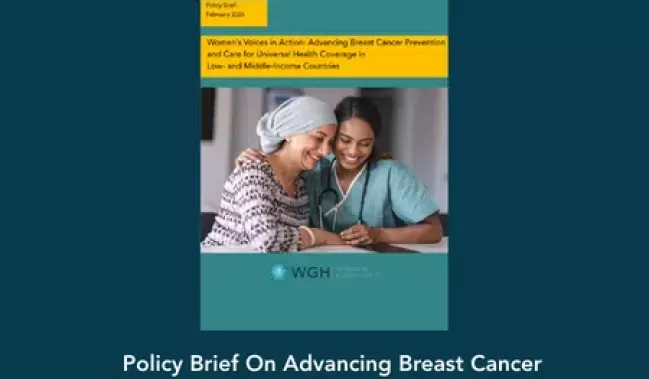
Equal representation in global health leadership
Currently women make up 70 percent of the health workforce globally and represent about 90 percent of frontline health workers, but hold just a quarter of leadership positions.
The exclusion of women from the majority of health decision-making roles is inequitable, but more than that, it weakens global health since the women workers who know most about health systems have the least say in their design and management. Women from low- and middle-income countries (LMICs) face the greatest barriers accessing senior posts in their home countries and globally.
Health policy decisions are not influenced equally by the priorities and experiences of men and women, and global health is diminished by lost female ideas, innovation, expertise and talent. We believe that everyone has the right to attain equal levels of recognition, participation and decision-making in global health regardless of gender.
We advocate for equal representation of women in decision-making roles across the global health sector, especially as they represent the vast majority of global health workers.
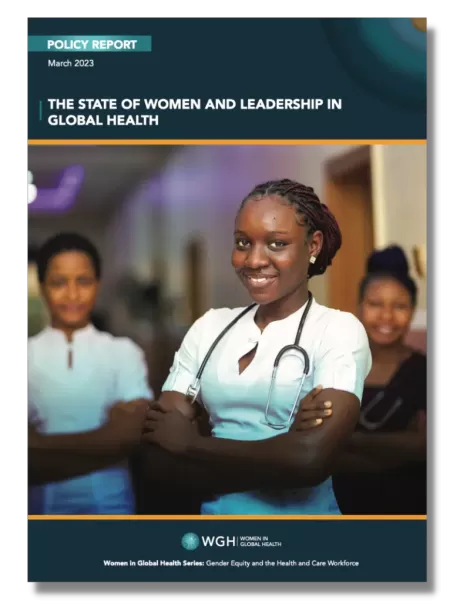
Policy Report: The State of Women and Leadership in Global Health
Women in Global Health undertook this research on the state of women’s leadership and global health to assess the pace of change at global level, the impact of the pandemic and inform our recommendations with country experiences from India, Kenya and Nigeria. Our headline conclusion is that women are still significantly underrepresented in health leadership and that impacts negatively on women affected and on health systems. It is therefore everybody’s business. Women working in health have the right to equal leadership opportunities, and health systems need their expertise.