Who we are

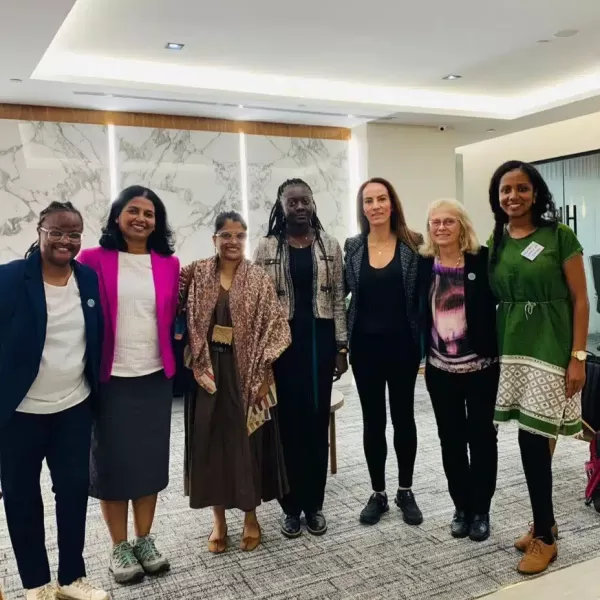
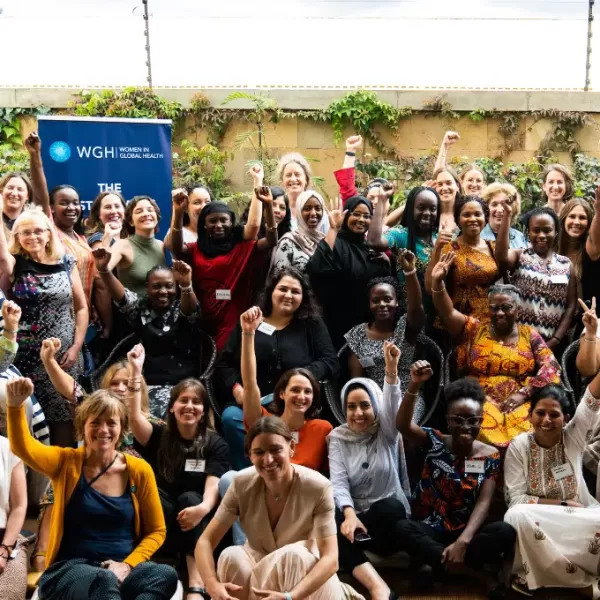
Women in Global Health (WGH) is a women-led, chapter-driven global movement advancing women’s leadership and gender equity across health systems and beyond. What began as a volunteer-led initiative with no funding has grown into a global organization with 65 chapters across 60 countries and over 100,000 supporters, rooted in local leadership and connected to global decision-making spaces.

We are nurses, midwives, doctors, pharmacists, researchers, community health workers, public health professionals, policymakers, and private-sector health leaders; united by a shared commitment to advancing gender equity and strengthening health systems worldwide.

Our Story

Our story didn’t begin in a boardroom. It began online.

In 2015, four early-career women connected across borders, united by a shared frustration. Women made up the majority of the global health workforce, yet decisions about health systems were being made without them. Panels on women’s health were all-male. Policies were shaped without the voices of those delivering care.

What started as a digital conversation quickly became a global call to action. With no funding and powered entirely by volunteers, we organized around a simple belief: women leading health will change the world. For the past 10 years, Women in Global Health has grown through grassroots leadership and collective action. We didn’t wait to be invited into existing systems; we built our own. That persistence became a global movement.

In 2022, WGH was granted Official Relations status with the World Health Organization, and in 2026, the WHO Executive Board approved the renewal of its Non-State Actor status, reaffirming this ongoing relationship

Today, we are helping shift power in global health. Our story continues to be written by nurses, doctors, researchers, community health workers, and leaders who are ensuring the future of health is not only delivered by women, but led by them.

What Makes Us Unique

Women in Global Health is a women-led, chapter-driven movement grounded in a simple truth: the women delivering health services must also be the ones leading them. Unlike organizations governed solely from a central headquarters, authority at WGH sits with women in context — health workers, advocates, and leaders who understand local realities and are best positioned to drive change.

We operate as a global movement with a hyperlocal presence. Our global team works alongside 65 chapters and a network of over 6,000 women, linking grassroots leadership directly to global decision-making spaces. This structure allows us to translate lived experience, data, and evidence into real influence, from adopted policies to secured financing, across platforms such as the World Health Assembly, UNGA, COP, and the G7/G20.

Our work is intersectional and intergenerational by design. Women across professions, geographies, generations, and lived experiences, including those from marginalized communities, shape our priorities and solutions. We do not speak for women; we invest in them to lead, equipping them with the skills, visibility, and platforms to influence systems themselves.

Through ethical storytelling, leadership development, advocacy, and accountability, Women in Global Health acts as a bridge between grassroots leadership and global policy, transforming women from beneficiaries of health systems into decision-makers and changemakers.
Our Impact

By leveraging our women-led global movement – the fastest growing and largest of its kind – we have advanced gender equity in global health. Over the last five years, WGH has:

A Global, Grassroots Movement

Grown into a global network of 65 Chapters connecting women, their allies, and local communities across 60 countries.

Formal Recognition by the World Health Organization

Entered into Official Relations as a Non-State Actor with the WHO in 2022, including sending an official delegation to the 75th World Health Assembly.

A Powerful Digital Community

Built and sustained a large online movement of more than 100,000 supporters across multiple digital channels.

Amplifying Women’s Voices Worldwide

We’ve turned the global spotlight on over 1,100 international speakers across 120+ workshops and events, ensuring that women’s perspectives are no longer an afterthought but the foundation of every major global health conversation.

Celebrating Women Health Leaders

Created a platform to elevate voices affected by gender inequity in health, celebrating more than 120 women health leaders, with an additional 65 recognized through the Heroines of Health awards.

Shaping Global Health Policy

Engaged in high-level policy dialogue with global health leaders and policymakers to accelerate gender-transformative progress in the health workforce, including co-chairing the Gender Equity Hub of WHO’s Global Health Workforce Network.

Mobilising Leadership Commitments

Secured public commitments from 40 global health leaders to advance gender-responsive global health.

Advancing Evidence and Thought Leadership

Conducted research and published influential articles and commentaries on gender equality in health in leading journals such as The Lancet and British Medical Journal.

Global Media Visibility and Influence

Featured across major international media and platforms including Thomson Reuters, Forbes, World Economic Forum, Devex, BMJ Global Health, and numerous other global outlets and podcasts.

Informing Policy Through Authoritative Reports

Contributed to key reports outlining policy recommendations and tracking progress and gaps, including Delivered by Women, Led by Men: A Gender and Equity Analysis of the Global Health and Social Workforce.

WGH Speakers Bureau (2025)

Trained 36 women in leadership and public speaking, empowering them to influence global health conversations.

Our Strategic Direction (2026–2030)

Women in Global Health is advancing a five-year strategic plan designed to convert evidence into institutional adoption and measurable systems change. Our strategy is anchored in three outcome pillars:

Gender-Transformative Leadership

By 2030, institutions will adopt and implement gender-transformative leadership reforms, embedding accountability tools, institutional reform mechanisms, and public scorecards that shift who leads and how leadership functions.

Safe & Decent Workplaces

By 2030, institutions will implement minimum standards for safe and decent work, including strengthened prevention and reporting systems on sexual exploitation, abuse and harassment (SEAH), resulting in safer and more equitable health workplaces.

Leadership in UHC & PPPR

By 2030, countries systematically integrate gender into Universal Health Coverage (UHC) and Pandemic Prevention, Preparedness and Response (PPPR) decision-making, ensuring gender equity informs national and global health security frameworks.

These are reinforced by two transversal pillars that power delivery across all areas:

1. Resource Mobilisation & Financial Resilience

securing diversified, sustainable funding to reduce dependency and strengthen long-term impact.

2. Policy Advocacy:

translating evidence into commitments, standards, and policy adoption, even in shrinking civic spaces.

Three accelerators, Climate & Health, Academia/STEAM & Research, and Digital & AI in Health, will shape how we deliver impact across every pillar.

This integrated approach ensures that our work does not stand alone, but builds durable systems, measurable commitments, and sustained global health resilience.