Report

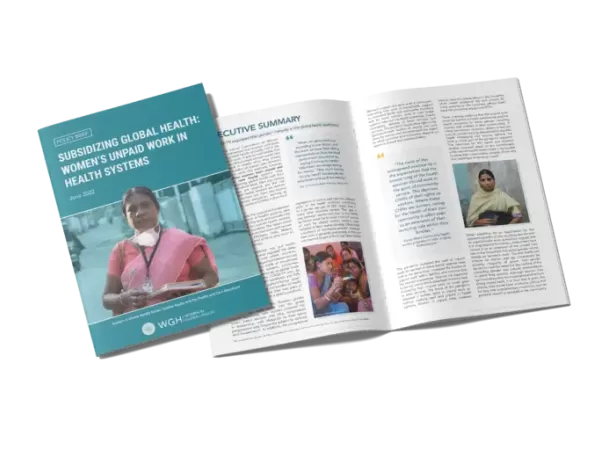
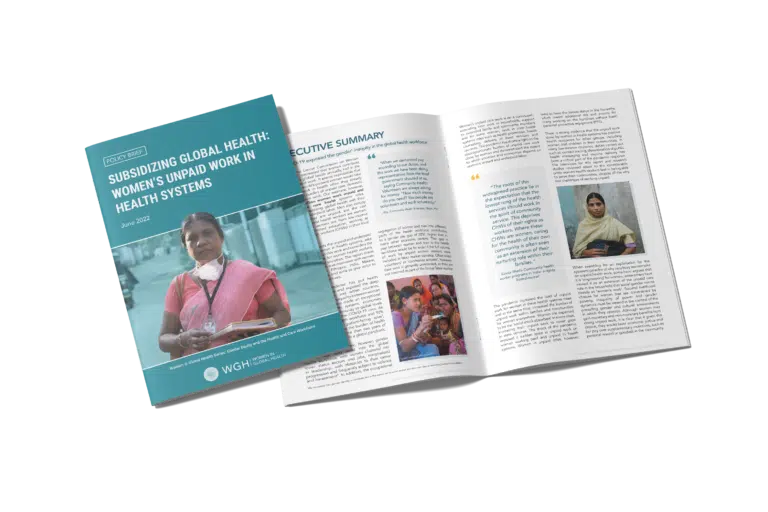
Policy Report: Subsidizing global health: Women’s unpaid work in health systems

This report examines the unpaid and underpaid work done by women in health systems, asks why women take up this work, and considers the impact of that work for women, health systems, and societies. It draws on interviews with women health workers in Ethiopia, India, Malawi, Mexico, and Zambia and aims to include their diverse perspectives.

The COVID-19 pandemic has put health center stage globally and exposed the deep inequalities between and within countries, highlighting gender inequality between women and men. Women have made an exceptional contribution to health systems, economies, and societies from community to global levels since the start of COVID-19. They have shouldered the burden of health systems delivery for more than two years of the pandemic since women are 70% of the global health workforce and 90% of health workers in patient-facing roles.


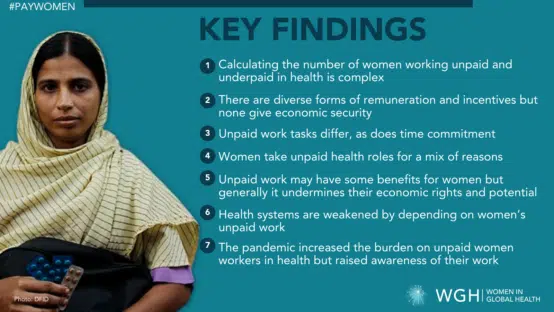
Key Findings
  1. Calculating the number of women working unpaid and underpaid in health is complex
  2. There are diverse forms of remuneration and incentives but none give economic security
  3. Unpaid work tasks differ, as does time commitment
  4. Women take unpaid health roles for a mix of reasons
  5. Unpaid work may have some benefits for women but generally it undermines their economic rights and potential
  6. Health systems are weakened by depending on women’s unpaid work
  7. The pandemic increased the burden on unpaid work for women but raised awareness of it
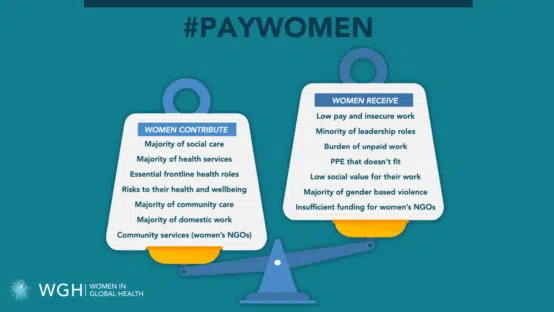
Advocacy Tiles

Related Content

Check out
other resources