Health for All Begins at the Frontline: A Lady Health Visitor’s Journey to Keeping Pakistan Polio-Free for 25 Years
11 December 2025
Country: Pakistan
Author: Saima Asghar
Email: Somia.iqtadar@gmail.com
Saima Asghar is a Lady Health Visitor (LHV) deeply engaged in community health, immunization, and maternal, newborn, and child health (MNCH) in Pakistan. Her story shows how local frontline health work connects directly to the global goal of universal health coverage (UHC), and why gender equality matters.
A Mission Beyond Vaccination
My journey as a polio worker began over a decade ago, when I joined the Polio Eradication Programme in Bhawalnagar, Punjab. As an LHV, I was already supporting mothers and children, but witnessing polio’s devastating impact made me determined to protect every child in our community. This work became a mission to safeguard health, not just against a disease, but towards a future where all children enjoy lifelong access to care.
What sustained me was the dedication of frontline workers, especially women, who reached families under difficult conditions: extreme heat, floods, and uncertainty. Their resilience proved that when women are trusted and empowered, real change happens. We committed to extending care beyond vaccines, laying the foundation for broader health access.
Building Trust, Door by Door: Laying Foundations for Universal Health Coverage
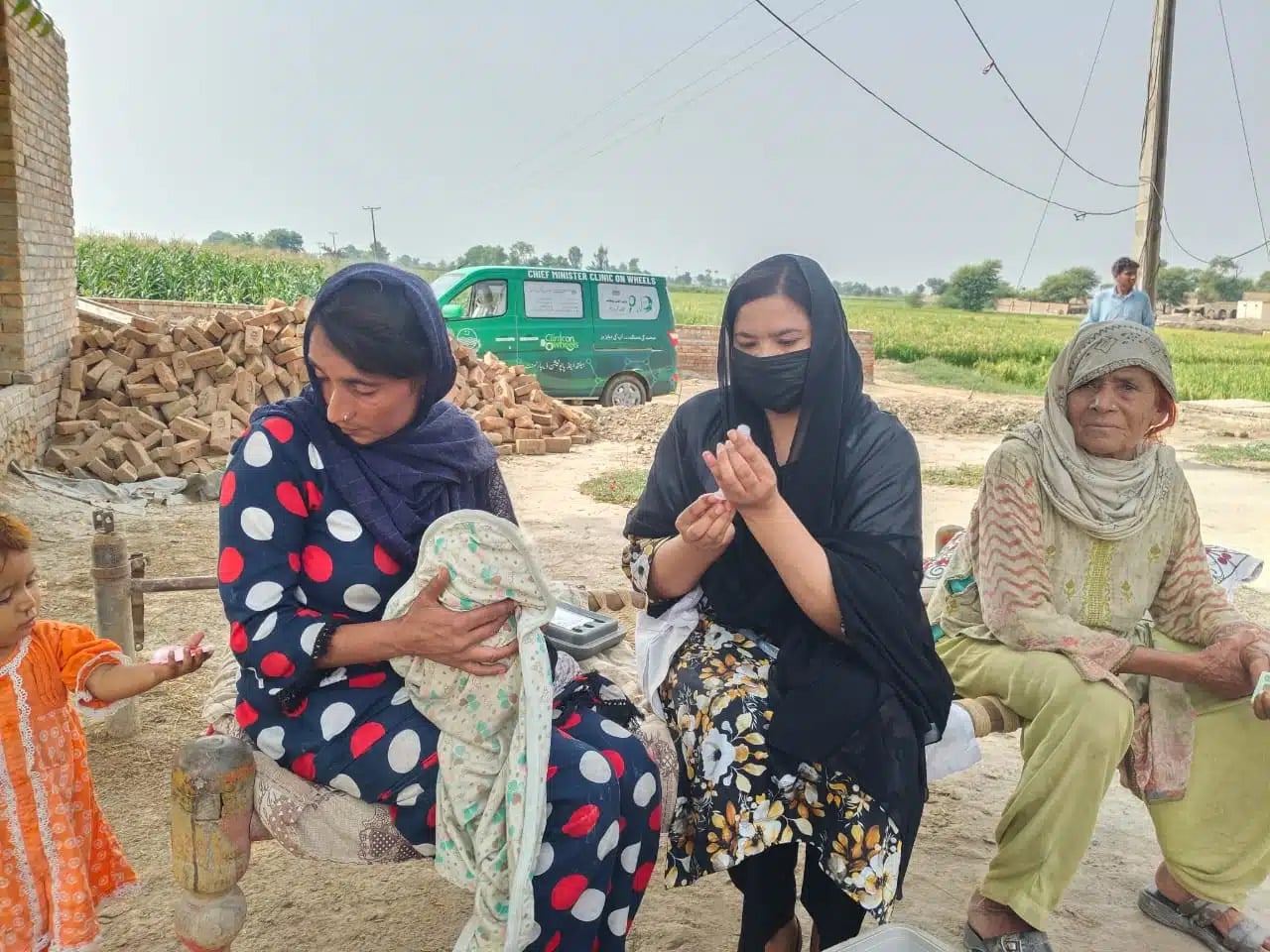
For years, polio workers did more than deliver vaccines, we built relationships. We walked from door to door, listened to families’ fears, countered misinformation, and supported mothers with guidance on child nutrition, growth, and access to health services. For many households, we were their first and only link to organized health care.
My role was to ensure that our teams felt safe, supported, and equipped, and that communities felt they could trust us. We provided training, addressed logistical challenges, and built referral systems so even children who missed a dose could access primary care later. Through consistent engagement, our work evolved, from narrow vaccination campaigns to community-based primary health outreach essential for UHC.
Overcoming Obstacles: Resilience in Action
We faced many obstacles: security threats, community mistrust, extreme weather, fatigue after long campaigns. Still, our shared purpose kept us going. Supervisors, LHVs, vaccinators, we supported one another, reminding ourselves that every single dose could change a child’s future. By returning with respect, listening with empathy, and showing up consistently, we slowly built trust. What started as hesitation transformed into acceptance. That trust was our most valuable tool, and a powerful step toward inclusive, community-based health care.
A Ripple Effect Beyond Polio: Towards Gender-Responsive Health Systems
Our visits didn’t just stop polio, they built hope. Families came to see us as trusted health partners. Over time, women began asking about pregnancy, breastfeeding, childhood illnesses, and general maternal and child health. They started making informed decisions, often for the first time, about their health and their children’s future.
The polio programme became a gateway to broader health awareness and empowerment. It showed how access to care, community trust, and women’s participation can transform health outcomes. This ripple effect reflects what global health experts call a gender-responsive health system: a system that understands how gender shapes access, equity, and care.
25 Years Polio-Free: A Shared Victory: Building Blocks of Universal Health Coverage
Bhawalnagar has remained polio-free since 2000, 25 years without a single case. This success is not the result of one person’s effort, but of collective action: every polio worker, every LHV, every health professional, every community member who opened their door and stood with us. Because of this collaboration, thousands of children gained the chance to grow up healthy, strong, and free from polio’s threat.
That sustained success shows what is possible when we commit to health as a right. It is a living example of how UHC, access to essential health services for all, can begin at the community level.
Lessons in Leadership, Perseverance, and Equity
If there is one lesson I have learned, it is that perseverance and empathy are the strongest tools a leader can carry. The LVH, as women, brought unique strength to community health leadership: they listened deeply, reassured mothers, and built relationships that drove real change.
Public health leadership must stand with both teams and communities. It must uphold the principle that health care is a human right, not a privilege. UHC is not just about services, it’s about justice, dignity, and equality. As a woman working on the front lines, I believe that gender equality in health leadership is essential to make health coverage truly universal.
Looking Ahead: UHC Day and Our Continued Mission
As we approach this year’s International UHC Day on December 12, I reflect on what our journey means for the future. Our polio work demonstrates how local, community-driven health action, grounded in trust, gender equity, and commitment, forms the foundation for resilient health systems.
If all countries commit to the promise of UHC, quality, accessible, affordable care for all, and design systems that center women’s voices and leadership, then the vision of health for all becomes achievable.
My wish is simple: that every child, every mother, every woman and girl across Pakistan, and beyond, has access to care, protection, and opportunity. Because when women lead, health systems become stronger, fairer, and truly universal.


