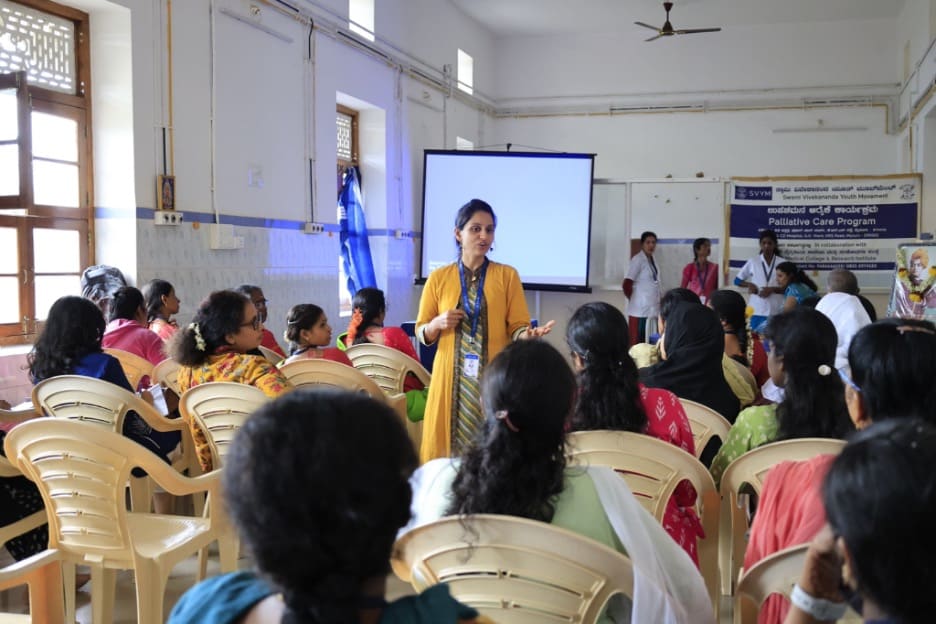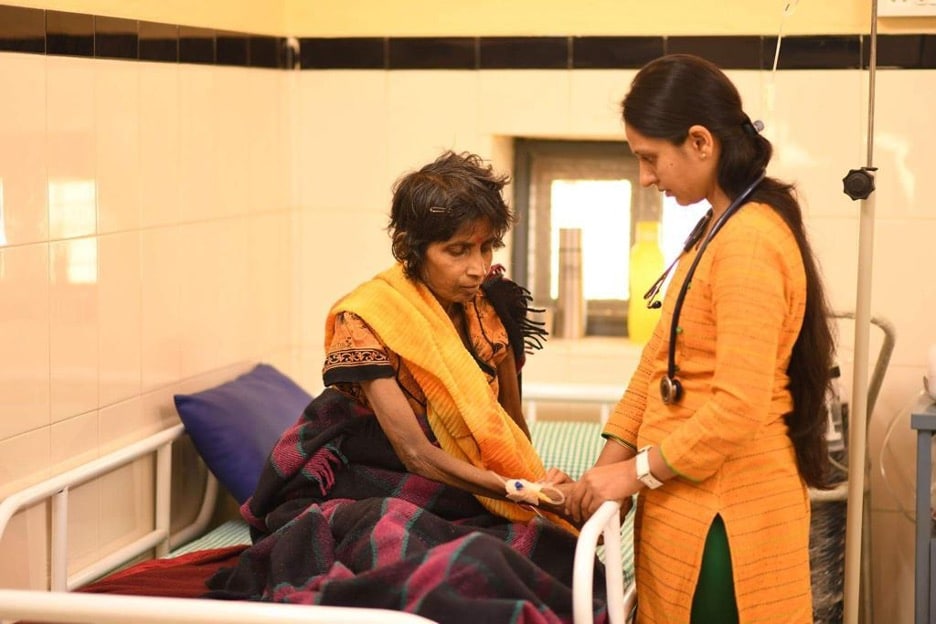
Vibha is a doctor with a postgraduate specialization in Community Medicine. She focuses on both institution-based and community-based palliative care in Mysuru, India. She leads palliative care programs that provide compassionate and comprehensive care for individuals suffering from life-limiting illnesses. Vibha also trains young healthcare professionals and conducts community-based training initiatives such as “Har Ghar Jeev Sevak” (A Life Companion in Every Home) to strengthen home-based care. She has presented her research at international palliative care conferences and is an active participant in Chingaari, a capacity-building program jointly organized by the International Center for Research on Women and Women in Global Health (WGH) India.
Forging My Own Path: Providing Healthcare Amidst Systemic Inequalities
I worked at a private corporate hospital where patients were segregated based on their economic background. There were special wards catering to international patients coming for medical tourism, semi-special wards for middle- and upper-middle-class patients, and general wards for those admitted through government schemes or medical camps, often poorer and marginalized individuals.
As a resident doctor, we were instructed to prioritize care for patients in the semi-special and special wards, often overlooking those in the general wards. This did not feel ethically right to me, and that was the moment I knew the corporate sector wasn’t where I belonged. This experience motivated me to choose public health as my specialization. I may now work in a resource-limited setting, but I remain true to my values and purpose.
After my graduation, I began my journey with a development organization named Swami Vivekananda Youth Movement (SVYM), which is built on strong values and works with the vision of building a new civil society in India through its grassroots to policy-level action in health, education, socio-economic empowerment, and training and research sectors since 1984. I joined the palliative care program at SVYM, and while working closely with patients and families facing chronic and serious illnesses, I realized that this was the right place for me. Seeing the hardships families go through and their resilience in facing them keeps me grounded and motivates me to do my part to ease their suffering.
Many times, we come across gender-related issues within families. Most often, the primary caregiver is a woman. We have seen that when a man is on his deathbed, his wife provides the best possible care, yet even in that situation, she often faces verbal or physical abuse, and her efforts go unappreciated, without even a word of gratitude. Sometimes this bias is subtle, and sometimes it is very evident. These gender-based issues are especially common among the elderly. At times, families may not even bring a woman to the hospital for treatment, and there is a clear difference in the way male and female family members are cared for. I often wonder how we can begin to address these issues, especially within their homes and communities.
Holding Space, Earning Ground
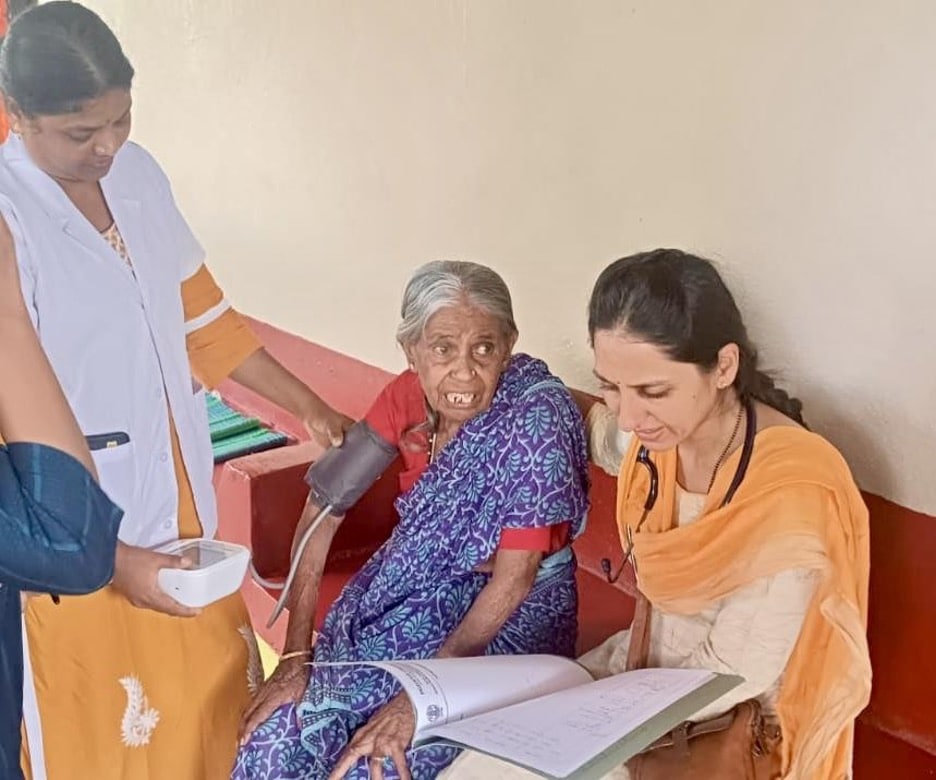
While my journey as a medical professional has had its challenges, I have also been fortunate to have support systems along the way. In India, getting admission into postgraduate programs is difficult due to the limited capacity of public institutions. Nonetheless, my student days were very enriching. We had a student welfare cell, freedom to express ourselves, and equal opportunities were given to both men and women.
However, the realities of working at the grassroots level are quite different. When I started as a young doctor, my abilities were often questioned because of my gender. Many people did not believe I could take responsibility. As a female doctor, earning respect has not been easy. People often assume I am a nurse, and I had to prove myself repeatedly, not just through my work but by constantly asserting my identity and competence.
I also find myself constantly thinking about how to grow in my profession—building technical skills and continuing to learn. Balancing family life and professional responsibilities is another ongoing challenge. At home, I sometimes hear that I don’t give enough time to my family, while at work I feel guilty for not being there on time.
Palliative care is an emerging field in India, and I am passionate about contributing to its growth by making it accessible and affordable for all who need it. I hope to draw on my experiences to engage meaningfully in both academic work and patient care.
My Words of Advice
If my story resonates with you, I would like to share a few words of advice: Stay true to your values, even when the path is challenging. Let empathy guide your work, and remember that every effort, no matter how small, can make a meaningful difference in someone’s life. Be patient with yourself, keep learning, and embrace the journey with resilience and compassion.