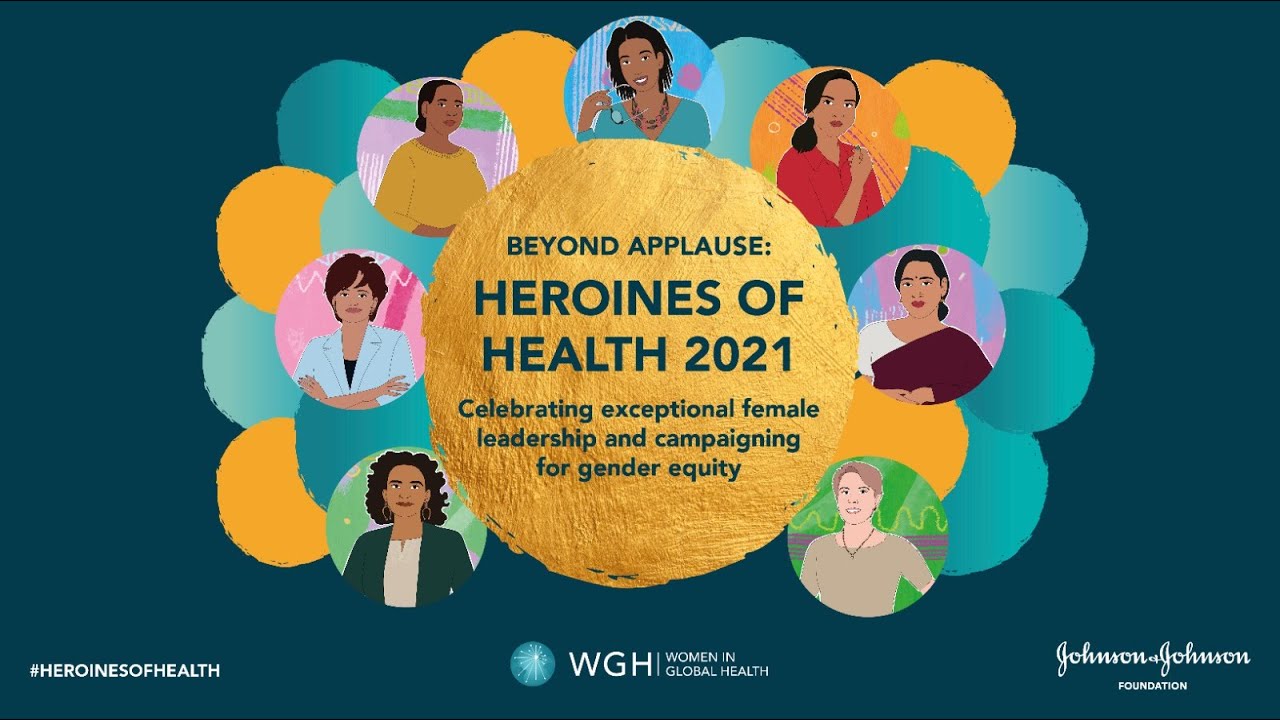
Heroine Year: 2021

Ms. Neha Mankani

It was while working as a midwife in a Karachi Hospital that Neha Mankani realised that relatively small sums of money could make the difference between life and death for so many of the women she cared for:

“Many a time, I saw someone crying outside the labour room because they had run out of cash to pay for (life-saving) blood. I often meet people who are in very desperate situations because of unanticipated emergencies.’

Once when a newborn was very sick she asked a grandmother to urgently take a sample of a baby’s blood to be tested. ‘When she told me she would try to arrange the money overnight I decided an emergency fund needed to be in place.’ Neha sent out a Facebook message, thousands of dollars were donated and she set up the rapid response ‘Mama Baby Fund’ which helped 150 families at the hospital with emergency needs within its first six months.

Now Neha – a graduate of the ICM Young Leaders’ Programme – is President of the Karachi branch of the Pakistan Midwives Association. She and her fellow midwives face many challenges with high maternal death rates and low-quality training. Pakistani midwives often lack not only skills but experience and confidence. Neha’s response was to set up a mentoring initiative to ‘buddy’ new midwives with their seniors, building the skills of midwife graduates to cope with obstetric emergencies, while also learning financial literacy and holistic woman-centred care. 

‘A big part of our role as midwives is to provide compassionate care during this difficult stage of their lives when they face not only physical but emotional challenges.’

The results of the initiative are clear to see. Two years on and midwife graduates of the programme now have better skills and more confidence, partly gained from using video training tools such as podcasts in local languages which have been developed by Neha. They are also being sought after to lead other maternal and newborn health initiatives in both the private and public health sectors. Meanwhile women are enjoying better access to services in the region, including a boat health clinic which provides them with postnatal care and breastfeeding support. 

Neha now regularly participates in global webinars and events to voice the many issues women are facing during the COVID-19 pandemic. She is a powerful and articulate advocate for the pivotal role of midwives in women’s lives during the pandemic and beyond: ‘As midwives we celebrate with women who have a healthy baby, and we also mourn with those who experience loss.’


Ms. Jane Kubai

At the age of 11 Jane Kubai’s father told her it was time to leave school, be circumcised (FGM) and get married. So she ran away from home and a priest helped her find a job as a maid. 

‘I told him please, I want to go back to school and achieve my dream to become a doctor, so he sponsored me until I reached secondary school.’

After a few years Jane had to drop out, to get a job and support her elderly parents and siblings. Yet she never gave up her dream. Working for five years as a security guard at Consolata Hospital in Nyeri County, her empathy and intelligence shone through: ‘I know the pain of the patients and their visitors,’ she says. ‘We talk, we pray, I encourage and console them.’ 

Amref colleagues spotted her talents and trained her in COVID-19 prevention and management. She began to educate communities and patients on how to prevent COVID-19, tackling fears about the vaccine and giving them life-saving information.

Jane took a Basic Life Support certificate and – in her lunch break – started working on the wards. ‘But I was most interested in Theatre’ she says. ‘I wanted to care for the patients after their operations.’ With her savings she became a part-time student at Mary Lonela Consolata Medical College to pursue a Certificate in Theatre Technology.

Jane has now graduated and works at Nakuru Rongai Hospital as a Theatre Assistant. But she still aims to continue with education so that she can achieve her lifelong dream and become a surgeon. 

Ms. Greisy Trejo

Greisy Trejo, a 42 year-old nurse from Panama, has drawn on painful experiences of her own to become a fervent champion for others who are vulnerable.

Born in Caracas, Venezuela, she overcame poverty and inequality to train as a community-based health carer. Then in 2010, gender-based violence, widowhood and her son’s attempted kidnapping forced her to leave Venezuela to start a new life in Spain. 

Here she continued helping the most vulnerable as a Red Cross volunteer. She then became a staff member of the International Federation of Red Cross and Red Crescent Societies (IFRC), where she is pioneering the drive in the Americas Region for more comprehensive mental health care as part of Universal Health Coverage. 

During the COVID-19 pandemic, Greisy has led a historic transformation of the Red Cross to provide more inclusive mental health services for people across the Americas – especially indigenous people, migrants, LGBTQ people, and those who are victims of violence or isolation. Peer support work; the exchange of experiences; using tech solutions to reach those in need of care; new training content and innovative methodologies – all are a part of her legacy.

Greisy continues to work tirelessly to promote a culture of peace, inclusion, equality, and resilience, especially for children. So far, she has supported the training of more than 150 teachers in mental health and psychosocial support. As a result, more than 3,000 children are now better equipped to cope with the distressing impacts of the pandemic. 

‘The new generation is more aware of the importance of mental health,’ says Greisy. ‘They can transform how the world sees this essential part of our wellbeing.’ 

Dr. Myrna Abi Abdallah Doumit

On August 3rd,  2020, a massive explosion ripped through Beirut’s docks, killing over 150 people and injuring thousands more. It was a disaster which called for an extraordinary response and it was Doctor Myrna Doumit who led the nurses of Lebanon as they stepped up to the challenge – and made sure their contribution was recognised.

These same nurses were on the verge of going on strike. Often unpaid, their working conditions had long been unsafe and unsustainable – and then the COVID-19 pandemic ramped up the crisis. Lebanon’s nurses had won the support of doctors and other health professionals in taking this unprecedented stand for their rights. 

But when the explosion happened the nurses – uniquely resilient after 40 years of war – came out in full force to help the injured and dying. Under Dr Doumit’s strategic leadership, nurses gave their all – sometimes their own blood, sometimes their own lives. Five nurses died and many more were seriously injured while on duty.

Dr Doumit went to every major hospital in Beirut to coordinate the response. Three major hospitals had been destroyed and the remainder were flooded with casualties. Medicines and supplies had been destroyed. Nurses were suturing wounds and providing emergency treatments on the streets. 

In the aftermath of the blast Dr Doumit went on to lead Lebanon’s COVID-19 relief efforts, organising national infection control and prevention measures, including paid leave and hotel accommodation where nurses who were infected could isolate.

At the same time Dr Doumit used media channels to shed light on the huge contribution made by nurses during the pandemic, engaging the people of Lebanon, empowering nurses and raising their voices. Her persistence and passion in creating strategic alliances and speaking up for nurses has not only given them much needed practical and psychological support, it has been a game changer in how nurses are perceived and valued.

Ms. Ramatu Jalloh

Ramatu Jalloh, 38, from Sierra Leone, has put frontline health workers front and centre on the world stage during the COVID-19 pandemic.

‘I’m ready for the fight,’ says Ramatu Jalloh, an inspirational Community Health Worker (CHW) from Sierra Leone. ‘People are scared, but we are there on the front line, making sure they have the right information to prevent (COVID-19).’

Ramatu has 12 years of experience as a frontline health worker in Sierra Leone and Nigeria. She and the 10 CHWs whom she supervises are committed to reaching the unreachable. ‘No matter how high a mountain,’ she says, ‘it will never stop our CHWs from reaching the sick. But what we need is PPE. What we need is support from around the world’.

Ramatu has won that support. In 2020 at the Skoll World Forum, she described her own battle with HIV and called for protection for all frontline health workers, especially those who are immunocompromised.  ‘When you protect a CHW, you are protecting the nation,’ she said, because ‘we are the link between the community and the health facility’. Her passionate advocacy led to the COVID-19 Action Fund for Africa which has so far raised nearly $USD 20 million to provide over 100 million pieces of PPE to hundreds of thousands of frontline health workers worldwide.

Ramatu has inspired a growing network of CHW advocates from around the globe who watch her speeches and see how advocacy by CHWs for CHWs can be a true catalyst for change. 

Ms. Vandana Gopikumar

Vandana Gopikumar has been reaching the most difficult to reach, women who are homeless and with mental ill-health. 

Of all the vulnerable people hit by the COVID-19 pandemic, women with mental ill-health, who are so often homeless, have been amongst the hardest hit. In India, they commonly end up in locked psychiatric wards for years, if not decades.

‘Our responses to these women range from sympathy and the wish to help, to revulsion and fear,’ says Vandana. ‘Yet when we address the root causes – such as poverty, conflict, disasters, domestic violence – we can dramatically change their prospects, enabling them to return to their communities, to hold down jobs, to live with dignity and respect.’

Vandana set up The Banyan to confront the stigma and challenge of mental health head on, not only supporting those in need but simultaneously educating communities and breaking down barriers. Led in part by women with lived experiences of mental health challenges who have been supported by The Banyan in the past, they provide safe spaces, employment opportunities, mental health support and basic care. This model is not only more just that the institutional alternative, it is more effective – and at a fraction of the cost. The Banyan now serves a population of over 1 million, and is expanding to 10 states of India and into Sri Lanka, working alongside local governments.

During the COVID-19 pandemic, Vandana and The Banyan have stepped up their work to provide oxygen, to deliver medications and meal kits, while continuing to support women in need with their unique housing and mental health model. 

Dr. Ruth Dirba

Doctor Ruth Dirbia will never forget the pregnant woman who walked for days while in labour to reach the hospital where she was working as a medical intern. The woman suffered irreversible damage but survived. Her baby died; it was the third time in a row that her pregnancy had ended in the death of her child.

Determined to learn how to prevent such fatal complications, Ruth went to work in the rural Sidama region at the Leku Primary Hospital. For two years she struggled to care for her patients – many of them wounded in ethnic conflict – without electricity or running water, often without food or medical supplies, cut off from the referral system by closed roads.

Ruth saw a lot of trauma, but she came through these difficulties to head up efforts ensuring quality care at the hospital. She developed trainings for colleagues in providing reproductive health services. She designed labour and abortion wards which would protect a woman’s privacy. She created a child-friendly paediatric ward.  Above all she saw the importance of policy decision, and so she joined the Ethiopian Public Health Institute where she provided training on mental and psychosocial health for colleagues working with Internally Displaced People (IDPs).

When COVID-19 hit she became a focal point for community engagement at the National Emergency Operation Centre. She conducted campaigns, led community engagement and developed digital education content for health workers as part of Ethiopia’s response to the pandemic. 

Women health care workers, Ruth believes, are the beating heart of any health system. Ethiopia’s Health Extension Workers are mostly women, and she has pioneered digitized in-service trainings to support them, starting with reproductive, maternal, neonatal and child health. She now works for ‘Last Mile Health’ in Ethiopia as Technical Advisor, leading their health advocacy and partnership with the Ministry of Health.

She is also leading the organization’s gender mainstreaming and social inclusion programme in Ethiopia, working in partnerships with the Ministry of Health to close the gender gap in digital literacy.  ‘Health for all cannot be achieved without gender equity’ she says.

Heroines of Health 2021

The seven incredible Heroines of Health, Ramatu Jalloh, Jane Kubai, Neha Mankani, Dr. Myrna Doumit, Dr. Vandana Gopikumar and Greisy Trejo were accompanied at the awards by H.E. Ellen Johnson Sirleaf, Dr. Suraya Dalil, Prof. Flavia Senkubuge and Laura Nel with video remarks from Dr. Tedros Adhanom Ghebreyesus and Anita Bhatia. Spoken word artist Mumbi Macharia performed a very special poem ‘Beyond Applause’ for the Heroines.

This virtual Gala provided a critical platform to hear from women health workers on the frontlines of COVID-19 who have risked their lives under the most extreme circumstances to deliver health services. Stories were shared of courage, leadership and overcoming unimaginable challenges. Discussions dealt with how to break down the barriers women in health face, and called for a new social contract for women health workers.

As the majority of the global health workforce, women have made an extraordinary contribution on the frontlines of this pandemic. But despite their expertise women continue to be clustered into lower status jobs, lower paid and unpaid, frequently in unsafe working conditions subject to violence and sexual harassment and left out of decision-making roles.

The Heroines of Health Awards began in 2017, recognized by global leaders, Dr Tedros Adhanom Ghebreyesus, Director General, WHO, Former Prime Minister of New Zealand, Helen Clark and Former President of Liberia, Ellen Johnson Sirleaf to shine a much needed spotlight on the glaringly problematic fact that women deliver health, but do not lead it.

Meet the 2021 Heroines

Watch the event recording

YouTube video player