Author: eric@ericschrijver.nl

From Sight to Smile: Integrating Oral and Eye Health into Primary Health Care for Mothers and Children

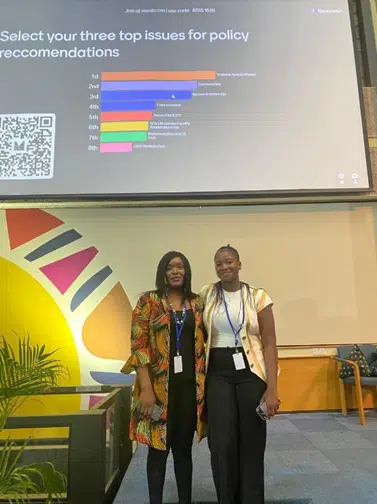
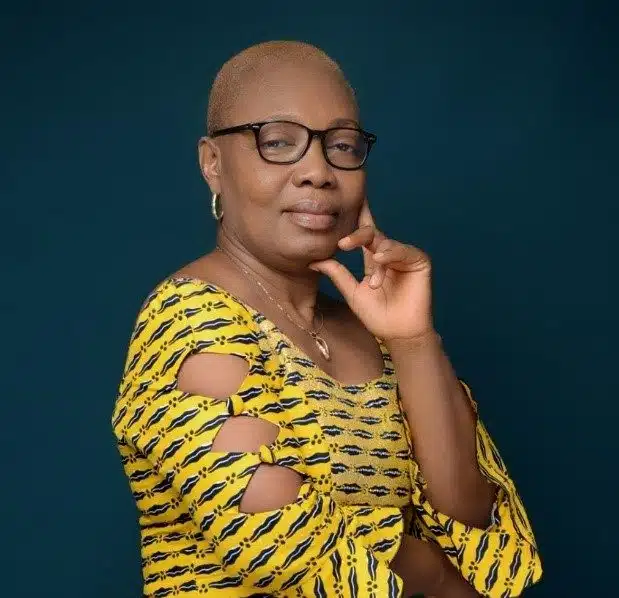
Dr. Hyewon Lee is a pediatric dentist and director at the Global Maternal and Child Oral Health Center at the Seoul National University Dental Research Institute and School of Dentistry. She is a leading advocate for integrating oral health into maternal and child health systems globally and has a special heart for Kenya.

Clare Szalay Timbo is a professional trainer specializing in eye health workforce development and gender equity. Her expertise spans capacity building, health systems strengthening, and promoting equity in eye and reproductive health services, with particular focus on maternal and child populations. She has a special heart for Sierra Leone.

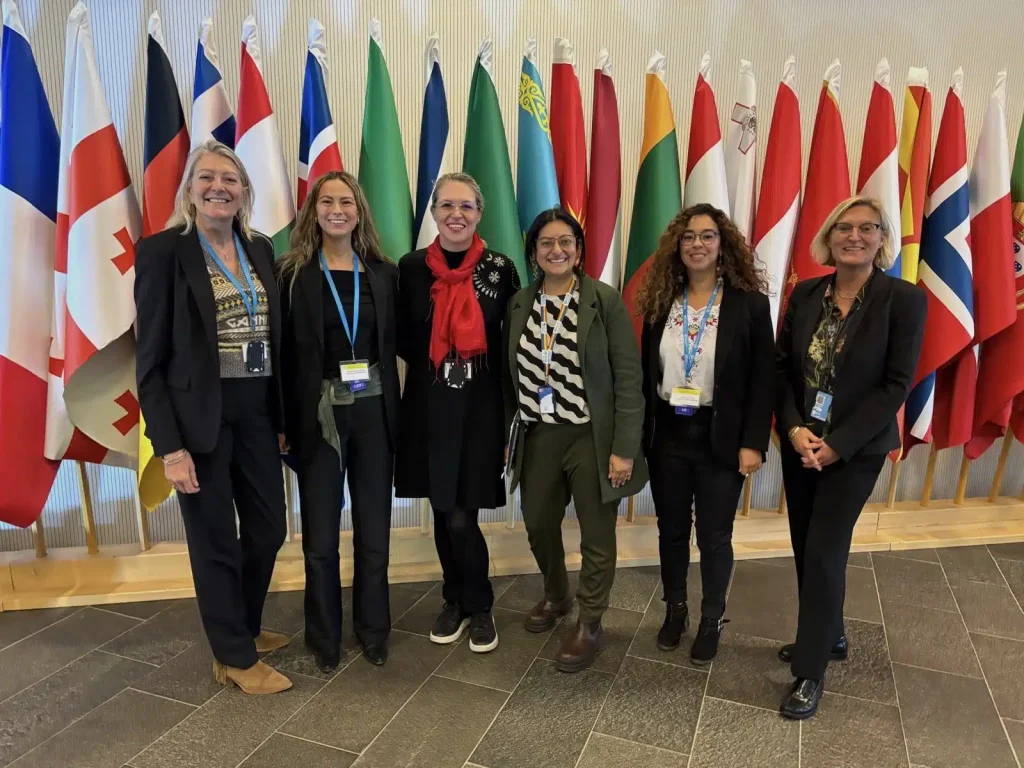
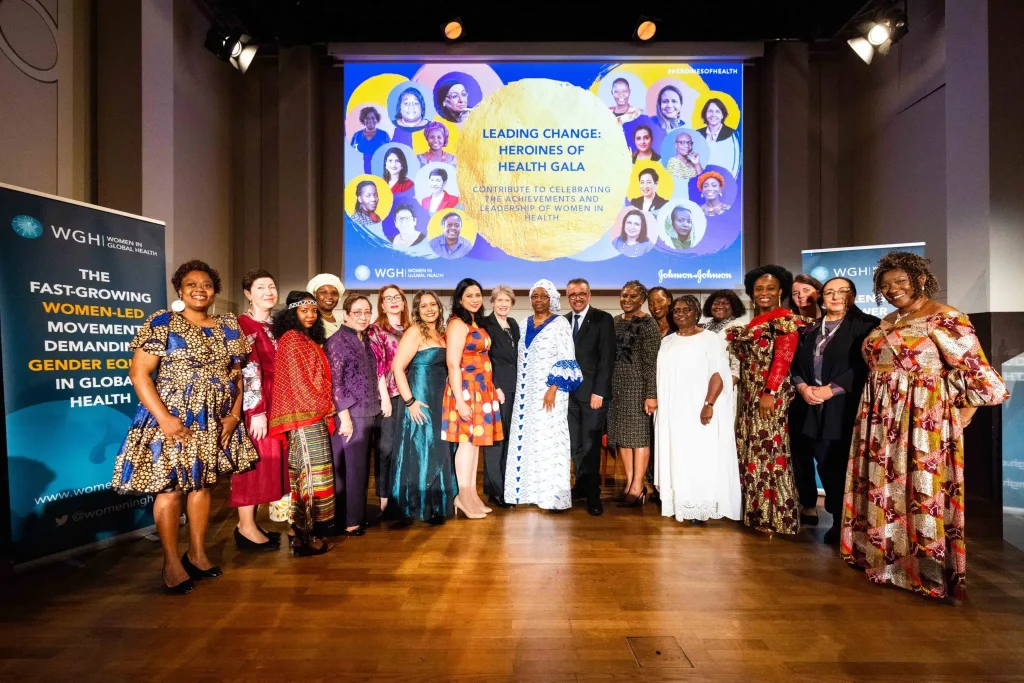
The authors met through the Women in Global Health Speakers Bureau training , where they discovered their shared passion for integrated approaches to maternal and child health. This collaborative article represents their commitment to breaking down silos between oral health, eye health, and primary care to create more comprehensive and equitable healthcare systems for mothers and children.

The Interconnected Foundation: Why Integration Matters

The Oral Health Connection

A mother’s oral health, knowledge, behaviors, and socioeconomic status create a powerful foundation that shapes her children’s lifelong oral health outcomes. Research demonstrates that poor maternal oral health significantly increases caries risk for young children through critical pathways: the direct vertical transmission of cariogenic bacteria from mother to child, and the transfer of health behaviors, knowledge, and resources—what researchers call “health capital”—that mothers and caregivers use to establish optimal oral health environments for their children. Importantly, these maternal factors operate within broader health and healthcare contexts that can either support or constrain a mother’s ability to promote optimal oral health. This profound intergenerational relationship has been extensively documented in scientific literature, leading national clinical guidelines to emphasize that oral health must be an integral component of both antenatal and postnatal care.

The Eye Health Imperative

While eye health is less commonly discussed in maternal and child health (MCH) contexts, its integration into MCH service packages presents a powerful and underutilized opportunity to improve lifelong health outcomes, not only for children but for mothers and families as well. The World Health Organization has identified several evidence-based interventions, such as vitamin A supplementation, screening for congenital cataracts, and timely treatment of retinopathy of prematurity, that can significantly reduce the burden of childhood blindness. Many of these interventions align seamlessly with existing MCH touchpoints, including antenatal care, immunization visits, and early childhood development programs.

For children, early detection and treatment of eye conditions can prevent irreversible visual impairment, support cognitive and motor development, and improve educational outcomes. The benefits extend beyond the child, since when a child’s vision is preserved or restored, it reduces caregiving burdens on mothers and parents, improves family economic resilience, and enhances overall quality of life. Mothers are often the primary caregivers and health decision-makers; equipping them with knowledge and access to eye health services empowers them to advocate for their children’s well-being and seek timely care.

Moreover, integrating eye health into MCH services creates opportunities to address maternal eye health needs as well, such as screening for diabetic retinopathy in pregnant women with gestational or type 2 diabetes, or managing vision changes during pregnancy. This holistic approach strengthens the continuum of care, ensuring that both mothers and children receive comprehensive support.

By embedding eye health into routine MCH services, health systems can reach families at scale, close gaps in access, and promote equity. Eye health integration is not just a clinical imperative, it is a strategic investment in the health, development, and future potential of entire families.

The Current PHC Landscape: Missed Opportunities

Traditional healthcare delivery often operates in silos, with oral health and eye health services separated from primary health care systems and relegated to specialized services. However, prenatal check-ups and well-child visits represent golden opportunities, as mothers come to clinics for health promotion, not merely for treatment of pain or discomfort.

While prevention may seem like a foreign and complex concept to many people from underserved communities, antenatal and postnatal care have always been the cornerstone of primary health care and health promotion, even in resource-limited settings. Pregnant women and most young children, up to five years of age, have frequent contact with trained health personnel at primary health care clinics for health education, monitoring, immunization, and check-ups.

Therefore, it is imperative that oral health and eye health be integrated into primary health care, especially for mothers and children. These existing touchpoints provide natural opportunities to address preventive care, early detection, and health education in ways that can transform long-term health outcomes.

The Path Forward: Policy and Practice Recommendations

The integration of oral and eye health into primary maternal and child healthcare represents more than an efficiency improvement; it embodies a fundamental shift toward truly comprehensive, person-centered care. By positioning oral and eye health services as core components of primary health care, we can prevent unnecessary and devastating healthcare expenditures on oral and eye diseases, as most of these conditions are preventable through early recognition and healthy behaviors.

Past and current approaches that deliver oral and eye health services separately from primary health care have proven insufficient in addressing the global burden of preventable diseases. The evidence clearly demonstrates that fragmented care models fail to reach the populations most in need and miss critical opportunities for early intervention.

Therefore, the question is not whether we can afford to integrate these essential health services, but whether we can afford not to. Every mother and child deserves comprehensive care that addresses their total health needs, including oral and eye health. This integration requires the development of national guidelines that mandate oral and eye health components in maternal and child health programs, the inclusion of oral and eye health measures within maternal and child health systems such as maternal handbooks and health outcomes measure sets, and the implementation of standardized protocols for oral and eye health screening in primary care settings, supported by capacity-building training for the PHC workforce who deliver maternal and child health services.

From sight to smile, every aspect of health matters, and every mother and child deserves nothing less than the best possible start in life.

EXECUTIVE BRIEF: Renewing Our Commitment to Equity and Shaping The Next Chapter of WGH

 Dear partners, colleagues, and friends,

2025 is an exceptional year in the world’s recent history and for us in particular: we are commemorating the 80th anniversary of the United Nations, marking thirty years since the Fourth World Conference on Women and adoption of the Beijing Declaration and Platform for Action and celebrating the 10th anniversary of Women in Global Health. These milestones remind us that advancing human and women’s rights remains central to building a fairer and healthier world—one that depends on global solidarity and shared responsibility.

Several ongoing challenges are reminding us that despite the immense progress achieved in lifting people out of poverty, improving people’s lives and wellbeing and advancing gender equity, a lot more is yet to be done. The progress made is under threat and will be undone if we are not united and resilient.

Following my last message, I write to you today with renewed purpose. The journey toward a more just and equitable world for women in global health has been challenging, yet our determination remains stronger than ever. The changes we have made reaffirm our values and position us for a future that demands even greater commitment.

We are committed to adapting to a complex and evolving world and ensuring the long-term sustainability of our mission. Having made important progress on women’s leadership, we are now widening our scope to advance gender equity in its most comprehensive form.

We are embracing an inclusive approach to address a wider spectrum of challenges women face—from climate change to academia. 

Our strength remains at the country level, through the energy of our Chapters and members whose work and voices bring our mission to life.

To our partners and donors: your support is more than a contribution—it is an investment in our shared vision of a gender-equal world. We cannot do this alone, and your continued commitment—through resources, collaboration, and advocacy—will allow us to reach further and achieve more.

We also extend thanks to our staff and advocacy team, whose dedication drives us forward. In the days ahead, you will see new colleagues joining us, bringing expertise, talent, passion and commitment. At the same time, we are strengthening governance and embedding systems of transparency, accountability, and sustainability that will support gender-transformative leadership at every level of our movement. 

As we close our current strategic plan, we look forward to sharing news of our next chapter and celebrating our 10th Anniversary with you at UNGA and beyond.

Thank you for walking this path with us. Together, we can shape the next decade of impact.

With gratitude and resolve,

Dr. Magda Robalo
Executive Director a.i WGH


EXECUTIVE BRIEF: Charting the path for a successful and sustainable future for WGH


Dear partners, colleagues and friends,


It is with a mission-driven determination that I have accepted to steer WGH through its period of transition.

I have now taken stock of the strengths and challenges we are facing and started charting a path to a successful future. We want to walk this path with you all, together.

Today, I am bringing you the first of regular updates on where we are and what we plan to be co-creating with you, because we strongly believe that, now more than ever, the world needs a strong and pragmatic WGH.

We have embarked on a five-year strategic plan (2026-2030) development, to steer this ever-growing movement through the last mile toward the Sustainable Development Goals and Universal Health Coverage (UHC), as none of them will be fully achieved without gender equality and equitable access to quality health outcomes through resilient health systems.

This work will be supported by a re-organized, lean and skilful team, strategically guided to bring out the best of their knowledge and experience, in a work environment where cultural competency, diversity and inclusion take centre stage.  We are grateful to all team members who have transitioned out, for their immense contribution to WGH.

The membership of the newly established Board is purposefully constituted by Chapter members, to ensure that their needs and insights are fully considered. 

Our Movement is now 65 chapters strong, spread around 60 countries. Most of them are in low and income countries, with Africa leading in the number of Chapters. The Chapters are at different stages of development, and we have launched a process of assessing their level of maturity, to tailor our support to them and encourage Chapter to Chapter mentoring, for experience sharing, learning and build a movement that grows together.

A governance and accountability framework is being finalized, to enhance trust and transparency and ensure that we hold each other accountable every step of the way.

Our Women in Leadership Training Programme is in full swing and we have successfully concluded the Ethiopia Supply Chain Landscape Analysis. We look forward to collaborating with the Ethiopian authorities to imbed the recommendations into national policies and strategies.

We aim at strengthening and diversifying our partnerships, consolidating the achievements that we have made thus far, with the help and support of all of you, our partners and stakeholders. 

Our focus is on revitalizing the partnerships and the Movement, and deepening our impact at country level, where it matters the most, by empowering the Chapters and ensuring that our advocacy is meaningful to transform the systems that continue to trap women in the pipeline to leadership in global health.

We count on your support as we embark on this journey together toward a gender equal leadership in global health.


With great esteem,


Dr. Magda Robalo

Executive Director a.i WGH


What happens to women health workers when Official Development Assistance is cut?

Recent cuts to Official Development Assistance (ODA) are triggering a silent emergency—one that disproportionately impacts the women who hold up health systems across the globe. According to the World Health Organization (WHO), health ODA is projected to decline by as much as 40%, a shift with grave implications for countries already struggling to build and retain a resilient health workforce.These reductions directly threaten progress on the commitments made by Member States in WHA78.16, the resolution on health workforce and health systems financing adopted at the 78th World Health Assembly.

This landmark resolution—led by WHO and strongly supported by Nigeria—calls for urgent, sustained investment in the health workforce as a core pillar of health systems. It emphasizes the importance of domestic resource mobilization, country ownership, and gender-responsive investments, particularly in primary health care and community-based services. WHA78.16 affirms that resilient health systems require not only financial stability but also a rights-based approach that centers the wellbeing and leadership of women in health.

Crucially, both WHA 78.16 and the newly adopted resolution on health financing underscore that the achievement of Universal Health Coverage (UHC) is not possible without investing in the people—particularly women—who deliver care. Without adequate, sustainable funding for the health workforce, and without policies that prioritize gender equity and decent work, the foundational vision of UHC—health for all, without financial hardship—will remain out of reach.

Complementing WHA 78.16, Member States also adopted a Nigeria-sponsored resolution on health financing, reinforcing the call for greater public investment to accelerate UHC. The resolution urges governments to increase domestic spending on health, echoing the 2019 UN General Assembly call for at least 1% of GDP to be allocated to primary health care. It identifies potential fiscal levers—such as increased taxes on tobacco, sugar, and alcohol—that can both improve public health and generate additional revenues.

Importantly, the resolution encourages countries to invest in affordable, evidence-based essential health benefit packages, developed through inclusive and transparent national processes. This underscores the need to ensure that health systems are not only well-resourced but also equitable, accountable, and aligned with population needs.

The Assembly also marked a historic step forward in equity by recognizing—for the first time—rare and neglected skin diseases as global public health priorities, further widening the lens on inclusion in global health policy.

Yet despite these powerful resolutions and the momentum they represent, the harsh reality on the ground tells a different story. In Togo, Nigeria, Malawi, Zimbabwe, and many other countries, women health professionals are bearing the brunt of funding shortfalls. They are facing job losses, stalled careers, and the collapse of community-based care systems that once relied on consistent international support. Entire programs are being scaled back or shut down entirely—silencing voices, reducing access, and setting back progress toward gender equity, health equity, and the broader UHC agenda.

These are not just numbers. They are midwives without tools, researchers without funding, doctors working without pay, and entire communities left without care.

The testimonies that follow come from women across Africa, Asia, and beyond—those who are living the consequences of shrinking funding and systemic neglect. Their stories highlight both the fragility of the progress made and the extraordinary resilience of women leaders who continue to advocate for dignity, justice, and inclusion in global health.

As WHA78.16 so powerfully reminds us: health workforce investments are not only technical—they are political and moral imperatives. The achievement of Universal Health Coverage depends on them. Every budget cut has a face. And every missed investment is a lost opportunity to build a stronger, fairer, and more equitable global health system.


Togo

“In Togo, women health professionals are facing a wave of challenges brought on by cuts to Official Development Assistance (ODA). Community programs supporting reproductive health, maternal care, and education for girls are being scaled back or shut down. Health workers are losing their jobs, forced into unpaid roles, or denied training opportunities.

Partner organizations that previously benefited from international funding have had to scale down or stop their activities. This has led to cancellation of awareness-raising sessions, discontinuation of free contraception programs, and decreased funding for training of midwives and community health workers.

Several colleagues involved in local NGOs or co-funded projects have lost their jobs or been forced to volunteer due to lack of financial support.

I am working to launch an integrated women’s health center. However, access to funding, especially for start-up support and training, is becoming increasingly difficult. Available funds are often redirected toward other priorities, even as community needs grow.

These shifts are undermining efforts to advance women’s rights, health, leadership, and economic empowerment. Every budget cut has a face, often a woman’s, and carries profound human consequences.”

— Gynaecologist and Obstetrician, Togo


“In my role as a health facility director in Togo, I’ve witnessed first-hand how recent cuts in Official Development Assistance (ODA) are quietly but deeply affecting women in the health workforce. 

Many community health programs led by women, including maternal health outreach, adolescent girls’ education, and reproductive health sensitization, have been scaled down or stopped altogether due to funding gaps. Several of the female contract staff who were part of these initiatives have lost their jobs or seen their hours cut, with no alternative support systems in place. This instability has had a direct impact on their mental health, income security, and leadership progression. Some were in line for supervisory roles, but the discontinuation of their contracts stalled their growth and shattered their confidence. 

At the institutional level, budget reallocations have prioritized infrastructure over capacity building and wellness programs, often side-lining gender-focused leadership training. As a result, women’s voices in decision-making spaces are shrinking again after years of progress. 

These changes are not just financial, they’re systemic setbacks. We urgently need to protect the gains made in women’s leadership and ensure that future funding models don’t erase the efforts of those who carry the backbone of our health systems.”

—  Medical Doctor, Togo


Nigeria

“Until the abrupt stop-work order halted my organization’s funding, I held a senior leadership role that gave me purpose and stability. In an instant, I lost not just income, but also direction. 

As a single mother and sole provider, the fallout was brutal. I had to relocate the same month my contract ended, with my savings drained and no financial cushion in sight. There were weeks I didn’t step outside, not by choice, but because the weight of not knowing what came next was simply too much. I sat in silence, watching rejection emails pile up, each one chipping away at my confidence. It has been a dark, grey stretch, where I’ve questioned my value, my progress, and even my identity. 

This stillness wasn’t rest. It was grief. What hurts more is the silence, the invisible cost of donor decisions made far from the realities they disrupt. The ripple effect is profound: women leaders are stepping away, others are stretched thin just trying to hold on, and many are grieving the sudden loss of work we’ve poured years of ourselves into. 

And yet, I’m holding on. Volunteering, consulting, building something new. Trying to stay anchored in purpose while navigating instability. But make no mistake: this moment is testing the very resilience we’ve built our careers upon.

For many women like me, it’s testing our mental health, our ability to lead, and our sense of safety in the systems we helped strengthen.

In moments like this, the role of communities like Women in Global Health becomes even more critical. Beyond advocacy, we need practical solidarity, emergency grants, mental health support, leadership transition fellowships, and platforms that help women remain visible and valued even when funding disappears. We need spaces to share, grieve, and rebuild together. Because the cost of these cuts cannot be silence, and the response cannot be invisibility. We’ve come too far for that.”

—  Medical Doctor, Nigeria


“Due to recent cuts in development assistance, a community maternal health project I supported in rural Rivers State lost critical funding for training traditional birth attendants and providing delivery kits.

This setback reduced the frequency of outreaches and affected women’s access to safe delivery options.

It also limited leadership opportunities for young female health workers who were being mentored through the project. These cuts are silently reversing progress made in women’s health and leadership development in underserved communities. “

— Medical Doctor, Nigeria


“This is both a global and a local health challenge. One thing I have been able to do is to speak to stakeholders on the need to adapt to the change and advocate to our Government on the need to set priorities right.

In Nigeria, political offices take more than 50% of the total income of the Nation. We have  witnessed how these politicians skyrocket contacts for themselves, accumulate so many material things including cars, houses, yachts, private jets, limited edition clothing, and designers at the expense of the people. I strongly believe that if there is a redirection and appropriate usage of funds, the cuts from ODA would not impact so much on Nigeria as it is now.”

— Public Health Physician, Nigeria


Malawi

“I was tasked with managing a highly technical project involving a diverse and complex consortium of partners. Despite my qualifications and track record, the senior management team, largely male began to express doubt in my ability to handle the project.

While no one explicitly mentioned my gender, the tone and content of the emails, the second-guessing, and the suggestion to bring back a former officer whose contract had ended made the underlying message clear: they didn’t believe a woman could lead such a high-stakes effort. The justification was that, they had identified gaps even without having evidence of my under performance. All my annual performance reviews indicated that I have been performing exceptionally well and beyond the organisation and donor’s expectations. 

Eventually, I survived what was an unjust attempt at terminating my contract. That moment reinforced my belief in the importance of women holding space at the decision-making table and staying there, even when the room grows cold. At the same time, I’ve seen how cuts to Official Development Assistance (ODA) and shifts in global health funding are disproportionately affecting women in the workforce.

In my network, several women-led programs have been downsized or defunded, leading to job losses and reduced opportunities for mentorship, especially for young women professionals.

The ripple effects are real, from mental strain to loss of momentum in gender equity efforts. These shifts make it even harder for women to access leadership roles or sustain the gains we’ve fought so hard to make. Stories like mine and others within my professional circles show that while progress has been made, the foundation is still fragile and it is often women who bear the brunt when systems are shaken.”

— Program Manager, Malawi


“Recent cuts to Official Development Assistance (ODA)—particularly the withdrawal of USAID support—have had significant effects on women in the health workforce and the services they deliver. Previously, donor-supported programs paid nurses to work in neonatal units across district hospitals. These roles, often filled by young female nurses, provided experience, income, and development. With funding withdrawn, contracts ended, staffing decreased, and risks to newborns increased.

Mentorship coverage for maternal and newborn care has been severely reduced. Programs like Momentum Tiyeni enabled skilled female mentors to coach on-site. With fewer visits, support for junior staff—particularly women—is declining.

Clinical and neonatal death audits by senior specialists (many women) have become irregular, reducing efforts to prevent deaths and improve care. Cuts have also disrupted HIV services, especially PMTCT programs. With fewer trained staff, follow-up for HIV-positive mothers and babies has declined.

Many women health workers now face reduced opportunities and job insecurity.

These cuts undermine clinical outcomes and threaten years of progress in women’s leadership and health service delivery.”

—  Clinical Training Manager, Malawi


“With the recent cuts in DA, I know of women who were economically independent and running their families become jobless and vulnerable to mental health challenges like depression as they figure out how to bounce back and regain their independency.”

— Health Advisor, Malawi


Zimbabwe

“I have had two consultancy assignments withdrawn and projects l have been working on stopped.

This has led me into financial distress and increased my dependence on my ex partner.

l feel frustrated because l have lost the progress l have made in my leadership journey and also lost my drive. However, this has given me time to reflect on the need to build resilience in the women health work force and psychosocial support structures.

l have participated in an Africa CDC Mental Health Leadership Course and l plan to use what l learnt to build capacity in mental health for working women.”

— Public Health Consultant, Zimbabwe


West and Central Africa

“Our research institution relies heavily on external partnerships to sustain our activities and provide continuous training opportunities.

Through an initiative led by WHO HRP, we established a regional research capacity-building hub, which included training programs aimed at strengthening institutional expertise. This initiative allowed me to pursue a doctoral program through a scholarship while also coordinating the project, ensuring that gender equity was a core principle in the selection and development of young researchers. As a result, we successfully increased female expertise within research teams across Francophone West Africa and parts of Central Africa. Unfortunately, due to budgetary constraints faced by our partners, we were unable to sustain this initiative. 

The discontinuation of funding has significantly impacted training opportunities, mentorship programs, and institutional capacity-building efforts, limiting the ability of young researchers, especially women, to advance in their careers and contribute to gender-transformative health research.”

— Public Health Researcher, West and Central Africa Region


As a result of the ODA, many women especially those working in NGOs have lost their jobs while some are experiencing low pay but with the same amount of work. This imbalance causes stress and other psychological and emotional issues to women.Public Health Expert, Cameroon

With the limited financial resources of the association of women doctors, we have contributed to awareness raising, screening and training of women’s communities and we are satisfied with this.”

— Public Health Doctor, Ivory Coast


Sudan

“The workforce cuts are a mean of causing a surplus and a degradation of the workforce in order to serve the capitalist structure.  More than a decade ago we used to question the funding apparatus and how it is not meeting its purpose in the global south.

Promoting women’s use of feminist methods should focus on putting health above militarisation and the harmful habits that the system is intended to support.

The goal should be to close the wealth gap between rich and poor nations and to assist them in creating green funds that can be used for development and health. The fundamental argument for raising people’s standard of living is to end the resource exploitation that is taking place in the southern part of the world and deal with all of the resources. Taxation and other financial factors should be carefully considered in order to support health and development.”

— Independent Consultant, Sudan


India

“Programs focused on women’s health being shut down with our partner organisation, and language of gender and sexuality muted”

— Thought leadership advisor and Program Manager, India


Colombia

“The course gave me the ability to better express in my networks and work spaces my position in relation to gender equality and the importance of making the issues visible in the public space. An example of them is to provide in my psychiatry classes the difference not only in income for health professionals between men and women but also in leadership positions at national and global level. It is necessary to be aware of the relationship in order to see it differently and transform it. Thank you for this valuable space.”

— Executive Director, Colombia


Canada

Chair, Excellencies, distinguished delegates,

I deliver this statement on behalf of the Medical Women’s International Association and the Alliance for Gender Equality and Universal Health Coverage—a coalition of over 165 civil society organizations representing 60 countries, advocating for gender-responsive health systems and universal access to sexual and reproductive health and rights (SRHR)—to the General Discussion for CPD58, April 2025.

As the Commission reflects on ensuring healthy lives and promoting well-being for all at all ages, we underscore the indivisibility of health and human rights. Universal Health Coverage will remain incomplete unless it intentionally addresses the specific needs of women, girls, adolescents, and marginalized communities across the life course.

We call on Member States to fulfill their commitments to gender equality and SRHR as enshrined in the 2030 Agenda and the Political Declaration on UHC. This includes:

  • Ensuring that essential health benefits packages fully integrate comprehensive SRHR services—from contraception and safe abortion to gender-based violence prevention, maternal health, and STI treatment;

  • Dismantling legal, financial, and social barriers—including gender discrimination, stigma, and punitive laws—that restrict access to quality health services;

  • Centering the voices and leadership of affected communities—particularly women, adolescents, LGBTQI+ people, Indigenous peoples, and those living in poverty—in the design, implementation, and accountability mechanisms of health systems.

We call for comprehensive sexuality education, digital inclusion, and intergenerational approaches, while emphasizing that the unpaid care burden on women and health workforce inequities must also be addressed to ensure sustainability.

UHC is not gender neutral. Health systems that ignore power, privilege, and patriarchy cannot deliver justice. We urge governments to invest in strong public health systems rooted in equity, rights, and solidarity—and to recognize that achieving health for all requires placing gender equality at the core.

— Medical Women’s International Association Statement Oral for CPD 58 April 2025


WHAT CAN YOU DO?

Help us raise awareness.

Share these stories on social media to spotlight the impact of global health cuts on women and demand policies and investments that center women’s leadership.

Share your story.

Are you witnessing the impact of these changes in your community or workplace?

We want to hear from you. Share your experience by emailing us at communications@womeningh.org and add your voice to this growing movement.

WHA78: Annual count of women Chief Delegates

At the 78th  World Health Assembly (WHA78), Women in Global Health (WGH) continued its annual assessment of gender representation among Chief Delegates, an initiative begun in 2017 to track progress on gender equity in global health leadership. While just one in several other important indicators and without pretending to be comprehensive, this count serves as a powerful accountability tool, shedding light on persistent gender imbalances and urging policy reform to close the representation gap. This ongoing initiative is part of WGH’s broader advocacy efforts to promote gender equality and inclusive leadership in global health governance.

Key findings

  • Total Chief Delegates: 188
  • Male Chief Delegates: 138 (73.4%)
  • Female Chief Delegates: 50 (26.6%)
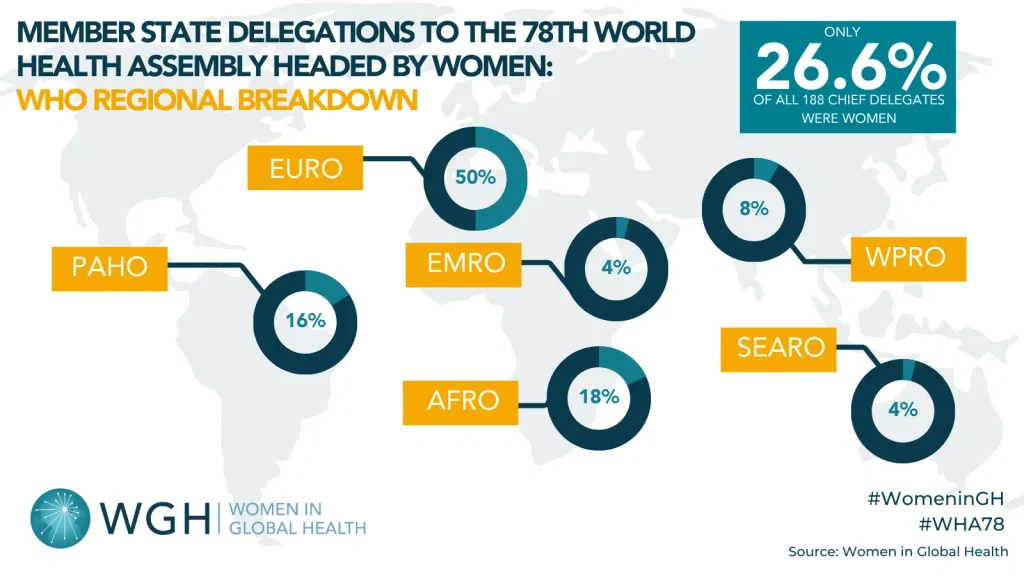
  • Countries/areas by WHO region breakdown: 
    • AFRO: 18%
    • EMRO: 4%
    • EURO: 50%
    • PAHO: 16%
    • SEARO: 4%
    • WPRO: 8%

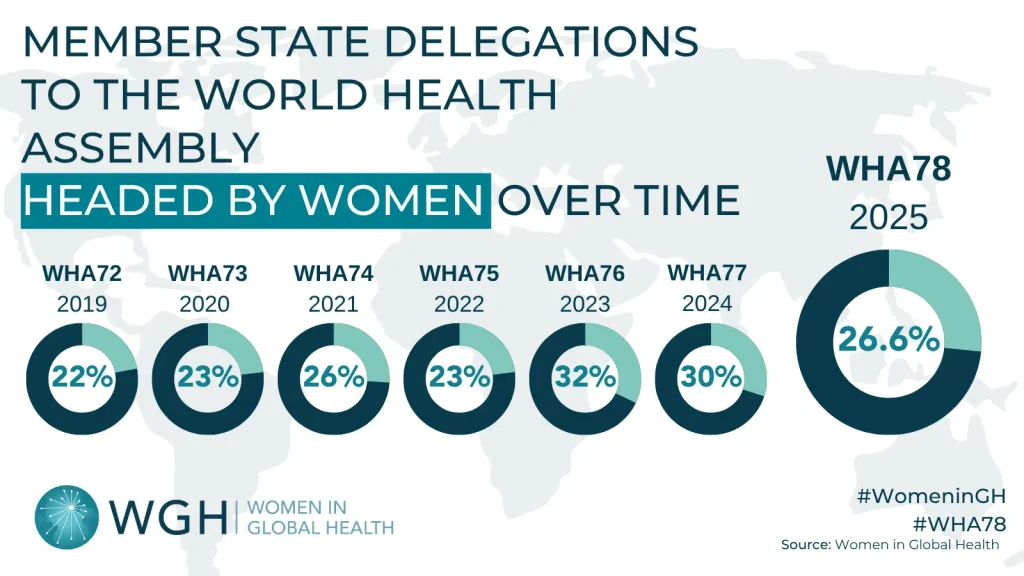
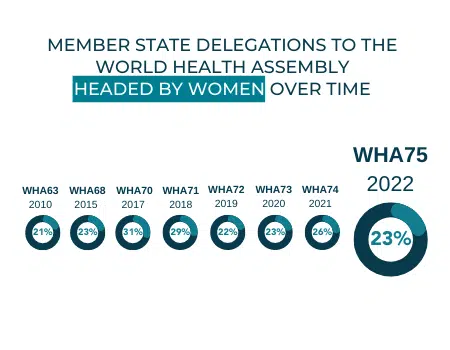
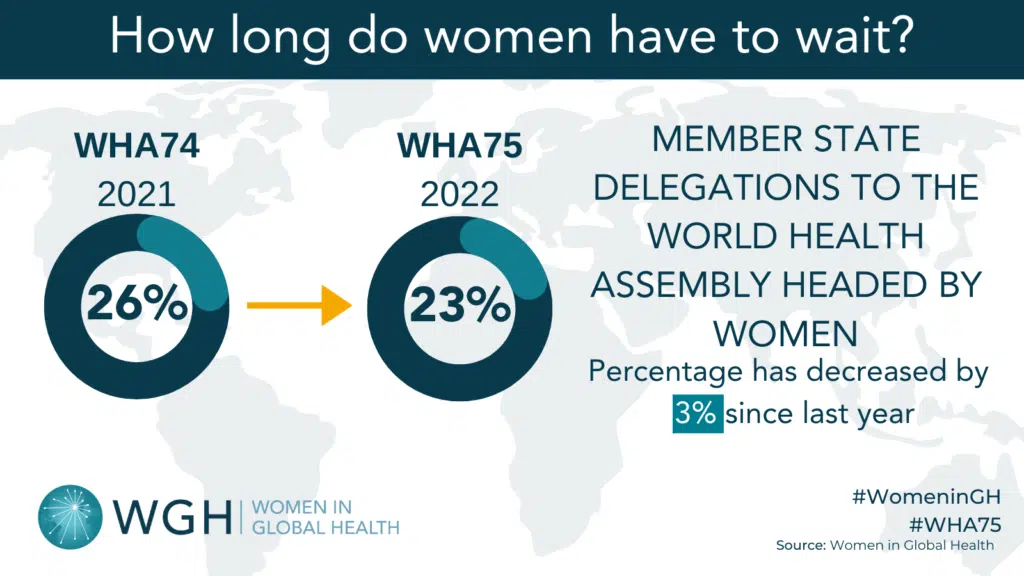
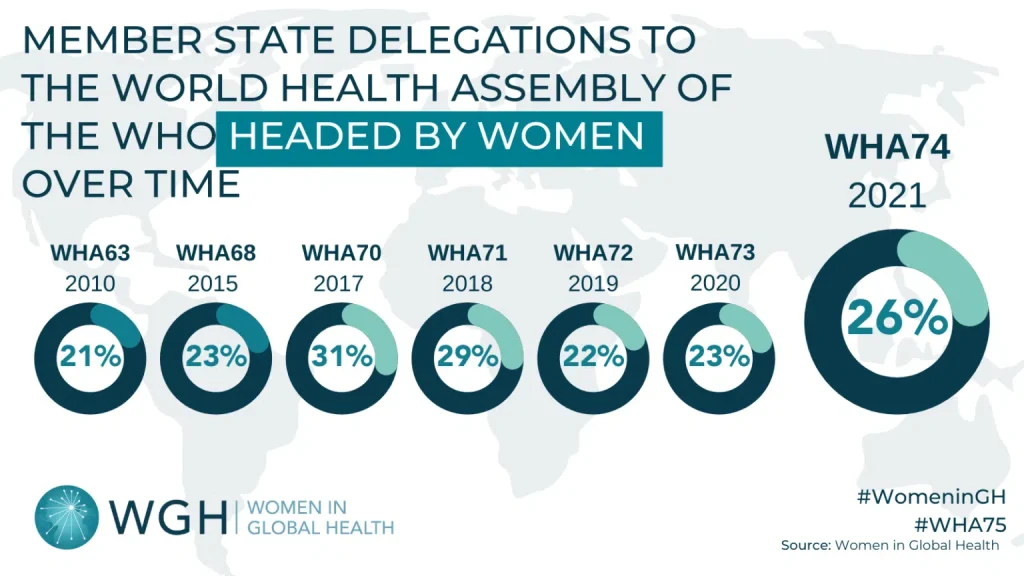
Despite global calls for more inclusive leadership, the 2025 data reflects a decline in women’s representation compared to recent years. In 2023, women accounted for 32% of Chief Delegates—then the highest figure since WGH began this count. In 2024, the number slightly dropped to 30%, and in 2025, representation has further fallen to 26.6%. Moreover, the breakdown of female Chief Delegates by WHO region/countries highlights a notable gap in representation from low- and middle-income countries (LMICs).

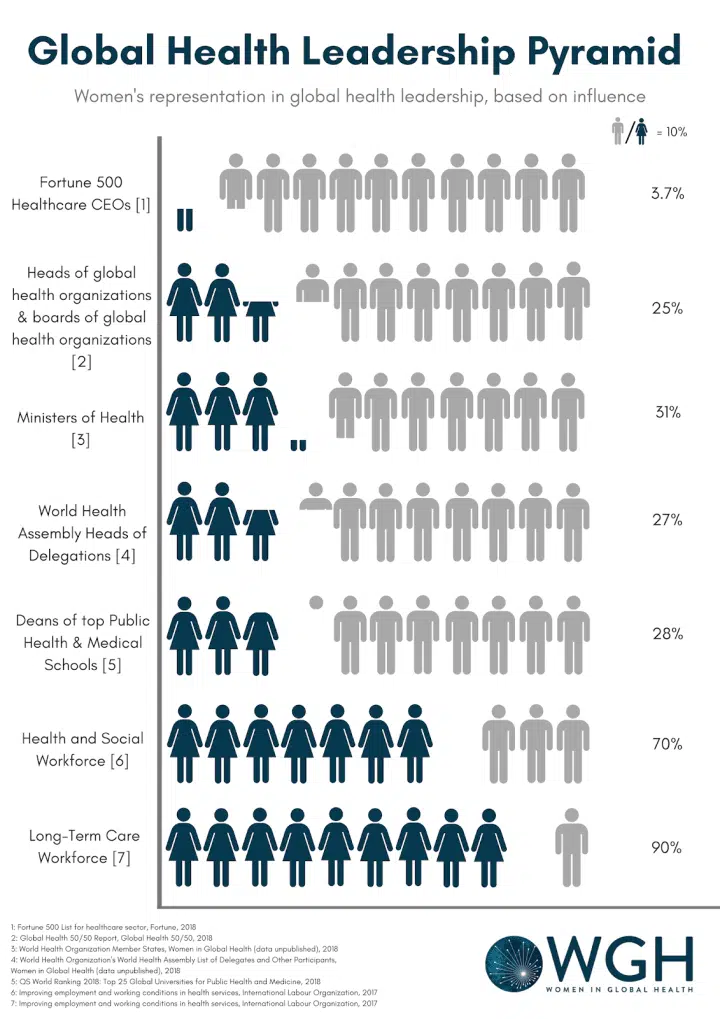
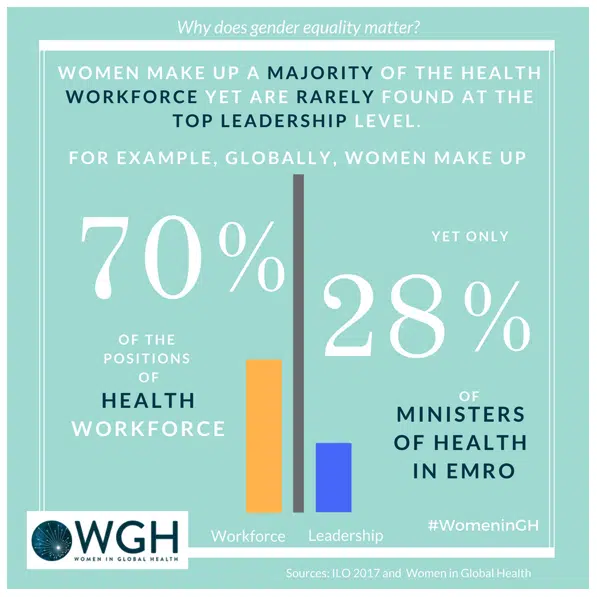
These figures highlight a persistent gender imbalance at the highest level of global health diplomacy and policy-making. While women constitute 70% of the global health workforce, their representation at decision-making levels remains disproportionately low.

Historical context:

  • WHA76 (2023): WGH celebrated a record 32% women Chief Delegates—a 9% increase from the previous year. While this was seen as progress, WGH cautioned against complacency, noting that a ratio of 3 men to every woman still prevailed.
  • WHA77 (2024): The percentage of women Chief Delegates dipped to 30%. WGH emphasized the need for urgent, transformative action, including ending the gender pay gap, eliminating unpaid labor, and creating safe, fairly compensated working environments for women in health.
  • WHA78 (2025): Representation of women further declined to 26.6%, marking a concerning regression. This setback signals that gains in gender equality are not guaranteed and require sustained political will and institutional accountability.

The 2025 gender count shows a multi-year consecutive decline on the number of women leading in the global health space and reinforces long-standing trends. Despite global commitments to gender equality and inclusive governance, women remain significantly underrepresented in formal leadership roles at the WHA. Moreover, the breakdown of female Chief Delegates by WHO region and country highlights a notable gap in representation from low- and middle-income countries (LMICs).


Without proportional representation:

  • Policy Gaps: Health policies fail to fully address the diverse needs of populations if the perspectives of women—particularly those on the frontlines of health care—are excluded from the decision-making process.
  • Accountability Deficit: Gender parity in leadership is a key indicator of institutional accountability to gender equity goals outlined in global frameworks such as the Sustainable Development Goals (SDG 5 – Gender Equality) and SDG 3 (Good Health and Well-being).
  • Lost Potential: Excluding women from leadership limits the innovation, insight, and effectiveness that diverse leadership brings to complex global health challenges.

Call to action:

WGH urges all Member States, global health institutions, and multilateral partners to take concrete steps toward gender parity in leadership. This includes:

  • Setting and achieving measurable targets for women’s representation in official delegations, especially those in LMICs.
  • Creating enabling environments for women’s participation and leadership.
  • Holding institutions accountable for gender equity commitments.


Until leadership in global health reflects the gender composition of its workforce, the field will fall short of its own ideals of equity, fairness, and effectiveness.

Join us in this effort, by supporting our work or getting in touch to find out what you can do in your own context.

WGH @ WHA78: Resist & Rise!

At the 78th World Health Assembly (WHA78), Women in Global Health will be leading a bold advocacy campaign grounded in the belief that gender justice is non-negotiable. This year, we are calling on governments and global health leaders to resist the rollback, and rise for gender equality in health systems.

Explore our full key messages

Our upcoming gender parity count of Chief Delegates

Women in Global Health has monitored the number of women-headed WHO member state delegations since 2010 and will be publishing these results during WHA78. WGH presents the findings of our annual gender count of Chief Delegates, highlighting both progress made and enduring challenges in achieving gender equity at the World Health Assembly (WHA).

Read more about last year’s count

Rising for Gender Equity and Justice at WHA78

The WHA78 campaign centers on five powerful calls to action:

  • Solidarity in Strength: Women Rising in Global Health Leadership
  • Rise Up: Push back against rollbacks on gender equality and SRHR
  • Fund the Future: Invest in gender-just and inclusive leadership
  • Center Women in Crisis Response: Protect and empower women during emergencies
  • Innovate for Inclusion: Build digital health that works for women
  •  

    These key messages will guide our engagement with policymakers, partners, and the public throughout WHA78. Each message is aligned with priority agenda items at the Assembly, because building equitable systems is not just aspirational, it is actionable.


    Are you ready to take action and make a difference at WHA78? There are lots of ways to get involved:

    ✅ Use our Social Media Toolkit to amplify our key advocacy messages

    ✅ Host or support local events and national digital campaigns that bring the WHA dialogue into your community

    ✅ Join our in-person events or stay tuned for the recordings we’ll distribute later

    ✅ Share our campaign video launch promo and key messages on your platforms

    Use our social media toolkit

    Together, we are building a future where women’s leadership in global health is the norm, not the exception. At WHA78, let’s rise for gender justice in health, because there is no health without gender equality.

    Stay updated by subscribing to our newsletter Follow us on social media @womeninGH Share your stories and stand with us

    WGH at CSW 69 & Beijing +30

    CSW 69 & Beijing +30: A Call to Resist, Reclaim, and Rise

    The 69th Session of the Commission on the Status of Women (CSW 69) and the Beijing +30 Review mark a critical moment to reaffirm global commitments to gender equality. As gender rights face increasing threats—undermining reproductive rights, diversity, equity, and inclusion (DEI) principles, and feminist movements—Women in Global Health is taking a stand.

    Women Under Fire: Advancing Gender Equality

    Women are facing growing challenges in conflict zones, workplaces, and health systems. Policies like the Global Gag Rule, shrinking funding for feminist movements, and the rise of harmful ideologies are reversing hard-won progress. We will not stand by as these rights erode. Now is the time to demand accountability, reject exclusion, and advocate for inclusive systems that uphold gender equity.

    Our Call to Action

    Resist the Rollback – Urge governments to uphold commitments, counter misinformation, and ensure accountability.
    Reclaim  Leadership – Provide frontline workers and advocates with the resources, data, and political space to lead change.
    Rise with Long-Term Investment – Encourage governments, donors, and financial institutions to invest in gender-responsive, inclusive health systems.

    Join the Movement: The #TakeAStand Pledge

    The #TakeAStand Pledge & Commitment Map tracks global actions to protect gender rights.

    1️⃣ View the Map – See how advocates worldwide are taking action.

    2️⃣ Add Your Action – Fill out a short form to document your contribution (e.g., advocacy, policy engagement, community initiatives).

    3️⃣ Track the Progress – Watch the global momentum build in real time and share with your online networks.

    Amplify the Message

    Access the Trello Kit – Use pre-written messages, social media templates, and campaign materials.
    Stay Engaged – Check the map, share the campaign, and use hashtags #TakeAStand and #WomenUnderFire to raise awareness.


    The Time is Now

    Governments must act now to protect gender rights and create equitable systems. Your voice and actions matter. Join us to resist, reclaim, and rise for a just future.

    Make your commitment today. Together, we stand for gender equality and a safer world for all women.


    TAKE A STAND

    WHO EB 156 Reflections

    From India and Saudi Arabia to the WHO Executive Board: our diversity is our strength

    Attending the World Health Organization (WHO) Executive Board for the first time was both exhilarating and uniquely transformative for us, as two women from India and Saudi Arabia. As we made our way to Geneva, we were not new to global health, having already spent years advocating for marginalized communities and championing gender equality. However, our participation in this important decision-making space marked an exciting intersection of empowerment, exchange, and a shared drive to impact global health policy. 

    A Powerful First Encounter

    Like all multilateral fora, the WHO Executive Board (EB) is known for its complex nature, involving intricate diplomatic discussions that shape global health policies. For Shubha, a passionate advocate for marginalized communities from the Himalayan state of India, and Najd, an experienced gender-responsive policy advocate from Saudi Arabia, it was a first opportunity to witness global health diplomacy firsthand. Shubha is a medical doctor and global health consultant with a focus on promoting health equity for individuals with disabilities and empowering women in leadership roles. In her role as the Advocacy Advisor for Women in Global Health (WGH), she works to challenge power dynamics and privilege to drive progress in gender equality within global health. Najd is an advocate for women’s health and empowerment, who has experience working as a human rights lawyer to address systemic barriers for women in the Middle East using her knowledge of human rights law and national laws in the region. As part of the WGH movement building team, she aims to use her legal and analytical skills to advocate for women’s rights in global health. 

    Participating in the WHO Executive Board for the first time was an exciting and unique experience. The energy in the room was unmistakable, and as many other participants recognised, this session did not feel ordinary. The withdrawal of the US and Argentina, among other global health issues, were certainly not taken lightly by delegates. The room designated for Non-State Actors (NSA) was notably quiet, with attendees carefully following the discussions. To thoroughly understand the dynamics of the Executive Board, one must dedicate time to extensive preparation—pre-reading materials, contextual understanding, and a deep knowledge of global health diplomacy and multilateral processes. It’s an experience that prompts deep reflection.

    A Shared Commitment to Gender Equity and Global Health

    Shubha possesses a profound understanding of the healthcare challenges faced by India’s diverse population, with a particular emphasis on advocating for the rights and inclusion of individuals with disabilities. Her extensive experience working with vulnerable communities gave her a distinctive perspective on global health discussions. Her participation in the Global Disability Summit pre-summit further strengthened her dedication to advocating for inclusive health policies. As she sat in the EB meeting, Shubha reflected on the importance of ensuring that these marginalized groups have a voice in shaping the global health agenda.

    Najd has worked across various regions in the MENA area, from supporting Syrian refugees with legal aid to advising UN agencies on gender-responsive policies and helping build capacity for governments to implement gender-sensitive national policies. Najd was eager to observe how WHO Executive Board members prioritize gender equity when addressing the ongoing health crises, recognizing that these crises have gendered impacts and require a tailored approach to effectively address them.

    Both Shubha and Najd noted that more representation from organizations predominantly based in the Global South participating as non-state actors would be a very good thing. “ I felt inspired to see a large number of women representing state delegations and some states mentioned the impact of current health issues on women, however, I wished the language that the member states used were more gender responsive overall. It was positive to see an agenda item focused on WHO Global Strategy for Women, Children, and adolescence. Hopefully this strategy will pave the way for more gender responsive global and national policies.” Najd remarked.   

    Looking Forward: We All Play a Part in Change

    In the current global health landscape, deeply affected by withdrawals from multilateralism and greatly diminishing aid assistance, no one can afford to stand by and do nothing. We made our point clear in Women in Global Health’s statement calling for member state actions to tackle the likely devastating impacts for health workers, for health systems and for each and everyone of us out there who depend on them to stay healthy and well.

    Non-state actors at the WHO must continue to play a critical role, contributing both collectively and individually,” Shubha said. “Representation from both the Global South and the Global North is essential to ensure a diverse and equitable approach to global health challenges.”

    Our experience at the WHO Executive Board represents much more than just a career milestone. For us, this is only the beginning. Our participation has propelled us forward as catalysts for change—empowered, united, and driven by a shared vision to make the world a healthier and more equitable place for all. As we continue our advocacy work, we are carrying with us the belief that meaningful change can only occur when voices from every corner of the globe are heard and respected. The strength lies in unity, and together, we are helping to shape the future of global health.

    Beyond Counting the Number of Women

    Towards Meaningful Inclusion in WHO Executive Board Beyond Counting the Number of Women

    A Women in Global Health delegation participated in the WHO 156th session of the Executive Board which took place on 3–11 February 2025, thanks to our status as a non-state actor in official relations with WHO. The Executive Board is composed of 34 technically qualified members elected for three-year terms. The main functions of the Board are to implement the decisions and policies of the Health Assembly, and to advise and generally facilitate its work. Underrepresentation of women in leading states’ delegation remains an issue for this year’s WHO Executive Board Meeting. While we acknowledge the presence of women delegates, the fact that only 26.4% of delegation heads are women underscores a significant gap that needs urgent attention.

    Effective global health policies require diverse perspectives and experiences. Women’s leadership is not just about representation; it’s about ensuring that the unique health needs and challenges faced by women and girls worldwide are fully understood and addressed. Women leaders bring invaluable insights, often rooted in lived experience, that are crucial for developing comprehensive and inclusive health solutions. Their absence at decision-making tables perpetuates gender biases in policy and programming, ultimately hindering progress towards health equity for all. Only a few states such as Palestine and South Africa have mentioned in their statements the gendered impact of current health challenges such as mental health and inclusive health coverage. 

    We congratulate WHO on drafting a Global Health Strategy for Women, Children and adolescents’ to bring attention to the gendered impact of health issues. We encourage WHO member states to ensure a gender transformative approach is adopted to support the implementation of this strategy that addresses the root causes of gender inequalities in reproductive and sexual health, including adopting an advocacy campaign to support the implementation of this strategy, a gender and inclusion audit of other public policies to address gender gaps that impact access to health care for women, children, and adolescents. In addition, prioritize women leadership when implementing this strategy as it is essential to ensure meaningful integration of women’s children’s and adolescents’ needs.

    While counting the number of women present is a starting point, we recognise it’s also insufficient. We must focus on creating an environment where women’s voices are genuinely heard and valued. This includes:

    • Gender-Responsive Language: Policies and resolutions must be crafted using language that acknowledges and addresses the specific needs of different genders. Gender-neutral language often masks underlying inequalities and can lead to unintended consequences.
    • Accountability Mechanisms: Clear mechanisms are needed to identify and address gender-blind statements or policies. This requires training for all delegates on gender analysis and the establishment of procedures for raising concerns and ensuring corrective action.
    • Centering Gender Equality: Gender equality must be at the core of health policy-making, not an afterthought. This means integrating gender considerations into all aspects of policy development, implementation, and evaluation. It also requires dedicated resources and capacity building to support gender analysis and mainstreaming.

    Achieving gender equality in global health leadership is not just a matter of fairness; it’s essential for achieving health for all. The underrepresentation of women at this year’s Executive Board Meeting points to a need  to urgently leverage the full potential of diverse leadership. We urge the WHO and member states to take concrete steps to address this gap and ensure that women’s voices are at the center of global health decision-making.

    Leadership news

    The Women in Global Health Board are delighted to welcome Dr. Magda Robalo as our Interim Executive Director. Dr. Robalo is a visionary leader in global health, bringing decades of experience in health governance and diplomacy, programme implementation, gender equity, and international development. As a former Minister of Health, she is a global advocate for women’s rights, and an experienced leader in driving systemic change. Dr. Robalo has led and contributed to multiple high-impact initiatives worldwide. Her strong leadership, strategic mindset, and unwavering commitment to equity and inclusion will be key as we move forward with strength, clarity, and purpose. Dr Robalo  is not new to WGH, having served as its Global Managing Director in 2022. In 2023, she led the establishment of a WGH Lusophone Chapter, a multi-country and transcontinental branch, which includes 9 countries and is now 80 members strong. We are delighted to have Dr Robalo at the helm at this vital stage in our organisation’s journey.

    We are mindful that the global health ecosystem is in a fragile state. Women’s rights are being reversed, gender equity is facing setbacks, and the world continues to grapple with health, economic, humanitarian and political crises that disproportionately impact women and young girls. At WGH, we have the responsibility to act. This is why, in addition to welcoming new leadership, we have also expanded our Board, for the challenges ahead demand inclusive and equitable representation for collective action.

    We are honored to welcome our new Board Members, who are all leaders from WGH Chapters. They bring diverse expertise and a strong commitment to advancing our mission:

    • Rosa Maria Orriols (Spain)
    • Merette Khalil (Egypt)
    • Kim Sales (Philippines)
    • Venus Dadirai Mushininga (Zimbabwe)
    • Lanice Williams (United States)

    They join our existing Board leadership:

    • Emilia Caro (Argentina) – Chair
    • Annick Sidibé (Burkina Faso) – Treasurer
    • Ruth Nyambura (Kenya) – Secretary
    • Sara Causevic (Sweden)

    For questions and further information, please contact Andreea Petre-Goncalves on andreea.petregoncalves@womeningh.org and +32 467 015 250.

    Women in Global Health helps to advance Gender-Responsive Universal Health Coverage in Burkina Faso

    The Landscape for UHC in Burkina Faso

    Ensuring Universal Health Coverage (UHC) is a key priority in Burkina Faso. A landlocked country located in West Africa, it faces a myriad of challenges linked to sustainable development, political stability, harsh climatic conditions hamper efforts to reduce vulnerability and poverty, aggravate security problems and further create health inequalities. 

    With a population of 22.8 million by 2023, of which 70% live in rural areas and 45% are aged between 0 and 14 years, the country faces both demographic pressures and limited resources. The country  Gender Inequality Index (GII) is 0.605, reflecting deep disparities between men and women, particularly in terms of reproductive health, economic empowerment, and political participation.

    Despite substantial improvements over the last few years, health indicators still largely lag behind regional averages. Life expectancy is at 62 years[1]. Maternal and under-five mortality are estimated at 198/100,000 and 30/1000 live births, respectively[2]. Malaria, acute respiratory infections and diarrhea still account for the largest proportion of child mortality [3].

    Health service delivery is organized in a three-tier system (district, regional and national). This structure includes primary health facilities (Centre de Santé et de Promotion Sociale), district hospitals located in each health district, regional and national referral hospitals. However, the system faces shortages of funding and human resources, affecting the quality of care. For instance, there is only 1 medical doctor for every 9872 people, and while the ratio of nurses (1 nurse per 2566 people) meets the WHO recommendations (1 nurse per 3000 people), there is a lack  of specialized medical and paramedical staff. According to the National Public Health Observatory, nearly half (49.71%) of healthcare professionals work in rural areas,15.24% are in semi-urban areas, and 35.05% are in urban areas. Among health personnel, 52% are women although women remain underrepresented in decision-making positions. 

    The government’s allocation to the health sector has fluctuated between 14.2% (2019) to 12%(2023)[4]. In 2022, per capita government spending on healthcare represented 7.27% of the country’s GDP, while out-of-pocket spending by Burkinabés accounted for 32.42% of total healthcare expenditure [5]. Even with this reduction and the global economic crisis, the government’s investment in health remains among the highest in the region.

    Despite the many socio-political and security challenges, substantial improvements have been noted in recent years, notably in terms of access to healthcare services. In 2020, 44.4% of the country was covered by essential health services, much more than other countries in the west african region ( 41.4% in Benin and 40.0% in Côte d’Ivoire) [6]. However, some health indicators remain well below regional averages.

    Achieving Gender-Responsive Universal Health Coverage in Burkina Faso

    In response to the observation of catastrophic healthcare expenditures faced by the Burkinabè households and with the aim of achieving UHC, several reforms have been introduced since 2015. These efforts started with the enactment of the law on the universal health insurance plan, followed by innovative social protection policies.

    In September 2015, the plan was designed to ensure that all citizens have access to essential health services without facing financial hardship. The law resulted from extensive policy dialogue supported by the World Health Organization (WHO) and other key partners. Over the years, the country has implemented several health financing reforms to foster progress towards UHC, focusing on maternal and child care. For instance, in June 2016, the Ministry of Health (MoH) launched the free-of-charge healthcare programme targeting pregnant and lactating women and children under five. This initiative was expanded in April 2023 by ensuring fee exemptions for the treatment of female cancers, cancers of children under 15 years old, prostate cancers, and poor persons who suffer from cancer.

    A critical component of these initiatives is the active involvement of civil society including Women in Global Health Burkina Faso (WGH-BF), and the local communities in the implementation and monitoring of UHC policies. 

    WGH-BF has been legally established since July 2021, and formalized a partnership with the Ministry of Health in September 2022. Since its creation, WGH-BF has received support from the global WGH network, in securing grants to promote women’s leadership and gender equity in global health in Burkina Faso. These grants allowed the chapter to implement various activities since January 2023, closely with the MoH,  to achieve gender-transformative UHC in Burkina Faso. 

    Women in Global Health Burkina Faso’s efforts on UHC

    WGH-BF started its UHC-related activities at the end of January with the “Strengthening UHC” project, planned to be implemented from January 2023 to December 2024. This began with officially informing the Ministry of Health and requesting its commitment to contribute to achieving the project goals.  [Link to the official letter]

    The MoH responded favorably and officially designated the Technical Secretariat for Health Financing Reforms ((ST-RFS),  previously the Technical Secretariat in charge of the gratuité, the free care program)) to work with the Burkina Faso Chapter.

    As part of the “Strengthening UHC” project, several activities have been planned, including capacity building to advocate for UHC for WGH-BF members and other members of sister chapters in French-speaking Africa, conducting research on the on UHC and gender in Burkina Faso, a consultation workshop with various stakeholders, a development of advocacy notes to lead to efficient national advocacy for a gender transformative UHC in Burkina Faso, and WGH-BF participation in major global health and UHC events.

    Capacity building to advocate for UHC

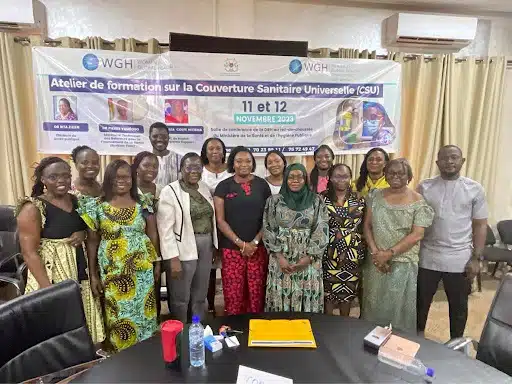
    To gain a better understanding of UHC in order to equip its members in advocating towards achieving global and national UHC goals, WGH-BF organized a two-day UHC-focused training workshop on November 11 and 12, 2023. This training was facilitated by the ST-RFS. The training was held in-person and online and opened to members of WGH-Burkina Faso and other West African French-speaking sister chapters. Over 35 women learned about what constitutes the UHC at national, regional and international levels, its key components, the role of gender, and the associated challenges and opportunities. The training also included practical sessions on developing key messages on UHC, providing the participants with the tools to effectively communicate the importance of UHC. This was found to be essential for raising awareness, building public support, and driving positive changes towards UHC. The training also fostered regional collaboration and networking among members of different Francophone West African chapters, strengthening the collective voice in advocating for UHC. This collaboration facilitates sharing of best practices and experiences across diverse contexts, which is crucial to overcoming common challenges and advancing UHC in a coordinated effort across the region. 

    WGH-BF participants to the UHC training and the facilitators (Dr Pierre Yameogo, ST-RFS; Dr Rita Zizien, Health Specialist and Dr Basilia Coefe Nitiema, Health Specialist), Ouagadougou, November 2023

    Conducting a study on UHC and gender in Burkina Faso

    WGH-BF researchers are currently conducting a study with an external consultant’s support to explore how gender is taken into account in current UHC policies in Burkina Faso, following a health system approach to understand the current situation and formulate evidence-based recommendations as part of the country’s efforts towards UHC. The study has been approved by the Burkinabe Ethical Committee for Health Research and results will be disseminated through a scientific paper and policy briefs.

    In 2023, WGH-BF established local partnerships with UNICEF and UNFPA, allowing them to hold technical consultations on gender-responsive UHC. An audience with the WHO office in Burkina Faso, provided a platform to share experiences and discuss potential partnerships. 

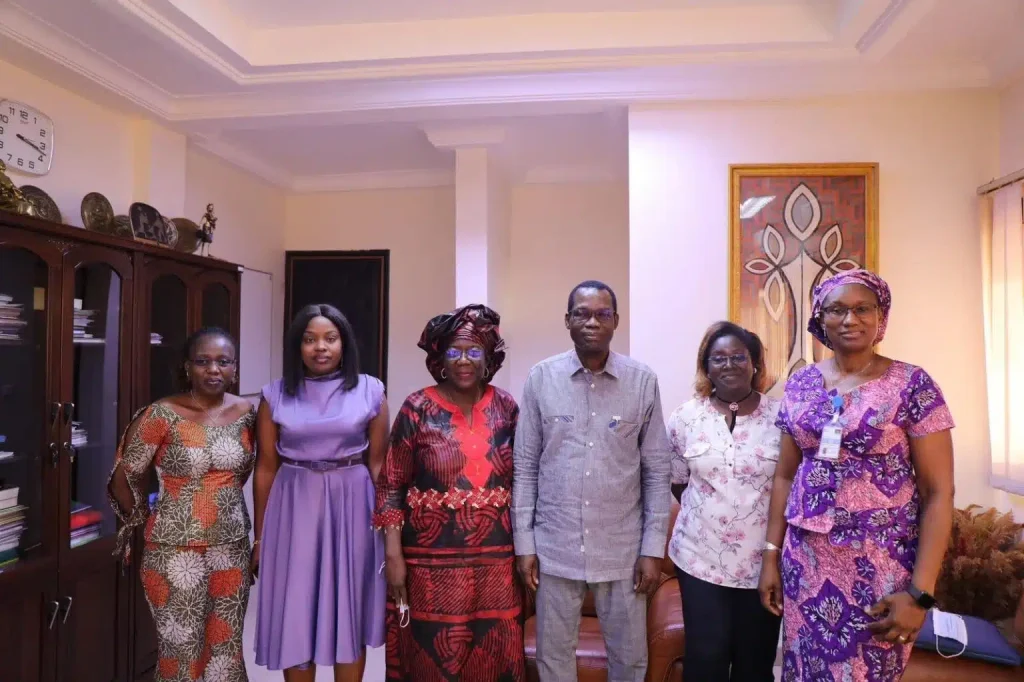
    Partnership visit at UNICEF by WGH-BF members, Ouagadougou, April 2023

    Engaging in global health events to support Women in Global Health advocacy efforts for gender transformative health systems and UHC

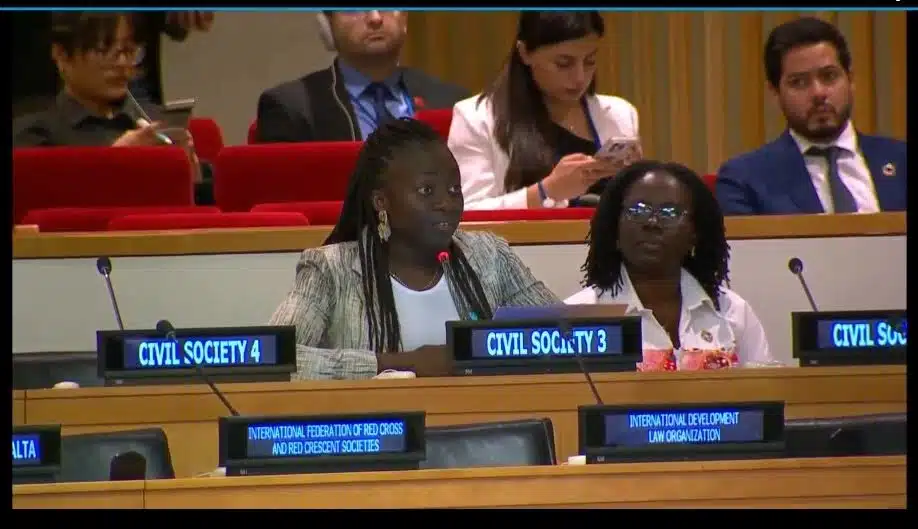
    WGH-BF actively participated in global forums such as  the World Health Assembly (WHA) and the United Nations General Assembly (UNGA). In may 2023, Dr Marie Madeleine Rouamba, the Burkina Faso Chapter coordinator, participated in the 76th WHA where she supported WGH advocacy efforts and facilitated a meeting between WGH global executive team and the Burkina Faso MoH. This was a key advocacy opportunity with the top public health official in Burkina Faso. The chapter also participated in the high-level meeting on UHC and human rights in 2023, held during the 78th UNGA in New York. During that event,  Bibata Wassonguema, a member of the WGH-BF executive team, delivered a statement on behalf of the Alliance for Gender Equality and UHC, to call for gender-responsive policies and UHC. 

    WGH chapter representatives including Bibata Wassonguema at UNGA, New York, September 2023

    WGH-BF was represented at UNGA 2024, placing a high priority on issues relating to UHC and the commitments made by the various national governments.

    Bibata Wassonguema delivering the statement at UNGA78, UN headquarters, New York, September 2023

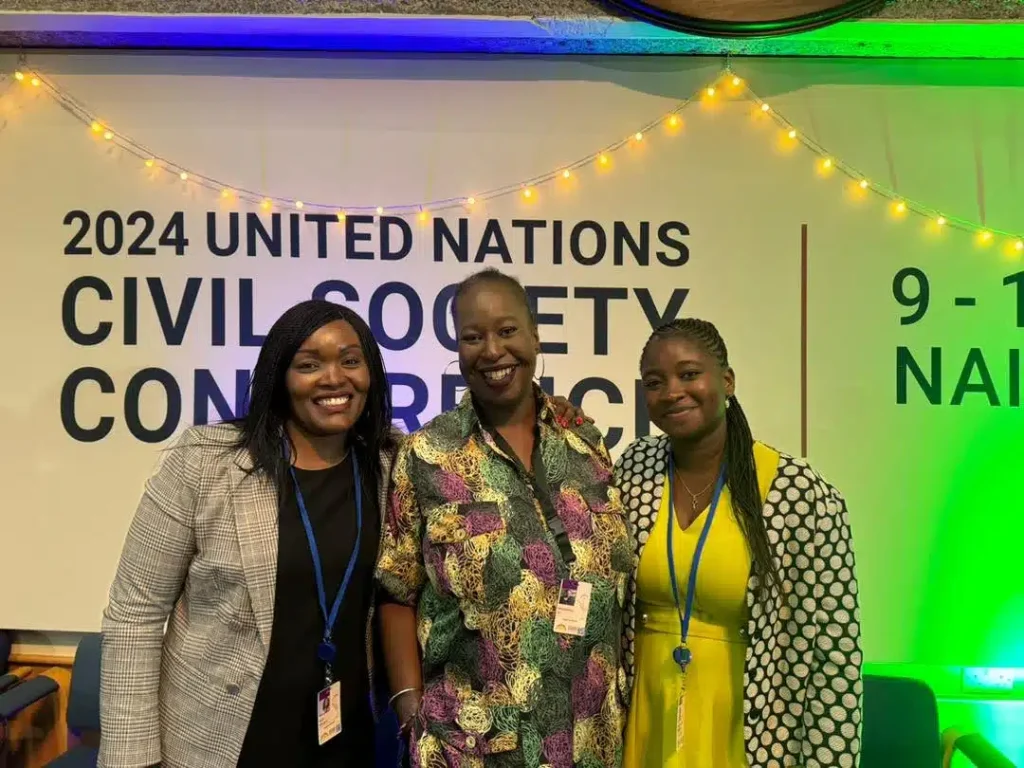
    At the UN Civil Society Conference in Nairobi in May 2024, WGH-BF was represented by Habibou Ouedraogo, the focal point of the chapter UHC-related activities, to champion the cause of equity and rights in global health, highlighting the urgent need to ensure a future where health is gender-sensitive and universally accessible. 

    Habibou Ouedraogo at the UN Civil Society conference in may 2024 together with WGH members from Kenya and Senegal, Nairobi, May 2024.

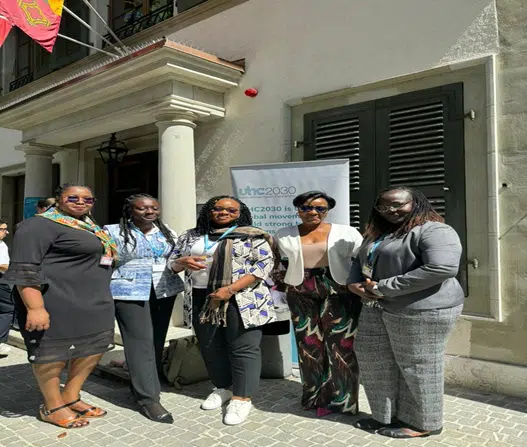
    WGH also took part in the 77th WHA in Geneva in May 2024, where several sessions (in which its members took part) focused on achieving UHC by 2030.

    WGH-BF chapter representatives at WHA, Geneva, May 2024

    Challenges and opportunities

    Achieving UHC in Burkina Faso means addressing challenges through opportunities, given the country’s socio-cultural, economic, security and health context. In terms of challenges, inequalities in access to healthcare, and more specifically access to sexual and reproductive health services for women, the under-representation of women in healthcare decision-making and economic disparities between genders continue to have a negative impact on the achievement of UHC. By addressing these gender-related challenges in a context of insecurity, Burkina Faso can create a more inclusive and equitable healthcare system, improving health outcomes for men and women across the country. 

    Opportunities revolve around the Burkinabe government’s strong commitment to implementing health policies in Burkina Faso that are increasingly gender-focused, and the promotion of women’s leadership through their growing participation in the decision-making process. This last component encourages greater consideration of women’s needs in the development and implementation of health policies.

    WGH-BF is focusing its efforts on initiating effective advocacy for the integration of a gender perspective into the implementation of the UHC. WGH-BF is working to address the aforementioned challenges of access to quality health services for all to ensure UHC for the entire population. An integrated approach that addresses gender disparities strengthens health systems, making them more inclusive and accessible. Ultimately, the real achievement of the country remains the attainment of sustainable UHC by being better prepared to respond to health emergencies.


    References

    [1] RGPH 2019, INSD

    [2] Annuaire statistique 2023, Ministère de la santé

    [3] Annuaire statistique 2023, Ministère de la santé

    [4] Annuaire statistique 2023, Ministère de la santé

    [5] Comptes nationaux de la santé 2022, Ministère de la santé

    [6] Indicateurs pour la région Afrique, OMS 2020

    Achieving UHC in India: The way forward can only be gender-responsive

    There is no blueprint for UHC that can be applied equally to all country contexts . Although health ministries typically lead on UHC, the definition in the SDGs includes prevention, health promotion and emergency preparedness measures so implementation must include the whole of government. UHC is a political choice and will be dependent on national negotiations on the social, political and commercial determinants of health, and critically, the gender determinants of health. 

    UHC will not be achieved anywhere without addressing gender equality, women’s rights and the role of women in the health workforce.


    WGH India, an advocate for women health workers

    Since 2019, the WGH India Chapter has been actively working on key issues related to women in health and women’s health. WGH India seeks to amplify the experiences and knowledge of women working in the health sector, particularly frontline workers, and marginalized vulnerable groups, through dialogues, research, and advocacy efforts. The Chapter is growing a movement to demand the advancement of women’s leadership in the health sector in India. Currently, WGH India comprises more than 180 members, which include nurses, midwives, doctors, public health professionals, health policymakers, researchers, and private-sector health workers. Since January 2022, WGH India has been hosted at SAATHII (Solidarity and Action Against The HIV Infection in India), New Delhi.


    Quick Facts: India

    India is the most populous country in the world, with a population of 1.4 billion and a population growth rate of 0.68%. [1] For every 100 girl babies born, 108 boys are born, indicating the presence of femicide. [2] The median age of the population is 28 and the average life expectancy is 67 years. Ten percent of the population lives on $2 a day. [3] Sixty-five percent of the country’s population lives in rural areas. [4]

    Progress has been made in some health areas: almost 90% of births are now attended by skilled attendants and the maternal mortality rate has fallen to 97 per 100,000 births. The UHC Service Coverage Index was at 63 out of 100 in 2021. The main cause of death is now from non-communicable diseases. [5]

    In relation to gender equality, key indicators to note include:

    • Girls’ completion rate for primary education was over 90% in 2016, however, only 40% completed upper secondary. [6]
    • Women’s participation in the workforce is 23%. [7]
    • Only 15% of national parliament seats are held by women. [8]

    In the health sector, women average around 28% in leadership roles across national health organizations, with the exception of the Nursing Council which has a majority female membership and 75% of women in leadership roles. However, averages can be misleading and some organizations such as the Pharmacy Council of India have almost no women in leadership positions.

    India is committed to achieving Universal Health care for all by 2030. To achieve this goal, improving the health of women and girls is critical. Health equity is intrinsically linked to gender equality.

    Women and girls in India lack access to essential health services. They have specific health needs that often go unaddressed. Failure of national health policies to properly reflect the interests and needs of women and girls prevents the securing of UHC in India. UHC discussions risk forgetting that gender equality and women’s rights drive health for all. 


    WGH India’s effort to promoting gender-responsive UHC

    Engaging with G20

    • WGH India made their voice heard at the G20 event, hosted by India.  At the national level, the WGH India team participated in four G20/C20  events in Pune, Nagpur, Faridabad, and Bhubaneswar, advocating for women’s leadership   in healthcare and highlighting the challenges faced by Community Health Workers in India.  
    • Working with the G20/C20 Gender Equality and Disability Working Group WGH India gave a keynote address during C20 GED Working Group Meeting on Role of Women  in Community Health and Development, in Pune.  WGH India members actively participated in the GED Working Group Summit, held in April in Bhubaneswar.  
    • WGH India’s presence was also seen in the W20 event held in February in Aurangabad


    Membership engagement resulting in collaborative efforts:

    • Diverse women leaders and  advocates  from the WGH India community collaborated and submitted recommendations on the draft Menstrual Health and Hygiene Policy formulated by the Ministry of Health and Family  Welfare, India in October 2023.
    • Through other collaborative efforts between members WGH India submitted a letter to the Ministry of Women and   Child Development, for inclusion of anemia and disability in the National Family Health Survey (NFHS)-6 in August 2023.


    76th WHO SEARO Regional Committee Meeting: 

    WGH India sent a delegation to the WHO SEARO Regional Committee Meeting. advocating for gender equity in health within the region.

     During the meeting, WGH India Chapter issued two statements, both written and oral, on integrating Sexual and Reproductive Health and Rights (SRHR) interventions into Universal Health Coverage (UHC) strategies and prioritizing the welfare of women health workers and enhancing their capacities to effectively deliver UHC.[  Written Statement | Oral Statement ]

    Participation in the Gender & UHC Webinar organized by WGH on 12th December, “Time for Action: Bridging the Gap for Gender-Responsive Universal Health Coverage” on UHC  day.

    During the discussion, WGH India’s Arushi Raj,  articulated challenges and strategies for establishing  gender-responsive Universal Health Coverage from an Indian perspective.

    Gender & UHC Coalition: 

    • WGH India has been building on the idea of creating a short-term  coalition with organizations working on Gender and UHC in India and eventually developing  a community of practice around it. Currently, they are working on identifying key priorities and   have initiated conversations on potential collaboration with Gender Collab (led by Oxford Policy Management & QuickSand). 

    Members’ Consultation to co-develop WGH India Strategy Document, October 2023:

    • 18  members joined the consultation to begin working on a Strategy document for WGH India,   which will lay out the key priority areas for WGH India to work within research, advocacy,  social media engagement, grant writing and partnership building space, with an emphasis   on UHC and gender equity as our current area of work. 

    Webinar on Health for All: 

    • Advancing Gender-Responsive Universal Health  Coverage (UHC) in India, a webinar on   December 14th, bringing together a rich and diverse panel to identify key priorities and   strategies for developing Gender-Responsive UHC in India. 

    76th World Health Assembly (WHA), Geneva, May 2023 

    • WGH India was part of the WGH Delegation and participated in the panel discussions and  bilateral meetings with various countries to advocate and support for incorporating gender responsive language in national policies, guidelines, and other relevant documents. 
    • WGH India joined a distinguished panel on SRHR as a vital component of Universal Health Coverage. These discussions were critical to informing the   ground realities for the framing of UHC Political Declaration.

    78th United Nations General Assembly- High-Level Meeting (UNGA-HLM), New York September 2023

    • WGH India as part of WGH delegation participated in level health-related meetings, engaged in various bilateral meetings with member state  delegations and spoke in several plenary sessions, including a crucial discussion hosted by  Alliance for Gender Equality and UHC.

    Conclusion

    For universal health coverage, “leave no one behind” means that countries should prepare equitable and gender-responsive health systems that consider the interaction of gender with wider dimensions of inequality, such as wealth, ethnicity, education, geographic location and sociocultural factors and implement them within a human rights framework.

    With 51 gender-specific indicators across the 17 UN Sustainable Development Goals (SDGs), the link between health and gender cannot be understated.  As evident in SDG 5(on gender equality), Target 5.5 emphasizes women’s participation and equal leadership opportunities, recognizing their impact on health outcomes. Target 5.6 aims for universal access to sexual and reproductive health, acknowledging the essential connection between gender equity and sustainable development. The SDG targets and indicators directly or indirectly address health inequalities, illustrating how gender equality is crucial for a strengthened health system. 

    Gender equality isn’t just a goal; it’s a key driver of progress in creating gender responsive health systems, ultimately achieving UHC. 

    References

    [1] United Nations, Department of Economic and Social Affairs, Population Division. World Population Prospects 2022.[Internet]. United Nations; 2022

    [2] Ibid

    [3] World Bank. Poverty and Inequality Platform[Internet]. World Bank; 2022. Available at: https://pip.worldbank.org/home

    [4] Ibid

    [5] World Health Organization. Global Health Estimates 2020: Deaths by Cause, Age, Sex, by Country and by Region, 2000-2019. Geneva, World Health Organization; 2020. Available from https://www.who.int/data/gho/data/themes/mortality-and-global-health-estimates/ghe-leading-causes-of-death 

    [6] UNICEF, State of the World’s Children 2023. Data set; 2023 Available at https://data.unicef.org/resources/sowc-2023/

    [7] International Labour Organization. ILO Stats: Statistics on Women. International Labour Organization; 2023. Available at:https://ilostat.ilo.org/topics/women/ 

    [8] OECD. Social Institutions & Gender Index. OECD Development Centre; 2023. Available at https://www.oecd.org/stories/gender/social-norms-and-gender-discrimination/sigi?country=IND  


    Women in Global Health Kenya: Gender Responsive Health Systems as Key to UHC

    “We commit to a Future led by HER: Health, Equity, Rights,” said Dr. Ruth Mbugua of the Women in Global Health Chapter in Kenya, representing the women-led movement at the United Nations Civil Society Conference (UNCSC) in Nairobi in May 2024. “A future that is healthy and equitable, where women and girls have the right to bodily autonomy.” WGH Kenya is committed to playing its own role. Established in 2022, the chapter has 130 members, advocating for gender equality and health workforce issues are prioritized in UHC discussions. 

    Progress in Kenya

    Kenya has taken some steps towards addressing gender disparities in health. This reflects a recognition of the importance of gender considerations in creating a more equitable health system. Kenya’s National Policy on Gender and Development, promotes women’s health access, and the draft Health Sector Gender and Equality Policy aims for equitable healthcare utilization and outcomes. The ongoing Gendered Health Pathways Project further highlights Kenya’s commitment to identifying and dismantling gender biases within the health system.

    WGH Kenya has been actively working along multiple fronts, with focus on integrating gender-responsive approaches within the national health systems. In April 2023, WGH Kenya launched the UHC in-country project, and contributed to the WGH She Shapes: The State of Women and Leadership in Global Health report, engaging with stakeholders from government and civil society on an ongoing basis. 

    Developing and Disseminating National Priorities

    In February 2023, WGH Kenya, in consultation with the Kenya UHC secretariat, held multiple discussions to craft messages on UHC and gender equality. These messages were then disseminated amongst the 47 county health ministers with the support of the UHC secretariat. Key messages on UHC drafted to advance advocacy in the lead up to the High-Level Meeting were also disseminated at the Kenya Healthcare Students Summit (KEHSS)  and the National High-Level Dialogue on Health Financing in 2023. 

    Engaging National Leaders

    Throughout 2023, WGH Kenya also collaborated with the Kenya Ministry of Health to engage all 47 counties on UHC and gender equality. This initiative included speaking opportunities at coordination meetings with county ministers of health in Machakos, Eldoret, and Embu. The groundwork laid in these meetings is expected to open doors for future policy and training support requests from counties on designing and implementing gender-responsive policies. 

    Engaging with High-Level Political Fora

    WGH Kenya took part in the the 76th and 77th World Health Assembly in Geneva, highlighting the need to develop policies that take into consideration the gendered aspects of health, particularly within the health workforce, where 67% of workers are women, but only 25% hold leadership positions. 

    Recently at the 78th United Nations General Assembly, WGH Kenya representative Dr. Marie-Claire Wangari delivered a statement at the High-Level Meeting on Pandemic Preparedness, Response, and Recovery, emphasizing the need for gender-responsive policies that provide health workers with a safe and decent working environment.

    Impact and call to action

    The continuous advocacy by WGH Kenya has contributed to raising the awareness of  county health leadership of the need to prioritize gender equity in health as a precondition of achieving UHC. This shift is evident in the new policies supporting UHC enacted by the Kenyan government.

    Through our initiatives, in-country advocacy, partnerships with organizations like Amref and Kenya Medical Association, and raising our voices at international fora like the UN Civil Society Conference, WGH Kenya is doing its bit to contribute to the global movement for UHC, promoting gender equality within the health workforce and ensuring that women’s health and leadership are at the forefront of health policy and practice in Kenya.

    As Dr Susan Mambo urged, representing WGH Kenya at the 77th World Health Assembly: 

    “We need to focus on strengthening health systems that are responsive to gender aspects.” 

    Dr. Susan Mambo’s call to action at the 77th World Health Assembly underscores the critical need for policymakers to prioritize the integration of gender considerations into health system strengthening. By recognizing that health systems must be responsive to the diverse needs of all genders, policymakers can ensure that services are equitable, accessible, and tailored to address the unique health challenges faced by different populations. This approach not only enhances the overall effectiveness of health systems but also promotes inclusive health policies that can lead to improved health outcomes for women, men, and marginalized communities alike. A gender-responsive health system is essential for fostering resilience and adaptability, particularly in the face of public health emergencies and shifting demographic trends.

    To achieve this vision, policymakers must adopt a multi-faceted strategy that includes collecting and analysing disaggregated health data, implementing gender-sensitive health programs, and allocating resources to support initiatives that address gender-based health disparities. Furthermore, engaging stakeholders, including women’s health advocates and community organizations, in the decision-making process can help ensure that policies reflect the real needs and experiences of those they aim to serve. This commitment by policymakers will create a more equitable health landscape that not only improves individual health outcomes but also strengthens the overall health system, paving the way for sustainable development and enhanced well-being for all.

    Shilpa Drakshi on gender-based violence against women health workers in India

    As part of Women in Global Health’s 16 Days of Activism Against Gender-Based Violence (GBV) campaign, #WomenUnderFire, we spotlight Dr. Shilpa Drakshi, Assistant Professor at the School of Public Health, JSS University (Jagadguru Sri Shivarathreeshwara University, India), and a public health advocate deeply committed to addressing systemic issues faced by women health workers in India.

    Witnessing Challenges Firsthand

    “As a public health professional, over the years I have observed the numerous challenges that health workers in India face, particularly regarding gender-based violence. Through my extensive work with grassroots health initiatives, including the National Health Mission and various immunization campaigns, I have gained a deep understanding of the systemic issues that make women health workers vulnerable. These individuals, often the frontline defenders of public health in remote and underserved areas, are frequently subjected to harassment and violence.

    They [Women health workers] endure long, arduous journeys on foot while carrying heavy registers, and are often too intimidated by the hierarchy to voice their concerns. This fear prevents them from speaking out about issues, as they find the system unaccommodating. 

    They struggle to maintain a work-life balance, often sacrificing their own health to meet their professional obligations. This not only affects their personal well-being but also hampers the overall effectiveness of health delivery.”

    Harrowing Experiences of Women Health Workers

    “In my role, I have encountered numerous instances where women health workers have shared their harrowing experiences of gender-based violence. These incidents range from verbal abuse to physical assaults, often perpetuated by the very communities they serve.

    Despite their critical role in improving health outcomes, these workers face cultural and societal barriers that undermine their safety and dignity. The lack of adequate support systems and protective measures further exacerbates their plight, leading to a high turnover rate and a demoralized workforce. This issue is not just a matter of personal security but also one of public health, as the safety of health workers is intrinsically linked to the quality of care they can provide.”

    A Call to Action

  • Robust Policy Framework:
    Establishing a robust policy framework that ensures the safety and protection of health workers, with strict penalties for perpetrators of violence and advocate for stronger laws and regulations specifically addressing violence against health workers.
  • Community Sensitization:
    Conducting regular training programs to sensitize communities about the vital role of women health workers and implement awareness campaigns to educate the public on their value and contributions.
  • Support Network for Health Workers: 
    Establishing a support network that includes counseling services, legal assistance, and peer support groups to offer emotional, psychological, and legal support to health workers facing violence.
  • Workplace Safety Measures:
    Developing and enforcing security protocols to protect health workers, especially those in high-risk areas, and implement confidential, accessible reporting mechanisms for incidents of violence without fear of retribution.
  • Training and Empowerment Programs:
    Developing programs that empower women health workers with skills and knowledge to protect themselves, including offering self-defense training.
  • Collaboration with NGOs and Community Leaders:
    Collaborating  with non-governmental organizations (NGOs) and community leaders to create a supportive environment for health workers, engaging them to champion health worker safety and address cultural norms perpetuating violence.
  • “Addressing gender-based violence against health workers requires a comprehensive and multi-pronged approach. By implementing these actions, we can create a safer and more supportive environment for women health workers. This will enable them to continue their indispensable work without fear of violence or discrimination, ultimately leading to better health outcomes for the communities they serve. Ensuring the safety and well-being of these workers is not just a moral imperative but a critical component of a functional and effective health system.”

    Sabreen Abeedallah on the violence faced by Palestinian women health workers

    As part of Women in Global Health’s 16 Days of Activism Against Gender-Based Violence (GBV) campaign, #WomenUnderFire, we spotlight Sabreen Abeedallah, a Palestinian activist and leader in Sexual and Reproductive Health (SRH). Sabreen works as the Focal Person for SRH Interventions at the Palestinian Medical Relief Society (PMRS), where she designs and implements health programs that address the needs of women and youth. With advanced studies in Women’s Public Health and extensive training in SRH and GBV, Sabreen has dedicated her career to improving health outcomes amidst the challenges of conflict and occupation.

    Witnessing Violence in Health Work

    Sabreen’s insights shed light on the often-overlooked violence endured by Palestinian women health workers. “Women working in the health sector face numerous forms of violence,” she explains. “Doctors, nurses, midwives, and paramedics are frequently subjected to physical assaults and verbal abuse by Israeli occupation forces. Many have tragically lost their lives while striving to provide humanitarian services.”

    But the violence doesn’t stop at the workplace. For Sabreen and countless other Palestinian women, the journey to work is a harrowing ordeal. Traveling between governorates often requires navigating military checkpoints, where delays, harassment, and restrictions are routine.

    “A journey that once took an hour now takes four hours, at best,” Sabreen shares. “The issue is not just about wasted time. The humiliation and fear we endure at checkpoints are forms of violence that leave deep psychological scars.”

    The Hidden Impact of Psychological Violence

    This daily ordeal is a silent, pervasive form of GBV. “The violence we face at checkpoints is not just physical—it’s psychological,” Sabreen explains. “It’s the uncertainty that haunts us. Will we reach our workplace? Will we return home? Will we be stopped, harassed, or assaulted for no reason?”

    This type of violence creates a constant state of anxiety and fear, turning each checkpoint into an obstacle not just of mobility, but of dignity and humanity.

    What needs to change?

    Sabreen calls for a global response to address the systemic violence against Palestinian women health workers:

  • Safeguarding Women in Healthcare:
    International organizations and NGOs must prioritize the safety of women health workers. “We need confidential reporting systems and measures that protect women from violence and harassment,” she stresses.
  • Recognizing Psychological Violence:
    Psychological trauma caused by constant uncertainty and humiliation must be acknowledged as a form of GBV. “Mental health support for health workers is critical,” Sabreen emphasizes.
  • Global Solidarity and Advocacy:
    The international community must hold perpetrators accountable and demand systemic changes to protect Palestinian women health workers.
  • A Call to Action

    Sabreen’s leadership and activism remind us that women health workers are the backbone of health systems, especially in conflict zones. Their safety and dignity are paramount, not only for their well-being but for the resilience of the communities they serve.

    We join Sabreen in calling for bold and transformative actions to safeguard and support women health workers in Palestine and beyond. Together, we must ensure that their voices are heard and their rights upheld.


    Here is her full interview account in Arabic: 

    تواجه النساء العاملات في القطاع الصحي أشكالاً عديدة من العنف، والذي أدى في كثير من الأحيان إلى وفاة العديد منهن، من طبيبات، ومسعفات، وممرضات. تعرضت الكثير منهن للاعتداء بالضرب والإهانة على يد الاحتلال الإسرائيلي فهن يعملن تحت تهديد مستمر، يخاطرن بأرواحهن لتقديم الخدمات الإنسانية.

    العنف الذي أود الحديث عنه قد يبدو مختلفًا عما يتحدث عنه الآخرون، لكنه عنف لا يمكن تجاهله، خاصة عندما نتحدث عن العنف الجامح الذي تواجهه النساء الفلسطينيات بشكل عام. مقارنةً بهذا العنف، قد تبدو بعض الأمور أقل أهمية، لكنها ليست كذلك. فهذا النوع من العنف هو عنف جسدي ونفسي شديد الأثر على المرأة العاملة، خصوصًا في القطاع الصحي والتنموي، في ظل الظروف الإنسانية الصعبة.

    هؤلاء النساء اللواتي يضطررن للتنقل بين المحافظات يعانين من التوتر و التعنيف المستمر على الحواجز. ففي حين كانت الرحلة تستغرق ساعة ذهابًا وساعة إيابًا، أصبحت اليوم، في أفضل الأحوال، تأخذ أربع ساعات في اتجاه واحد. المشكلة ليست فقط في الوقت المهدور أو الآلام الجسدية الناتجة عن التنقل الطويل، بل المشكلة الأكبر تكمن في الإذلال النفسي على الحواجز.

    إنها معاناة تتجلى في الحرب النفسية التي تعيشها النساء. عنف عدم المعرفة بما سوف يحيط بهن في كل خطوة: هل ستصل إلى عملها؟ وإذا وصلت، هل ستتمكن من العودة إلى منزلها؟ هل ستُمنع من العبور لأي سبب؟ أو ربما تتعرض للضرب والإهانة دون أي مبرر؟

    هذا النوع من العنف يجعل كل حاجز عقبة مليئة بالخوف والترقب، خوف من أن تُوقف أو تُهان أو تُضرب لأي سبب كان. هو عنف يترك أثره العميق، ليس فقط على الجسد، بل على الروح أيضًا.

    Edith Chinonye on addressing gender-based violence against women health workers

    As part of Women in Global Health’s 16 Days of Activism Against Gender-Based Violence (GBV) campaign, #WomenUnderFire, we spotlight Edith Chinonye from Nigeria. Edith is a dedicated Nurse-Midwife with a background in International Public Health. Currently working in humanitarian leadership within an international organization, Edith combines her professional expertise and advocacy to fight for the rights of women health workers globally.

    Witnessing GBV Against Women Health Workers

    For Edith, GBV against women health workers is not just a professional issue—it’s a personal and systemic challenge that affects every aspect of health systems.

    “Gender-based violence against women health workers is a silent endemic, stealing away the valuable contributions of women health workers in our society,” Edith explains. “It is a suffering inflicted on individuals who are meant to alleviate suffering. This violence robs the health system of well-being and undermines health delivery.”

    Edith has witnessed GBV take many forms: from subtle undermining comments and dismissive looks to more overt forms of abuse. “It is a silent form of oppression, clothed in purple linings, easy to ignore and get away with,” she shares. “Women health workers in all roles—whether leadership, managerial, or supporting—have a story to tell. This violence is on every street, in workspaces, health centers, just everywhere.”

    What makes this issue particularly insidious, Edith notes, is that GBV is often perpetrated by those expected to end it. This paradox reinforces its silent, pervasive presence in health environments.

    What needs to change?

    Edith is clear: combating GBV against women health workers requires an urgent and comprehensive approach that addresses the evolving nature of this violence. “GBV is becoming modernized,” she says. “It’s changing shape every day, making it seem harmless, but it’s anything but.”

    Edith proposes the following strategies for systemic change:

    • Active Safeguarding:
      Tackling GBV requires collective action and a willingness to make sacrifices. Safeguarding efforts must include everyone, leaving no one behind.
    • Cultural Transformation:
      “We must enforce a culture of mutual respect in workplaces,” Edith emphasizes. Addressing power imbalances and undervaluing women health workers is critical. Policymakers, leaders, and change-makers must lead the charge to reshape societal norms.
    • Active Advocacy and Male Partnerships:
      Edith highlights the importance of engaging men in the fight against GBV. “We need strong male alliances, community involvement, and continuous awareness campaigns to shift perceptions and attitudes,” she says.
    • Empowering Women Health Workers:
      “We must refuse to get used to abuse,” Edith declares. Empowering women health workers to recognize and reject violence is a vital step toward creating safer environments.

    A Call to Action

    As a health professional and humanitarian leader, Edith is deeply committed to advocating for safe work environments, equitable treatment, and systemic change. “We need an active push to tackle GBV at all levels. No one can change something they are used to,” she insists.

    Edith’s call to action is clear: “We must prioritize the safety and dignity of women health workers. It is not just their fight; it is a fight for the entire health system and the well-being of communities they serve.”

    Join us in amplifying Edith Chinonye’s voice and advocating for the protection and empowerment of women health workers worldwide. Together, we can build a safer, more equitable future for health systems.

    Women Under Fire: Dr. Mariam Dahir on safeguarding women health workers

    As part of Women in Global Health’s 16 Days of Activism Against Gender-Based Violence (GBV) campaign, #WomenUnderFire, we’re amplifying the voices of women healthcare workers who face violence while serving their communities. Today, we share the experience and perspective of WGH’s Senior Program Officer Dr. Mariam Dahir, a medical doctor and health systems strengthening specialist from Somalia.

    Witnessing GBV on the Frontlines

    “From my experience as a health worker and program manager implementing programs in Somalia, I have witnessed the immense challenges faced by women healthcare workers regarding gender-based violence (GBV). One major issue is the absence of hotlines or formal reporting mechanisms, leaving these women with nowhere to turn if they experience GBV.

    Despite being the first responders to GBV cases, the services available to address these issues often exclude sexual exploitation and harassment, depriving women healthcare workers of safe spaces to report such incidents. Additionally, working on the frontlines in a context marked by protracted conflict, climate shocks, and emergencies increases their vulnerability to violence, with limited protection measures in place.”

    What Needs to Change?

    Ending violence against women healthcare workers requires significant systemic and cultural shifts. Dr. Dahir highlights three critical areas for action:

  • Strengthening Policies and Legal Frameworks:
    Policies and legal frameworks must be developed and enforced to ensure the safety of women healthcare workers. This includes establishing hotlines and confidential reporting mechanisms to provide accessible and safe avenues for support.
  • NGOs and International Organizations Must Prioritize Safeguarding:
    International NGOs implementing programs in Somalia have a significant role to play in prioritizing safeguarding at every level. Programs must include comprehensive measures to prevent and address sexual exploitation and harassment, ensuring that GBV services also protect women healthcare workers.
  • Creating Safer Work Environments:
    Accountability, targeted training, and strengthened enforcement of policies are essential to building safer workplaces. Women healthcare workers are the backbone of healthcare systems, and their workplaces must recognize their contributions and protect their well-being.
  • A Global Call to Action

    We call on governments and global organizations to take bold, transformative action to safeguard and support women health workers. Their well-being is critical not only for their individual safety but also for the health and resilience of communities in the world’s most challenging environments.

    Together, we must prioritize their protection and invest in their empowerment. When women health workers thrive, entire communities flourish. Join us in standing with these courageous women and advocating for their safety and dignity.


    #WomenUnderFire: Join the Movement to Protect Women Health Workers

    As the 16 Days of Activism Against Gender-Based Violence begins on November 25th, Women in Global Health (WGH) is proud to launch our campaign, #WomenUnderFire, to spotlight the violence faced by women health workers across the globe. These professionals form the backbone of health systems and often work under dire and unsafe conditions—from conflict zones to underserved communities—where their own safety is at risk.

    Violence is a daily reality

    From kidnapping and sexual violence to harassment and attacks on health facilities, women health workers endure disproportionate risks compared to their male counterparts. Many operate in environments where protections fail, accountability is scarce, and systemic violence persists. This must change.

    Join us in action

    This campaign demands transformative action to address systemic violence, enforce institutional safeguards, and foster inclusive, resilient health systems. We call on global leaders and institutions to uphold international protections, bring perpetrators to justice, and implement zero-tolerance policies against violence.

    To kick off the campaign, we invite you to our webinar:

    Webinar: Safe Spaces in Crisis – Protecting Women Health Workers Against SEAH
    Date: November 26, 2024
    Time: 07:00 AM UTC
    Register here: Link

    Organized with WGH chapters across The Philippines, Bangladesh, Pakistan, Ethiopia, Nigeria, Zambia, Mali, Burkina Faso, and Somalia, this event highlights the urgent need for action to prevent Sexual Exploitation, Abuse, and Harassment (SEAH) in crisis contexts.

    Be part of the campaign

    Access our social media toolkit to amplify the voices of women health workers and advocate for their safety. Share your stories, challenge systemic violence, and demand justice. When women health workers are safe, communities thrive.

    This campaign is not just a call for awareness—it’s a rallying cry for accountability, investment, and transformative change. Together, we can inspire meaningful action and create a world where women health workers can carry out their vital roles without fear.

    Join our campaign


    Women in Global Health advocates for inclusive health governance at WHO Regional Committee for Europe

    Women in Global Health (WGH) joined actors from across the region at the 74th Session of the WHO Regional Committee for Europe (October 29-31) in Copenhagen, Denmark, advocating for a more inclusive, transparent, and equitable health governance framework. As signatories of the Joint Statement on the NSA Engagement Plan, WGH reinforced our commitment to strengthening participatory governance in health—an approach that is crucial for addressing widening health disparities and ensuring resilient health systems.

    Representatives from WGH Denmark joined the discussions on governance and leadership, held on October 30, to highlight the critical importance of gender diversity in health policy-making. WGH’s signature on this Joint Statement reflects our organizational dedication to creating systems that prioritize patient rights, social participation, and the inclusion of underrepresented voices—especially women, girls, and other marginalized communities who are disproportionately impacted by health inequities.

    The NSA Engagement Plan, introduced at this Regional Committee session, outlines a roadmap for embedding civil society perspectives into health policies. The plan, informed by Non-State Actors’ input, is a step toward fostering meaningful collaboration between WHO Europe and civil society, grounded in the values established by the World Health Assembly’s recent resolution on social participation. WGH strongly supports this Plan as a vehicle for making diverse voices—those of patients, health workers, caregivers, and advocates—central to health policy and governance.

    We join fellow signatories in urging WHO Europe and Member States to dedicate sustainable funding for civil society organizations, ensuring that their contributions are not only welcomed but also supported over the long term. This is essential to creating resilient health systems that address the unique needs of women and other marginalized groups.

    WGH is committed to working alongside WHO and our partners to make this Engagement Plan an actionable framework that drives equity and inclusivity in health policy. We thank WGH Denmark and all our partners who championed this message at the Regional Committee, amplifying the call for health systems that reflect and respond to the needs of all.

    Webinar: Gender-Responsive Health Supply Chain Systems: Are We There Yet?

    On October 29 at 12:00 UTC, we hosted a lively discussion on a topic that doesn’t always get the spotlight it deserves—integrating gender considerations in pharmaceutical supply chains.

    As we work toward universal health coverage, ensuring everyone has access to essential medicines is key. But did you know that gender biases in supply chains can impact health outcomes for women and marginalized groups? Our latest webinar dove into the vital roles women play across the supply chain and unpacked the unique challenges they face, especially when it comes to leadership and decision-making roles.

    Event Snapshot:

    This session shed light on practical ways to make supply chains more gender-responsive. Our fantastic panel of experts shared strategies for bridging gender gaps and highlighted why women’s leadership is crucial for creating supply chains that better serve everyone, especially women and children. While policies are in place, our speakers reminded us that the true challenge lies in turning these policies into real, meaningful change.

    A huge thank you to our speakers and the audience for keeping the conversation engaging and forward-thinking! If you missed it, you can catch the full recording in EnglishFrenchSpanish, and Portuguese on our official YouTube page.

    Women in Global Health Board Chair Statement

    Effective October 15th, Emilia Caro will step in as the new interim Board Chair of Women in Global Health (WGH). The Board is now entirely composed of exceptional women leaders from WGH chapters worldwide. We are grateful to Dr. Jeffrey Mecaskey for his leadership as interim Chair during the organization’s period of transformation.

    Emilia is the Co-founder and lead of the WGH Argentina Chapter, joining the WGH Board in September 2024. She is a healthcare leader and advocate for gender equity, with extensive experience in health management, strategic alliances, and innovation in the health tech sector. Read more about Emilia here.

    We confidently move forward, proud of our organisation’s achievements, team, and strong movement. This important step in our evolution is especially welcome as we prepare to celebrate 10 years of Women in Global Health in 2025.

    We thank our Chapters and all our partners for their vital support in ensuring that Women in Global Health thrives and can continue to deliver on its mission of achieving gender equity in all health systems everywhere.

    For more information, please contact andreea.petregoncalves@womeningh.org or by phone at +32 467015250.


    Declaración del consejo de administración 

    A partir del 15 de octubre, Emilia Caro asumirá interinamente la presidencia del consejo de administración de Women in Global Health (WGH). El consejo de administración está ahora compuesto exclusivamente por mujeres líderes excepcionales de los capítulos de WGH de todo el mundo. Agradecemos al Dr. Jeffrey Mecaskey por su liderazgo como presidente interino durante este período de transformación de la organización.

    Emilia es cofundadora y líder del capítulo de WGH Argentina, y se unió al Consejo de Administración de WGH en septiembre de 2024. Es una destacada líder en el ámbito de la atención médica y defensora de la equidad de género, con amplia experiencia en gestión de la salud, alianzas estratégicas e innovación en el sector de las tecnologías de la salud. Para saber más sobre Emilia, haga clic aquí.

    Seguimos avanzando con confianza, orgullosos de los logros de nuestra organización, de su equipo y de la fuerza de su movimiento. Este  importante paso en nuestra evolución es especialmente significativo mientras nos preparamos para celebrar el décimo aniversario de Women in Global Health en 2025.

    Agradecemos a nuestros capítulos  y a todos nuestros socios por su apoyo vital, asegurando que Women in Global Health prospere y continúe cumpliendo su misión: lograr la equidad de género en todos los sistemas de salud a nivel mundial..

    Para más información, por favor contacte a andreea.petregoncalves@womeningh.org o al teléfono +32 467 015 250.


    Feminist Insights on the Global Health Workers Compact: Women in Global Health’s Perspective

    At Women in Global Health (WGH), we celebrate the critical role of health workers in improving health outcomes and providing compassionate care to all, especially the most vulnerable. The majority of these workers are women. Yet, despite their indispensable contributions, they continue to face widespread inequalities in wages, leadership and working conditions.The Global Health and Care Workers Compact is a significant step toward addressing these imbalances, and a feminist reading reveals further structural opportunities that can be addressed to advance gender equality within the workforce.

    Source: World Health Organization. (2023). Global Health and Care Worker Compact. Retrieved from WHO

    Health and Care Workers: Overrepresented Yet Undervalued

    According to the World Health Organization (WHO), women constitute nearly 70% of the global health and care workforce, yet they hold only 25% of leadership roles. This glaring gap in representation reflects entrenched gender norms that undervalue women’s contributions and limit their access to decision-making positions. At Women in Global Health we believe that leadership is critical for shaping policies that reflect the lived experiences of women workers. Without women’s representation in leadership, decisions that directly affect their working conditions are made without their input, perpetuating inequity.

    The gender pay gap in health and care is equally troubling. Globally, women in this sector earn, on average, 24% less than their male counterparts, despite often working longer hours and shouldering unpaid caregiving responsibilities at home. This pay disparity is emblematic of a broader societal undervaluation of care work, which has historically been feminized and thus, underappreciated in economic terms. As WGH advocates, addressing these issues is not only about economic justice; it is about dismantling the structural discrimination that limits women’s opportunities.

    Revaluing Health and Care Work

    A feminist reading of the Compact reveals an urgent need to revalue health and care work. Historically, caregiving has been seen as “women’s work,” often relegated to the private sphere and underpaid in professional settings. Women in Global Health believes that improving pay and conditions for health workers is a step toward reversing this narrative and recognizing care work as essential to the functioning of health systems and economies.

    Countries like Uruguay and Brazil provide examples of progress. Through initiatives like Uruguay’s National Integrated System of Care, caregiving is formally recognized and compensated, granting caregivers access to social benefits. However, such examples are rare, and the global health workforce remains underpaid and underprotected, especially in low- and middle-income countries. For instance, in India, Accredited Social Health Activists (ASHAs) are community health workers critical to rural healthcare but are excluded from formal social protection systems. Ensuring fair compensation and adequate support for these workers is key to advancing gender equity, particularly in regions that depend heavily on informal care workers.

    Safe and Dignified Working Conditions for Women

    Women in Global Health advocates that all health workers should be guaranteed safe, dignified, and conducive working environments, free from harassment and violence. This includes access to well-fitting personal protective equipment (PPE), secure employment contracts, and reasonable working hours. The COVID-19 pandemic exposed the vulnerabilities of health workers, with women disproportionately affected by burnout, unpaid care burdens, and poor working conditions.

    In many low-income countries, community health workers often lack the most basic protective measures, such as PPE, and face unsafe working environments. From a feminist perspective, addressing these conditions is essential to prevent the exploitation of women, who are too often overworked and underpaid in unsafe settings.

    Tackling Gender-Based Violence and Harassment

    Gender-based violence and harassment are pervasive in the health and care workforce. Women in Global Health underscores that tackling workplace violence is a priority, particularly for women in informal or community settings, where supervision is limited, and reporting mechanisms are weak. Feminist analyses call for zero-tolerance policies against gender-based violence and strong reporting systems to create safe and supportive work environments.

    Canada provides a model for addressing workplace harassment, implementing new regulations in 2021 under the Canada Labour Code that specifically aim to prevent workplace violence and harassment. These efforts, aligned with International Labour Organization (ILO) Convention 190, are steps toward ensuring that women health workers can perform their roles in safety and with dignity.

    Promoting Women in Leadership

    At WGH, we believe that leadership is central to achieving gender equity in the health workforce. Empowering women to take on leadership positions requires proactive measures, such as gender quotas, mentorship programs, and policy reforms that address the structural barriers women face. Norway, for example, has implemented gender-inclusive policies that have resulted in women holding 40% of leadership positions in health.

    Fostering women’s leadership ensures that the voices of those who make up the majority of the workforce are reflected in policy-making, creating workplaces that are more equitable and responsive to the needs of women health workers.

    Redefining Gender Norms and Care Responsibilities

    The Compact calls for a gender-transformative approach that not only addresses workplace inequalities but also challenges the broader gender norms that have historically relegated women to unpaid or underpaid care roles. Women in Global Health advocates for policies that promote an equitable redistribution of caregiving duties, encouraging men to take on more responsibilities at home and supporting women in both their professional and personal lives.

    This shift also includes expanding social protections for all health workers, especially in low-income and migrant contexts. Globally, more than half of health workers lack access to basic social protections like maternity leave or health benefits. Reforms that include these workers in formal systems are essential to creating a more just and supportive global health workforce.

    Mental Health and Well-Being

    Finally, a feminist reading of the Compact cannot ignore the psychological toll on women health workers. WGH acknowledges the importance of mental health support, especially for women balancing professional roles with unpaid caregiving duties at home. Mental health services, like those provided by the United Kingdom’s NHS, have proven essential in supporting health workers during crises like the COVID-19 pandemic.

    Conclusion: A Feminist Path Forward

    At WGH, we view the Global Health and Care Workers Compact as an important framework for advancing gender justice. A feminist reading underscores the opportunity for broader structural transformations to fully address the root causes of inequality in the workforce. This includes revaluing care work, ensuring equal representation in leadership, and implementing robust protections against violence and harassment. If the Compact is effectively implemented, it holds the potential to empower women in health, improve their working conditions, and secure their rightful place as leaders in global health.


    Written by Maria de los Angeles Loayza,  Senior Gender Equality Specialist

    References:


    We cannot wait any longer: The voices of women health workers in the AMR crisis

    Antimicrobial resistance (AMR) is one of the biggest global health challenges, with serious gendered implications, particularly for women in low-resource settings.

    Join Women in Global Health (WGH) for a critical webinar on AMR, Gender, and Universal Health Coverage (UHC) as a side event to the UN General Assembly’s High-Level Meeting on AMR.

    Date: September 26, 2024
    Time: 12:00 UTC / 8:00 AM EDT / 2:00 PM CET

    Link to join the webinar: https://lnkd.in/eCe7WmWc

    Let’s discuss the disproportionate impact of AMR on women and advocate for gender-responsive policies that prioritize female leadership in AMR discussions!

    Achieving a gender-responsive universal health system in Brazil: the role of Women in Global Health

    According to the World Health Organization (WHO), Universal Health Coverage (UHC) means that all people have access to the full range of quality health services they need, whenever they need. The WHO highlights that every country has a different path to achieving UHC and to decide what to cover based on the needs of their populations and the resources at hand. 

    The policy framework for UHC

    Brazil’s path towards health for all has been legally guaranteed in the federal constitution since 1988, as a right for all and a duty of the state. In 1990, the 8080/90 and 8142/90 Federal laws embedded the Unified Health System (SUS), aiming to provide universal and equitable health services. Community participation in the management of the SUS was also introduced. 

    Despite this progressive framework, Brazil faces significant challenges in fully realizing these principles, due to historical funding challenges that intensify social and regional inequalities in access and health outcomes, as well as affecting service quality and efficiency. Documents such as the Ministry of Health’s Strategic Planning (2020-2023), the National Health Plan (2020-2023), the National Integral Health Policy for the Black Population (2009), the National Policy for the Health Care of Indigenous Peoples (2002, actualized in 2022), or the National LGBT Integral Health Policy (2011), underscore ongoing efforts to enhance health service delivery and access to health services for all social groups.

    Shifting demography

    Social protection policies aimed at ensuring basic human rights and respecting differences have a direct impact on the patterns of illness and mortality among Brazilians. Although Brazil has made significant strides in the health sector, the journey towards  social protection continues. When it comes to poverty, 1.7% of the population lives below the international poverty line of US$1.90 daily. According to the Brazilian Institute of Geography and Statistics, in 2018, 8.8% of people living below the poverty line on less than US$1.90 were black or brown, while 3.6% were white. The Gini Index of 0,52 in 2023, historically above 0,5, highlights the significant income inequality within the country.

    The demographic and epidemiological landscape has shifted notably in Brazil, with population growth from 175.87 million in 2000 to 203.1 million in 2022. Non-communicable diseases are leading the burden of diseases and deaths. The population is aging, with people over 65 years old now comprising 10.9% of the total population, an increase of 4.7 percentage points compared to 2000. This demographic shift, coupled with a life expectancy of 76.2 years in 2020 — 6.4 years higher than in 2000 — illustrates the ongoing transformations within Brazil’s societal structure. However, significant inequality in Brazilian society is reflected in differences in life expectancy between its Federal Units. For example, in Santa Catarina in the South, life expectancy is 79 years, while states in the North and Northeast, such as Maranhão and Piauí, have significantly lower life expectancies, sometimes falling below 72 years. It is important to note that the Brazilian population is predominantly white in the south and black and brown in the north and northeast.

    Inequality as a social determinant of health

    These inequalities result in growing disparities in health outcomes and disease prevalence between different regions, social groups or populations, especially those who are more vulnerable, such as black, indigenous and LGBTQIA+ people. For example, black pregnant women are most at risk, accounting for 60% of all maternal deaths in the last 10 years.

    Structural problems such as racial discrimination and gender inequality are often invisible but latent and deeply rooted in society. In Brazil, the more significant female presence is still evident in sectors such as education, social services, commerce, domestic services, and health, which are often low-wage, unstable, and precarious. These conditions negatively impact the health and safety of these workers. In the health sector specifically, the trend towards feminization of the workforce continues, with female predominance increasing from 64.5% to 68.3% between 2010 and 2022, above that observed in the Brazilian population, while white men still dominate leadership.

    Since 2023, intensified federal efforts have been made to promote and maintain gender, race, and ethnic equity in Brazil, including in the health sector. For example, it is possible to mention the National Program for Gender, Race, Ethnicity and Valuation of Female Workers in the Unified Health System. Moreover, this year (2024), the Ministry of Management and Innovation in Public Services assumed the ministry’s adherence to the Gender Equality seal of the United Nations Development Program.

    Efforts to reduce health inequalities are integral to Brazil’s public health strategy. Conditional income transfer programs such as Programa Bolsa Família aim to alleviate poverty and promote social equity through direct income support and integrated public policies. These initiatives and, along with a participatory governance model, are essential for addressing Brazil’s complex health challenges. 

    Public health spending constituted 4.62% of GDP in 2020 of a 10,1% GDP total health spending, with out-of-pocket expenses accounting for 22.39% of total health spending in the first pandemic year. Historically, the country has never had a public health spending over 4% of GDP, highlighting the large participation of the private sector on health spending and the inequalities in health access. 

    As the country continues to navigate the complexities of public health, the commitment to universal health coverage remains a guiding principle. The experiences and lessons learned from Brazil’s Women in Global Health Chapter for the inclusion of gender equality, women’s leadership, and the essential role of women in the health workforce in the UHC implementation in the country are essential. 

    Achieving Gender-Responsive Universal Health Coverage in Brazil – the role of WGH Brazil

    UHC means that all individuals and communities receive the health services they need without financial hardship. This includes a full range of essential health services, from health promotion to prevention, treatment, rehabilitation, and palliative care.

    Aligning global and national movements

    One of the primary goals of WGH Brazil is to align global and national efforts on gender equity in health leadership. By synchronizing these movements, we reaffirm the need to recognize the potential of women’s work at all levels of health work. This alignment is critical in fostering a cohesive approach that integrates gender perspectives at all levels of health leadership.

  • Since the WGH Brazil chapter was founded in 2020, we have contributed to the cause by participating in important national and international activities such as actively participating in high-profile global health events. The chapter was represented at the 76th and 77th World Health Assembly in Geneva, Switzerland, by Isabela Barjon, the Director of Inclusion and Chapter Diversity, and Laurenice Pires, the Director of Advocacy and Strategy. 
  • We also participated in the 17th World Public Health Congress in Rome, Italy. Flávia Virginio, represented the chapter in the round table discussion titled “Gender, Power and Privilege: Opportunities and Challenges for Women Leading in a World of Turmoil.” This platform provided an opportunity to discuss the significant challenges and opportunities for women leaders in public health, particularly in times of global instability.
  • We attended the 78th United Nations General Assembly in New York, where Gabriela Borin, former WGH Brazil President, was a WGH delegate. 
  • We co-organized the event “12/12 Time for Action: Bridging the Gap for Gender Responsive Universal Health Coverage” and participated in the panel “Feminist Solutions to Addressing Inequities & Discrimination for Enhanced Health Outcomes.” This event, co-hosted by WGH India, WGH Nigeria, WGH Burkina Faso, WGH Kenya, and WGH Brazil, was an important platform for sharing feminist perspectives on health inequities. Gisela Foz, an associate member of WGH-BR, represented the chapter at this online event.
  • We participated online in the Women Deliver Conference in 2023, represented by Gisela Foz.
  • We participated of the Working Groups in C20 Brazil, representing the chapter in the groups of Philanthropy, Health, Gender, and Environment contributing to the recommendations for G20.
  • We have been actively involved in the Alliance for Gender Equality and UHC monthly meetings, which Gisela Foz attends on behalf of the Chapter. These meetings are essential for coordinating efforts and sharing strategies to achieve gender equality in universal health coverage.
  • Cultivating women leaders

    To overcome the challenges posed by regressive social and gender norms, WGH Brazil is dedicated to fostering a new generation of women leaders with the skills, experience, and confidence to advocate effectively for change. By providing leadership training and development opportunities, we empower women to take on decision-making roles within the health sector. Cultivating women leaders is essential for ensuring that gender perspectives are represented at all levels of health governance.

    By bridging global advocacy with local action, we aim to contribute to a health system that is equitable, inclusive, and responsive to the needs of all individuals, particularly women and girls. The active participation of our chapter members and the collaboration with local and global partners will be essential in turning our vision into reality. Together, we can move towards a healthier and more equitable world.

    The Brazilian chapter of Women in Global Health (WGH-BR) has contributed to a short video titled “Why We Fight for Gender Equality.” This video is intended to be part of an end-of-year compilation that highlights the passion and commitment of its members. 

    The road to UHC passes through gender responsive health systems: the case of WGH Nigeria

    Being the most populous country in Africa, with an estimated total population of 216 million, Nigeria faces multiple challenges to achieve Universal Health Coverage by 2030, in line with global SDG commitments. 

    Nigeria currently ranks 157 of 167 countries in health system performance. The Nigerian public healthcare system is delivered through a three-tier arrangement system, ranging from primary level, mainly delivered through the community-based primary healthcare centres (PHCs), secondary in the state-owned or run health facilities, all the way to tertiary level care, where advanced services like cancer care and complicated surgeries are provided through tertiary and teaching hospitals. 

    A glance at the Nigeria health system

    UHC is a core theme in the national plan to deliver health, however the path to UHC for Nigeria is not without its challenges. These include financial, infrastructure and structural barriers, leading to poor health outcomes for the population, but also significant disparities in the more marginalized populations. For example, women in the rural areas often bear a double burden of facing barriers brought about by a confluence of patriarchal cultural norms, little access to education, lack of financial autonomy and lack of strong political participation.

    The country’s health budget is often insufficient to provide adequate, affordable and wide-covering health services to its significant population. Instead of access to health insurance and financial protection, most Nigerians still purchase health care with personal, out-of-pocket funds leading to further impoverishment. Health infrastructure deficiencies are widespread, with many public-intended facilities lacking essential equipment and supplies, particularly in rural areas, where they are most needed. Service delivery suffers a significant shortage of healthcare professionals with doctors and nurses/midwives being shown to be 38.9 (1:2572) and 148 (1:677) per 100,000 population. 

    The brain drain of health workers into other health systems means that even when available, the remaining overworked health workers have to contend with inadequate infrastructure, and with the continued loss of medical experience and talent. There is a lack of sufficient training to ensure that quality health care services are delivered. 

    Nigeria’s strategy and progress on UHC

    Nigeria’s National Health Act, enacted in 2014, laid the foundation for UHC by establishing the Basic Health Care Provision Fund (BHCPF). The BHCPF is funded by a multi-source contribution from the Federal government 1% of the national budget allocation, a matching proposed 25% by state and local governments, donors, partners and other private sector stakeholders. The World Health Organization (WHO) along with many other global, bilateral and multilateral actors, are examples of many technical partners supporting the vision of UHC attainment in Nigeria 

    This fund, then managed by the NPHCDA (National Primary Healthcare Development Agency) aims to ensure that UHC Service delivery is implemented through a quality and functional PHC system. The primary health care facilities will be revitalized and sustained to ensure access and availability of preventive and basic curative services to the population, while also ensuring financial protection.

    The inclusion of maternal and child health services as key components of the BHCPF underscores the government’s commitment to gender-responsive health care, including prioritizing gender-responsive health care as a cornerstone of their UHC strategy. 

    As an example, one of the core health targets under this strategic funding is the health of women and children, through responsive sexual and reproductive health delivery, provision of nationwide skilled birth attendants, improved antenatal and immunization coverage. 

    Human resources to deliver quality health services has also been gender aligned as health workers in the PHC system are made up of more than 75% of women delivering primary health care services as primary health care workers.

    In implementation design, women are also key health service recipients, so special attention has been given to training health care workers on gender-sensitive care, making these centers more welcoming and effective for women. 

    To overcome financial barriers to healthcare access, instead of exposure to impoverishment by out of pocket payments, Nigeria has implemented community-based health insurance schemes (CBHIS) to cushion the impact of health care costs. 

    These schemes have been particularly beneficial for women and the rural-living, who often have less financial autonomy. By pooling resources at the community level, CBHIS ensures that women can access health care without the burden of out-of-pocket expenses. The schemes also educate communities on the importance of health insurance, fostering a culture of shared responsibility for health.

    WGH Nigeria’s ethos and focus

    Since its inception in 2020, Women in Global Health Nigeria has been a steadfast advocate for a more equitable and gender-responsive health system. Our efforts aim to highlight the contributions of Nigerian women in shaping global health programming, policy, and advocacy both domestically and internationally, ensuring they receive the recognition they deserve.

    The Chapter is inclusive, welcoming individuals of all genders, career stages, and levels within the healthcare space, regardless of their background. This commitment to inclusivity is central to our understanding of gender transformative leadership. We believe that gender-responsive health systems are essential for achieving Universal Health Coverage (UHC) and have made this a priority focus.

    Advocacy for UHC and gender equality

    In the lead-up to the High-Level Meeting on Universal Health Coverage (UHC) at the UN General Assembly in 2023, WGH Nigeria actively advocated for gender equality in health through various high-profile engagements. Here are some key examples:

  • Social Norms Conference: As a technical partner at the Social Norms Conference in September 2023, we emphasized the importance of gender mainstreaming in development programming to ensure that health interventions are inclusive and effective for all. We facilitated an interactive discussion on a panel discussing the challenges and potential solutions in ensuring that gender is mainstreamed into development programs. 
  • Women in Leadership: We supported the Women in Leadership Action Network (WILAN) meeting in June 2023 to empower mid-career women in global health leadership. This initiative aimed to provide women with the necessary skills and opportunities to advance their careers and contribute to shaping health policies and programs.
  • Global Leadership: We participated in a Bill and Melinda Gates Foundation convening in June 2023 to discuss strategies for promoting female leadership in global health. This engagement allowed us to share our experiences and insights and contribute to developing innovative approaches for advancing women’s leadership in Nigeria, and globally. 
  • World Health Assembly: Bukola Shaba represented Nigeria at the World Health Assembly in Geneva, advocating for gender equality and UHC. Her participation was instrumental in raising awareness of the critical importance of gender-responsive health systems and in urging member states to commit to delivering on their promises made at UNGA 2019.
  • Community Health Workers: WGH Nigeria sponsored the National Association of Community Health Workers Conference in November 2023 to support frontline health practitioners, primarily women. This initiative aimed to recognize the invaluable contributions of community health workers and to advocate for improved working conditions and greater investment in their training and development.
  • National Health Leadership: We engaged health leaders at the National Council on Health meeting in November 2023, disseminating insights from the “State of Women in Health Leadership” report. This engagement provided an opportunity to raise awareness of the challenges and opportunities facing women in health leadership and to advocate for policy changes to promote gender equality in the health sector.
  • UN General Assembly: Dr. Amina Dorayi discussed UHC and aligning health investments post-COVID at the 2023 UN General Assembly. Her participation helped to keep UHC on the global agenda and to advocate for the necessary investments and policy reforms to achieve this critical goal.
  • As WGH Nigeria continues to follow up on the member state commitments made during the 2023 High Level Meeting, we remain committed to our advocacy work to ensure that gender-responsive health systems remain a priority for our country. 

    In the words of Dr. Amina Aminu Dorayi, “Through gender transformative policy change, more women will be in decision-making positions to challenge harmful gender norms and make the world more equitable for everyone, everywhere.”

    From Nairobi to New York – what reasons to be hopeful for women’s equality at the Summit of the Future

    The Summit of the Future, championed by the UN Secretary-General, is upon us. International organizations, civil society, and member states have been anticipating this event. With the goal of addressing global challenges since the SDGs were negotiated, we must ask: Will the Pact truly advance the rights of women and girls, and promote gender equality?

    At Women in Global Health, we sought insights from our delegation that attended the United Nations Civil Society Conference in Nairobi, held on 9-10 May 2024. This conference, a precursor to UNGA 79 and the Summit of the Future, was the first of its kind in the Global South. Habibou Ouedraogo from WGH Burkina Faso shared her reflections on this significant location change and how it broadened perspectives.

    Two WGH delegates from Burkina Faso and Kenya at UNCSC in Nairobi

    1. You participated in the UN Civil Society Conference on May 9-10th in Nairobi. What were your takeaways on the UN’s effort to include civil society in the Summit process?

    Habibou: For the first time in history, the conference was organized in an African country, which to a certain extent allowed more civil society organizations to attend, especially those from the Global South. It also offered a unique opportunity for CSOs to feed into the Pact of the Future through debates, demonstrations, and the creation of coalitions to call for action and add to what was missing and needed to be revised in the Pact of the Future. More than 2,000 civil society organizations (CSOs) worldwide representing more than 115 countries.

    More importantly, the conference enabled discussions on key issues such as gender equity, youth, sustainable development, peace and security. For Women in Global Health, we took the opportunity to reaffirm our commitment towards gender equity and Universal Health Coverage, advocate for gender progressive policies, share some of the initiatives the Burkina Faso and Kenya Chapters are currently leading in this regard such as training sessions, and network with like-minded organizations.

    Women in Global Health will be engaging at global and national levels, sending a diverse group of delegates to the UN General Assembly for the Summit of the Future. The Summit’s outcome document, the Pact for the Future, must reflect commitments made to the rights of women and girls and gender equality.  

    2. What did the UNCSC in Nairobi do to move the needle in addressing the rights of women and girls, in your opinion?

    Habibou: A short-term win was the platform for CSOs to exchange best practices on women’s and girls’ issues. During gender coalition meetings, CSOs voted to prioritize policy recommendations, with violence against women, girls’ rights, and women’s leadership being top concerns. Another success was the creation of a health coalition, addressing a gap in the original 20 ImPACT coalitions. The closing ceremony was a beautiful way to address this gap as a demonstration was organized whereby people were supporting the creation of a health coalition with many CSOs including WGH being members of the coalition.

    The Women in Global Health delegation for the United Nations General Assembly 79 and Summit of the Future have a diverse set of skills and expertise as medical professionals and longtime advocates for women’s health and rights for women and girls.

    3. As the delegates pack their bags and head to New York City, what advice do you have for them? What can our delegation do at UNGA  and Summit of the Future to remain committed to working with all stakeholders to ensure a Pact for the Future truly advances gender equality and the well-being of all?

    Habibou: One of the key takeaways that stood out for me during the conference is this quote from a panelist at a conference organized by Fos Feminista and stating “We don’t necessarily need more events for CSOs but rather platforms that will offer them better engagement and opportunities to fully contribute to decision making”. Along the same line, I would say let’s continue to be proactive and specific in our advocacy messages, especially on universal health coverage and gender equity, an essential component in achieving the Sustainable Development Goals. There are a lot of best practices that can be learned from organizations in other countries. So, leveraging this opportunity would help in a collective effort and in avoiding duplications to better reach our goal for gender equity and universal health coverage.

    Summit of the Future at UNGA 79, here we come!

    Our voices will continue to push for progress in the Beijing+30 processes, and the Summit of the Future is just one step in our ongoing advocacy. While some UN member states still rely on outdated gatekeeping, Women in Global Health will work with all stakeholders to ensure the Pact for the Future advances gender equality and well-being for all. The current shortcomings remind us of the need to strengthen the UN and make new commitments that address modern challenges. Now is the time to transform multilateralism through decolonization, feminist leadership, and inclusivity.

    Economic Justice for Women Health Workers: Leave no one behind

    “As a new graduate nurse, we work as ‘cover staff’ while waiting for a paid hospital job. We get no regular salary, sometimes work long shifts with no breaks, and are paid only for shifts we’re called to cover,” says Maria, a fresh graduate from Mexico and member of Women in Global Health (WGH) Mexico. Maria’s experience highlights a key driver of the gender pay gap, identified in the WHO report, The Gender Pay Gap in the Health and Care Sector.

    Women are the backbone of the global health workforce, yet their contributions are vastly undervalued. The financial worth of women’s input into health systems exceeds $3 trillion annually—half of which is unpaid. Around six million women work unpaid or underpaid in core health roles, effectively subsidizing health systems with their labor. They lack formal job protections, benefits, and career progression opportunities, while health systems fail to harness the full potential of their expertise.

    Globally, women make up nearly 70% of the health workforce. However, they are concentrated in lower-paid roles like nursing and midwifery, where the gender pay gap is narrower but still significant. Men dominate the higher-paid roles, such as doctors, where the gap widens. As a result, women in the health sector earn 24% less than men on average.

    The situation is particularly dire in low- and middle-income countries, where a large proportion of women health workers are unpaid. In India alone, one-quarter of these six million women work without pay, mostly in community health roles.

    Maria adds, “The system isn’t fair. People with connections get jobs, and the rest of us wait indefinitely. After all that training, it’s stressful not to have secure employment or pay.” Her frustration mirrors that of countless women health workers globally who face systemic barriers to fair compensation.

    The Pandemic’s Impact

    COVID-19 exposed and worsened existing inequalities in the health workforce. As 90% of frontline workers, women shouldered immense responsibility, often with no formal contracts or social security. Community health workers, most of whom are women, were essential to pandemic response but remained unpaid or underpaid. Additionally, women faced unsafe working conditions, often without proper PPE designed to fit women, putting their health at further risk.

    A public health consultant from Zimbabwe, and member of WGH Zimbabwe, notes, “Unpaid overtime and lack of resources led to an exodus of experienced female health workers post-pandemic. Governments must incentivize and fairly compensate women for the work they do.”

    What Needs to Change

    The path forward is clear: we must recognize the economic value of women health workers by ensuring fair pay, decent working conditions, and gender parity in leadership. Achieving gender equity in the health workforce is not just a matter of justice—it’s crucial for building more resilient, effective health systems.

    Governments must prioritize economic reforms, enforce labor protections, and provide financial incentives to support women in the health workforce. It’s time to address the myths and stereotypes that perpetuate unpaid work for women and ensure their contributions are fairly recognized.

    Only by closing the gender pay gap and ensuring equal opportunities can we build a healthier, more equitable future where no one is left behind.


    References

  • World Health Organization. (2022). The gender pay gap in the health and care sector: A global analysis in the time of COVID-19. https://www.who.int/publications/i/item/9789240052895

  • World Health Organization. (n.d.). Value gender and equity in the global health workforce. https://www.who.int/activities/value-gender-and-equity-in-the-global-health-workforce

  • World Health Organization. (2023). Delivered by women, led by men: A gender and equity analysis of the global health workforce (Human Resources for Health Observer Series No. 24). https://www.who.int/publications/i/item/9789240082854

  • Boniol, M., McIsaac, M., Xu, L., Wuliji, T., Diallo, K., & Campbell, J. (2019). Gender equity in the health workforce: Analysis of 104 countries [Internet]. World Health Organization. https://apps.who.int/iris/handle/10665/311314

  • Women in Global Health. (2022). Subsidizing global health: Women’s unpaid work in health systems. https://www.womeningh.org/publications

  • World Health Organization. (2019). Delivered by women, led by men: A gender and equity analysis of the global health workforce (Human Resources for Health Observer Series No. 24). Geneva: World Health Organization.

  • World Health Organization, & International Labour Organization. (2022). The gender pay gap in the health and care sector: A global analysis in the time of COVID-19. Geneva: World Health Organization and the International Labour Organization.

  • WGH – Board expansion announcement

    Women in Global Health Inc. is pleased to announce the appointment of four new members to our Board of Directors. As leaders from WGH Chapters, they bring the experience and insight needed to guide Women in Global Health into the next stage of its evolution. We warmly welcome Dr. Sara Causevic, Ruth Ngechu, Dr. Annick Sidibe and Emilia Caro. Please read their bios on our Governance page. We are delighted to see our Movement represented on the Board of WGH, and look forward to working together to ignite change for gender equity in health.

    We take the opportunity to extend our wholehearted gratitude to Dr Alastair Dunne for his principled leadership and commitment to WGH, as he steps down from his role as Treasurer on the WGH Board.

    For more information, please contact alaya.adogboba@womeningh.org

    Ms. Alaya Adogboba, Coordinating Director, WGH

    Breaking Barriers: What global health means for women leaders at UNGA 79


    This blog embodies my journey as a woman leader from a modest hill state in India, to the UNGA in New York. My hopes are immense; I aspire to use this platform to amplify the voices of women like myself, often overlooked, and to spotlight the unique health challenges faced by those in rural and underserved regions. I envision global health strategies that are inclusive and equitable, reflecting the realities of those far from the corridors of power. Yet, I am also apprehensive about whether my voice will be heard among so many influential leaders, fearing that the urgent needs of women from small towns might be overshadowed. Balancing these emotions—hopeful advocacy and nervous participation—drives me to ensure that all women’s perspectives, regardless of their origins, are included in this vital conversation.

    As I prepare to join the official UNGA delegation in New York next week, I reflect on how the global health landscape has been shaped by powerful women leaders. Despite significant progress, more women are needed at the forefront to drive transformative change. Effective political participation and decision-making by women are crucial for addressing global priorities in an inclusive and decisive manner. The recent global crises, such as the COVID-19 pandemic, have highlighted the impact of women’s leadership. Evidence shows that countries with higher female representation prioritize issues like health, education, and violence against women more effectively. The UNDP-UN Women COVID-19 Global Gender Response Tracker indicates that governments with higher female representation in parliaments adopted more gender-sensitive policy measures, focusing on enhancing women’s economic security.

    Ms. Sima Bahous, Executive Director of UN Women, emphasizes:

    When more women lead in political and public life, everyone benefits, especially in crises. A new generation of girls sees a possible future for themselves. Health, education, childcare, and violence against women receive greater attention and better solutions. We must amplify the assets women leaders bring. This Platform is an opportunity to do just that.”

    Recent achievements by remarkable women leaders underscore the importance of gender-inclusive leadership. Dr. Gro Harlem Brundtland, former Prime Minister of Norway and ex-Director-General of WHO, highlighted the need for addressing broad determinants of health and ensuring universal access to essential services. Dr. Maria Van Kerkhove and Dr. Soumya Swaminathan, pivotal figures in the WHO’s COVID-19 response, showcased the critical role of women in crisis management. Dr. Ngozi Okonjo-Iweala, Director-General of the WTO, has worked to remove trade barriers to improve access to medicines. Dr. Phumzile Mlambo-Ngcuka, former Executive Director of UN Women, has championed gender-sensitive health policies. These leaders demonstrate that skilled, gender-inclusive leadership is essential for effective crisis management and health equity.

    As heads of state gather in New York this September, they have the opportunity to reshape global cooperation and begin a new chapter in the UN’s nearly 80-year history. What unfolds next week should reflect both our concerns and our highest aspirations. The United Nations General Assembly is more than a distant spectacle; it’s a vital forum where the voices of ordinary citizens converge to influence our collective present and future. Decisions made here have a direct impact on our daily lives.

    As one of many women leaders at UNGA, I feel deeply empowered yet humbled; filled with excitement, yet tinged with nervousness. This platform offers a powerful opportunity to influence change, but also carries the weight of ensuring my voice resonates amidst many others. The privilege of attending in person contrasts starkly with the reality faced by many women absent due to funding or visa barriers. Their voices are equally crucial. Leadership is not reserved for the famous few, but it is a collective force that includes us all. I feel a profound responsibility to elevate our shared voices and advocate for those who cannot be here, ensuring every woman’s perspective is included in this critical global dialogue.

    Call for action at UNGA 79

    SDG 5: Gender Equality demands renewed focus at UNGA 79. As we approach this pivotal assembly, my deep hope is to elevate women leaders in shaping global health and advancing the 2030 Agenda for Sustainable Development. Women are essential to driving change, advocating for gender equality, and addressing the pandemic’s impact on vulnerable groups. Gender equality must be central to these efforts, essential for ending poverty and securing peace. Let’s ensure that women’s voices and expertise are integral to shaping the future of global health and that this year’s UNGA highlights the crucial role of women in political leadership.


    Written by: Dr. Shubha Nagesh, MD MPH


    Strength in Unity: making a difference at UNGA 79 and Summit of the Future

    As UN member states gather for the 79th United Nations General Assembly (UNGA) and the Summit of the Future, Women in Global Health is standing united, reminding global leaders that gender equity is front and center in global health discussions. Women health leaders—who form the backbone of health systems globally—must be at the table as decisions are made about the future of health for all.

    What the WGH movement can do as advocates with governments, donors, and partners:

    Check out our advocacy messages

    The United Nations General Assembly (UNGA) is where all 193 member states of the UN come together to discuss and make decisions on major world issues. This year, UNGA is happening from September 10 to 28, and it’s set to be packed with important discussions. One highlight to watch out for is the Summit of the Future on September 22-23, where world leaders will address global governance challenges and strengthen international cooperation five years from our SDG deadline.

    The Summit is the time for all of us to push for Universal Health Coverage (UHC) and gender-responsive health systems.

    Advocates: what you can do at UNGA 79

    • Use the Platform: UNGA is a high-profile global stage—use it! Speak up for UHC and gender-responsive health systems. Make your voice heard.
    • Engage Your Country’s Delegation: Connect with your country’s UN representatives, highlight key messages, and show them how you can contribute.
    • Join Side Events: These events are great for networking, learning, and amplifying your advocacy.
    • Get Social: Use media and social media to spread your key messages far and wide. It’s a chance to engage a broader audience

    Use our social media toolkit

    National governments: the power of policy

    National governments play a critical role in making UHC a reality. We need them to commit to real action by pushing for policies that ensure UHC, which can only be achieved through gender-responsive health systems. Health workers, 70% of whom are women, must be listened to in order to make this a reality. Whether it’s closing the gender pay gap or making sure women are represented in leadership, these changes are crucial in ensuring health systems cater for the needs of all.

    How you can help:

    • Share Your Expertise: If you have technical knowledge in health policy or gender equity, offer it up. Help shape strategies, inform decision-makers, and design policy, gender-responsive budgeting and effective interventions.
    • Leverage Your Networks: Use your connections to introduce key players, like policymakers and health leaders, and foster collaborations.

    Donors: let’s invest in gender-responsive health systems

    Funding is key to advancing gender equality in health systems. We need donors to step up and increase support for initiatives that prioritize gender-responsive health care and help drive progress toward UHC.

    How you can help:

    • Develop fundable projects: Build programs that are aligned with donor priorities and focus on advancing gender-responsive interventions in your local and national settings.
    • Support what matters: Get behind projects that address critical gender and health equity goals.

    National partnerships: building stronger alliances

    Strong partnerships can make all the difference. Collaborating with local and national NGOs, community leaders, and other sectors can amplify efforts to achieve UHC. The Alliance for Gender Equality and Universal Health Coverage, co-convened by Women in Global Health, is one example of a powerful collective voice.

    How you can help:

    • Use your influence: Amplify key messages through your networks. Engage
    • your contacts in social media campaigns, public forums, and community events to build wider public support for gender equality in health.

    UNGA 79 and SoTF are a crucial moment for us to push for change. Let’s use this opportunity to drive progress on UHC and gender-responsive health systems. Together, we can make sure women’s voices are heard and that health systems work for everyone.

    Stay informed and take action

    We are mobilizing our community to advocate for a Pact for the Future that strongly reflects commitment to gender equality and women’s rights through Universal Health Coverage (UHC) and gender-responsive health systems. Follow us on our social media for our delegates’ speaking engagements, our upcoming AMR webinar and more in NYC.

    Join us for the Meet & Greet

    On September 23rd, 2024, at 7:30 AM EDT, join us at the Penn Club of New York for a breakfast meet & greet moderated by the Women in Global Health New York Chapter as part of the 79th United Nations General Assembly. Connect with fellow attendees, engage with our WGH chapters, and be part of an important conversation on gender equity in global health. Don’t miss this chance to network, share insights, and strengthen partnerships.

    Empowering Women in Global Health: Join Our Gender Transformative Leadership Program

    Women in Global Health (WGH) is excited to announce a unique opportunity for its chapter members to strengthen their leadership skills through our Gender Transformative Leadership and Intersectionality (GTLI) Program. This program is designed to empower women in the health sector to become agents of change, advocating for gender equity and inclusive practices across all levels of healthcare.

    Why This Program Matters

    In a world where healthcare systems are often gender-blind, the GTLI program seeks to equip women with the tools and knowledge to navigate and challenge these environments. Participants will learn how to apply feminist leadership principles and intersectional approaches to drive meaningful change in their workplaces and beyond.

    What You’ll Gain

    • Leadership Skills: Develop a strong foundation in gender transformative leadership, empowering you to lead with confidence and purpose.
    • Peer Networks: Connect with a global community of women in health, fostering peer-to-peer support and collaboration.
    • Alumni Network- Become part of an exclusive alumni network, offering continued access to resources, mentorship opportunities, and a supportive community committed to ongoing professional growth.
    • Practical Tools: Gain access to interactive sessions, real-world case studies, and practical assignments that will enhance your ability to influence and innovate.
    • Collaborative Learning Environment: Engage in a dynamic co-learning environment where all participants contribute to and benefit from shared knowledge, promoting a rich and inclusive educational experience.

    Who Should Apply

    The program is open to early-to-mid-career women healthcare professionals who are passionate about making a difference in the health sector. Whether you’re a doctor, nurse, midwife, community health worker, or researcher with 1-7 years of experience, this program is tailored to help you accelerate your career and amplify your impact.

    Program at a Glance

    • Format: Online, spanning 28 hours over seven weeks
    • Global Reach: Exclusively for WGH chapter members worldwide
    • Certification: Receive a certificate of participation upon successful completion

    Join us on this journey to becoming a leader in global health, advocating for gender equity, and making a lasting impact on healthcare systems.

    Applications are now open! Don’t miss your chance to be part of this transformative experience—apply by September 6th, 2024.


    Apply here

    WGH Movement Building Process: The Power of Collective Action

    In 2025, our movement will be 10 years old. There are more of us than ever, in 58 chapters in 53 countries. As we continue to grow, it’s vital that we build a robust foundation for our future. This is why in 2023, we embarked on the Movement Building Process – an iterative, collaborative journey driven by  broad and inclusive participatory methodologies. The process engaged nearly 100 members from 44 Chapters, our Board and our global team. Together we developed a shared Mandate outlining core values and a unified vision, a global Theory of Change framework and an Organizational Model promoting non-hierarchical collaboration. We held consultations in virtual workshops especially designed to create an atmosphere of inclusivity, trust, and accountability – and had great fun in the process

    In carrying out this exercise, we recommitted to growing together, reiterating the movement’s common purpose and collaborative dynamics.

    The consolidated WGH Mandate outlines the shared identity and vision to enable WGH members to speak with a unified voice. Fostering inclusive spaces that are multidirectional and grounded in solidarity, it champions women as leaders who can change power dynamics in health and drive the movement toward lasting progress in gender equity.

    The unified framework of the WGH Theory of Change empowers all chapters to achieve the collective mission of challenging power and privilege, advance gender equality in health, more diverse and responsible leadership, better conditions for women to grow into and stay in top positions and improved working conditions for women in health.

    The WGH organizational model lays out the fundamental principles and values for the network model approach that is non-hierarchical and collaborative in service of the WGH mandate. Overarching principles apply to the culture of the movement committed to advancing gender equity and that the WGH Mandate is central to its identity.  The Enabling Principles support the movement to advance the mandate through Operational Agility enabled by Chapters functioning as independent and collaborative entities, working within a Multidirectional Exchange that encourages to share learnings and disseminate knowledge as public goods. 

    The value of Compassionate Sisterhood & Altruism evolved in the process and represents a nurturing and empathetic bond among individuals and a deep concern for the movement’s wellbeing. WGH’s underpinning values Solidarity, Non-competitive, Collaboration, Subsidiarity and Equity equally support the WGH organizational model and underscore its power in supporting collective spaces for women.

    Annual count of women Chief Delegates at the World Health Assembly

    The Women in Global Health (WGH) women-led delegation at the 77th World Health Assembly (WHA77) represented a powerhouse of leaders who harnessed collective vision to drive commitments on gender-responsive, equitable health systems that champion the rights and well-being of women and girls worldwide.

    These equal voices for women in global health decision-making resonated powerfully at the Assembly, urging for transformative change to act on gender equity in health leadership, to close the gender pay gap, to end unpaid labor, and to ensure safe, fairly paid work environments free from violence and harassment.

    This however is different from the picture at WHA across the board.

    Women in Global Health annual WHA gender count is released

    Women in Global Health’s annual count of women-headed member state delegations provides

    a snapshot of gender parity at the 77th session of the World Health Assembly. Overall, the share of women Chief Delegates at WHA77 is 30 percent.

    The findings show that not even a third of national delegations to WHA this year have been led by women, with the total gender count dropped by 2 percentage points compared to 2023.

    This must change.  

    Regional disparities and under-representation of women leaders from the Global South underscores the urgency to do better. Women’s leadership in global multilateral fora such as WHA has significant implications for health and prosperity for everyone. Women in Global Health will continue to advocate for a fair share of leadership at all levels, from the global to the national and local. 

    Join us in this effort, by supporting our work or getting in touch to find out what you can do in your own context.

    Women in Global Health is joining the 77th World Health Assembly

    During the 77th World Health Assembly, we will advocate and monitor policy change in two overarching areas: gender-responsive health systems and gender-equal health and care workforce.

    Download our advocacy messages

    Our upcoming gender parity count of Chief Delegates

    Women in Global Health has monitored the number of women-headed WHO member state delegations since 2010 and will be publishing these results during WHA77. WGH presents the findings of our annual gender count of Chief Delegates, highlighting both progress made and enduring challenges in achieving gender equity at the World Health Assembly (WHA).

    In a continued bid to push for gender parity in WHA leadership, our annual count last year reveals a promising 9% increase since 2022 in women occupying Chief Delegate positions, resulting in an overall representation of 32%. This takes the percentage of women just 1% above the pre-pandemic high point of 31% in 2017. However, considering women constitute the majority of the health workforce, the significant disparity in decision-making power—three men for every woman—underscores the urgency to do better.

    Read more about last year’s count

    Walk the Talk on gender equity

    We are launching a campaign to Walk the Talk on gender equity in step with the World Health Organization’s #WalkTheTalk Challenge.

    Join us in spirit and solidarity by participating in our #WalkTheTalk campaign on gender equity. We invite you to participate and show your support, whether virtually or in person we can all step it up for women in health! 

    To join us virtually:

  • Take a photo of yourself, your friends, your family, or your fellow chapter members while you are out walking, running, cycling or swimming
  • Post it to your social media, tag @womeninGH, and use the hashtag #WalkTheTalk on gender equity
  • To join us in Geneva, meet us on Sunday, May 26th, at 8:00 AM at Place des Nations.


    Take action for gender equity in health

    Are you ready to take action and make a difference at WHA77? There are lots of ways to get involved:

    • Use our social media toolkit to advocate for #GenderEqualHCW and gender-responsive health systems
    • Go local by bringing the WHA dialogue to your community and adapting our messages to fit your own context
    • Join our in-person events or stay tuned for the recordings we’ll distribute later
    • Participate in our #WalkTheTalk on gender equity campaign

    Use our social media toolkit

    Women in Global Health Board statement | Full external independent review into the operations of Women in Global Health, Inc

    The Board of Directors of Women in Global Health is commissioning a full external independent review into the operations of Women in Global Health, covering the period 2021 to date. In April and May 2024, the Board comprising Dr. Sheba Meymandi, Dr. Alistair Dunne and Ms. Shirley Bejarano conducted a process within the remit of the Board’s oversight responsibilities that concluded in a recent leadership transition at Women in Global Health.

    The breadth of the review will cover all aspects of operations, including issues related to: 

    • Good governance
    • Organizational management
    • Financial & grant management
    • Human resource management
    • Delivery
    • Accountability and transparency

    The Board has instructed the organisation to prioritise the external review process, while continuing to guarantee the delivery of committed work. The Board is confident that the full, extensive review will provide the organisation with a solid starting point for the next phase of its development, including engagement with stakeholders, under new leadership.

    UPDATE June 10 2024

    The Board are consulting widely on the Terms of Reference (ToR) for our upcoming review, including with the Chapter Steering Committee, current and previous Board members, donors and others. WGH Chapters will also receive the ToR for information. The Board are also in the process of engaging with potential service providers and expect to be able to appoint in early summer 2024.


    For further information, please contact the Women in Global Health Communications team:

    Andreea Petre-Goncalves

    Senior Communications Consultant  

    andreea.petregoncalves@womeningh.org

    Phone: +32 467015250

    Leadership transition at Women in Global Health

    Dr. Roopa Dhatt stepped down as Executive Director of Women in Global Health in May 2024. We are grateful for her important contribution in growing the movement and consolidating it through our recent Movement Building Process, as well as the external representation role she has played for nearly a decade. At Women in Global Health, we wish Dr. Dhatt every success in her journey ahead.

    In June 2024, we introduced a new, feminist co-leadership model across our Senior Leadership Team and welcomed a new member, Alaya Adogboba, in the newly created role of Coordinating Director. A Ghanaian national with advanced training at the London School of Tropical Medicine and the Harvard Kennedy School, Alaya is an experienced leader with deep commitment to advancing the rights of women and girls. Together we will, as always, continue to move the needle on gender equity in health, on behalf of women health workers everywhere.

    Contact details for our team can be found here.


    For press enquiries, contact: 

    Andreea Petre-Goncalves – Women in Global Health 

    e: andreea.petregoncalves@womeningh.org 

    t: +32 467015250

    A future led by HER – Health, Equity and Rights

    Summit of the Future: leave no one behind on the road to a better tomorrow

    The clock is ticking on achieving the United Nations’ Sustainable Development Goals (UN SDGs) by 2030. Data shows, however, that the world is not on track to meet most of the SDGs by the 2030 end date, including gender equality goals and the overarching health goal of Universal Health Coverage (UHC). The Summit of the Future, happening this September at the UN General Assembly, aims to get the world back on track and address new global challenges that have emerged since the SDGs were negotiated over a decade ago. A crucial UN Civil Society Conference will take place on May 9-10th in Nairobi to include the perspectives of civil society in the Summit process. Women in Global Health will be engaging at global and national levels, sending a delegation to the UN Civil Society Conference in May and the UN General Assembly in September. The Summit’s outcome document, the Pact for the Future, must reflect commitments made to the rights of women and girls and gender equality.  At Women in Global Health, we remain committed to working with all stakeholders to ensure a Pact for the Future that truly advances gender equality and the well-being of all.

    Download our key messages

    Commit with us to a healthy, gender-equal future

    The future we want is a healthy future for all 

    Recognizing health as a universal right for well-being, thriving economies, and peace, we must rebuild equal after the devastation of the pandemic. To ensure health for all, we must prioritize gender equality and the rights of women and girls as committed by member states in numerous global agreements.

    Gender equality plays a critical role in global health

    Despite comprising 70% of the health workforce,  women hold only 25% of senior leadership roles in health. They are undervalued, earning on average 24% less than their male counterparts and at least 6 million women work unpaid and grossly underpaid in core health systems’ roles. We call for gender equality in health leadership as the vital foundation for strong health services and universal access to health.

    Gender-responsive health systems and Universal Health Coverage (UHC) are a priority for the future

    The Summit of the Future must highlight the Sustainable Development Goals (SDGs) commitment to UHC. It must prioritize gender equality by ensuring member states fulfill their pledge to gender-responsive health systems made last year at the UN High-Level Meeting on UHC.

    Fundamental rights must be defended

    The speed and scale of the global to national campaign to roll back gender equality, women’s rights, and Sexual and Reproductive Health and Rights (SRHR) is alarming. Civil society is determined to defend progress made on these fronts, recognizing that women’s and girls’ bodily autonomy and health rights are imperative to achieving the SDGs.

    Global risks require urgent multilateral action

    As global crises like climate change and conflict disproportionately harm the most vulnerable populations, especially women and girls, a united global response is essential to protect progress in health and ensure social welfare for all.

    Take action with us

    We are mobilizing our community to advocate for a Pact for the Future that strongly reflects commitment to gender equality and women’s rights. Join us in our advocacy!

    Share our messages

    Join our virtual UN CSC side event

    Attend UN CSC virtually


    World Health Worker Week: calling for gender and economic justice for women Community Health Workers

    Around the globe, Community Health Workers (CHWs), the majority of whom are women, deliver essential primary care to over a billion people in low- and middle-income countries. They are trusted in their communities, often the first point of contact for health concerns, and sometimes the only bridge with the health system.

    Yet most women CHWs are not in formal sector jobs, they are uncounted, subject to violence and harassment and do not have the salaries, professional skills, supervision, and supplies they need to succeed. This systemic neglect perpetuates gender discrimination, creating a cycle of disadvantage for both the CHWs and the communities they serve.

    This World Health Worker Week, Women in Global Health calls for gender and economic justice for women Community Health Workers. By professionalizing their roles, we empower women, strengthen local health systems, and ultimately improve health outcomes for all. When CHWs have the training, supervision, and resources they deserve, they can reach their full potential, delivering quality care and promoting healthier communities.

    Read our seven asks for Women CHWs:

    Seven Asks for Women Community Health Workers

    Watch our recent CSW side event on career progression for Women CHWs:

    Watch the webinar

    Advocate with us at the 68th Commission on the Status of Women

    The Commission on the Status of Women (CSW) is the global intergovernmental body dedicated to the promotion of gender equality and the empowerment of women and girls. Women in Global Health is sending the delegation to the CSW for the very first time, led by our Executive Director, Dr. Roopa Dhatt. The sixty-eighth session of the Commission on the Status of Women takes place from 11 to 22 March 2024. The principal output of the CSW is the Agreed Conclusions (AC) on the priority theme set for that year. The Agreed Conclusions contain an analysis of the priority theme and provide concrete recommendations to be implemented at the international, national, regional, and local level by governments, intergovernmental bodies, civil society, and other relevant stakeholders. 

    This year’s priority event focuses on accelerating the achievement of gender equality and the empowerment of all women and girls by addressing poverty and strengthening institutions and financing with a gender perspective.

    Join us in a call for gender equality and empowering all women and girls in global health!

    Advocate with us 

    Join us at the 68th CSW to help us drive the agenda on gender equality in global health, as we advocate for four overarching asks:

    Women’s leadership in health

    Today, women hold around 70% of health worker jobs globally, and 90% of patient-facing roles. Women’s work – paid and unpaid – forms the essential foundation for health, well-being, and delivery of health systems. Despite that, women hold only 25% of senior leadership roles in the sector. We advocate for gender-transformative policy action to ensure women in all their diversity working in health can attain their equal right to lead.

    Pushing back against the backlash on the rights of women and girls

    The global to national campaign to roll back gender equality and Sexual and Reproductive Health and Rights (SRHR) advances in alarming speed and scale. Women and girls cannot realize their right to health until they have bodily autonomy and their SRHR are central to health services. Addressing gendered health inequities is fundamental to driving progress for health for all.

    Gender-responsive Universal Health Coverage

    Universal health coverage (UHC) has the potential to transform the health and lives of billions of people and women as the majority of healthcare providers will largely deliver UHC. Gender-responsive health systems address the health risks and needs of women, men, girls, boys, and gender-diverse people. They also enable women health workers to deliver health for all. That is how we will reach UHC, leaving no-one behind.

    Economic and Gender Justice for Women Community Health Workers

    Community Health Workers (CHWs) are vital in achieving health for all. Women comprise 70% of CHWs worldwide. But most women CHWs do not have the salaries, professional skills, supervision, and supplies they need to succeed. Professionalising CHWs is a matter of gender and economic justice.

    Advocate with us by:

    • Sharing our messages with our network 
    • Using our social media toolkit to amplify our messages
    • Attending and engaging with our events

    Social media toolkit

    This International Women’s Day #TakeAStand for women’s rights

    The global pushback on gender equality and Sexual and Reproductive Health and Rights (SRHR) is advancing at an alarming speed and scale. This global to national campaign to roll back women’s rights immensely impacts women’s health and well-being. Women and girls cannot realize their right to health unless they have bodily autonomy and access to SRHR services is central to healthcare. This means women having control over reproductive choices, including access to contraception, safe abortion, and comprehensive sexual education. This autonomy means better health for themselves, their families, and their communities.

    As women comprise 70% of healthcare workers globally, they are on the frontlines of this gradual constriction of rights. They largely deliver SRHR services, such as contraception, safe abortion, and essential knowledge to empower women to make informed choices about their bodies and their futures. And yet, their dedication comes at a cost. In many parts of the world, they face severe challenges. Violence and harassment, physical threats, intimidation, and online abuse are only a few. Restrictive laws and policies can make providing healthcare a crime, and delivering services a risk of prosecution.  Underfunded healthcare systems often lack the resources necessary to provide quality SRHR services.

    Addressing gendered health inequities is fundamental to driving progress for health for all. This should be done through gender-responsive actions and health systems. The fight for gender equality and SRHR will benefit not only women but the whole of society, everywhere. When women and girls thrive, everyone benefits. Together we can stop the backlash against women’s rights. This International Women’s Day let’s #TakeAStand for women’s rights and gender-equal future.

    Join our campaign

    Healthcare workers under fire: the view from Palestine

    At Women in Global Health, we have watched with horror the events that have unfolded in Israel and Gaza since the start of October 2023. We have been staunch in our support of our women colleagues in Gaza, who must continue to carry out their life-saving work as health workers under continuous attack and in deeply traumatic circumstances. 

    The seriousness of the situation in Gaza cannot be overstated – its devastating consequences will be felt for generations to come. We reiterate the need to immediately cease all attacks on health facilities and on civilians, and to allow desperately needed humanitarian aid to reach the nearly two million people who have been displaced and who are experiencing unimaginable distress and deprivation.

    We urge you to read the sobering testimony of our colleague Dr Duha Shellah, who has been writing since the start of the conflict about her experience witnessing devastation and despair among a health workforce pushed to its limit, as it tries to deliver lifesaving care to patients in the worst imaginable circumstances. It is well documented that women, especially pregnant women, have special health needs and are at very grave risk during conflict. The voices of health workers must be heard and amplified at times like this, and Duha’s plea for an immediate ceasefire could not be clearer. Health workers can never be a target. 

    Dr Duha Shellah is co-lead of the incoming Women in Global Health Chapter in Palestine. She is a Coordinator at the Medical and Health Sciences Division, Palestine Academy for Science and Technology, West Bank, Palestine, and Research & Teaching Assistant, the Faculty of Medicine, Arab American University (AAUP)

    Read Duha’s articles:

    Watch a video about Duha filmed before the conflict.

    Strength in unity: Women in Global Health Argentina rise against a changing political landscape

    Over a month ago, in downtown Buenos Aires, Maria Emilia Caro led the launch of a new Women in Global Health (WGH) chapter in the Americas region. As WGH Argentina president and co-founder, she initiated the commitment to a platform for dialogue and collaboration between professionals to center gender equity as the key to strengthening the Argentinian health system. Amidst the political transitions the country faces, the network serves an especially powerful purpose.

    The official launch of WGH Argentina took place on Thursday, November 23. Over 100 prominent figures from both public and private health sectors attended. Caro spoke about the hard but worthwhile work required to gather professionals who shared the same goal: institutionalizing an effort for gender equity in health leadership, with more women at decision-making tables. As a chapter founder, she underlined how women bring diverse perspectives to discussions and urged their active participation in shaping health policy & discourse. The event featured a panel of experts in health, medicine, and women leadership, with special contributions from Hon. Carla Vizzotti, Minister of Health; Alexia Navarro and Leticia Ceriani, Undersecretaries of State.

    Photos from WGH Argentina launch event. Bottom-right corner – Maria Emilia Caro, WGH Argentina co-founder and President.

    The event was marked by the beginning of a new phase for the health sector, bringing significant challenges in terms of gender equity for health and care personnel. Recent elections cast a shadow on the future of the health sector and sexual and reproductive health and rights within the country. With the threat of a shutdown of the Health Ministry and fear of a pushback on the legal right to abortion gained only in  2020, the importance of building strong networks amplifying women’s leadership and contributing to the development of an inclusive health system is urgent. The Women in Global Health Argentina leadership stresses:“The decriminalization of abortion is a topic of significant debate and interaction in Argentina. It is marked by different ethical, social, and political stances.”  In a field where a significant number of health professionals are women, there is a  need to increase their participation in decision-making roles to preserve and advance women’s rights in health. “We work with statistics and data gathered from various study centers to address policies and activities that ensure access to safe sexual and reproductive health services while promoting comprehensive strategies for prevention and education,” explains Caro. WGH Argentina serves as an example of how unity brings strength to the field. By building strategic alliances with other organizations, such as the Gedyt Foundation, they collaborate on various projects and activities within the programs of both organizations to further enhance the collective impact and promote meaningful change for women’s leadership in health.

    The launch of WGH Argentina, its future initiatives, and projects in the midst of the changing political landscape, is a call to action for all of us. The path toward advancing gender equity in global health never stops and fostering networks that strengthen unity and collaboration is crucial in this journey. It’s time for us to stand committed to shaping a future where women’s leadership and health for all are non-negotiable.

    CABA, Buenos Aires / Argentina; March 9, 2020: international women’s day. Women shouting slogans in favor of the approval of the law of legal, safe and free abortion

    75 years of the Universal Declaration of Human Rights: it’s time for gender equity in health

    As we celebrate the 75th anniversary of the Universal Declaration of Human Rights, Women in Global Health is proud to dedicate its energy and efforts to advancing women’s human rights.

    While women predominantly deliver health globally, by making up 70% of the health workforce, three quarters of leadership roles are held by men. The imperative to achieve gender-equal leadership in health decision-making is clear. This is essential not only to amplify the invaluable lived experiences of women within the health system but also to transform institutional cultures, eradicating violence and discrimination. Empowering women in decision-making positions is fundamental to dismantling patriarchal attitudes.

    Gender equity in the health and care workforce cannot wait. Workplace policies, often modeled on men’s lives, perpetuate a gender pay gap of 24%, starkly demonstrating persistent inequality. In addition, our own research found that more than 6 million women work unpaid in core health system’s roles, mostly as Community Health Workers. This is an issue of gender justice and economic justice. Women deserve fair pay, safe and decent working conditions, free from sexual harassment and violence. It is critical for countries to address the lack of stringent laws on sex discrimination and to ratify the ILO Convention 190 ILO to end work-related violence and harassment.

    The COVID-19 pandemic has amply demonstrated the imperative to establish gender-responsive health systems for Universal Health Coverage and effective pandemic preparedness and response. The active involvement and preparedness of health workers are both crucial to effective health systems. Women’s voices remain insufficiently heard in essential political decisions regarding universal health coverage and pandemic preparedness and response. Employing a gender-based analysis is vital for enhancing health system efficiency. We reaffirm our commitment to Sexual and Reproductive Health and Rights (SRHR) as an essential component of responsive health systems.

    Over time, greater recognition has been given to human rights for all people. everywhere,  driven by the courage of countless women who, through their collective movements, compel institutions and governments to take action. We are proud to be supporting 53 Women in Global Health chapters worldwide, providing a platform for women from diverse countries and health systems to be heard, gain spaces of power, and collaboratively transform institutions for equality and human rights.

    Together, let us ensure that the principles of the Universal Declaration of Human Rights become a lived reality for every woman and girl within the global health landscape.

    Brewing Change: How a Café Conversation Sparked a Global Health Career

    By Becca Reisdorf, former WGH Policy Associate


    In April 2018, seated in a Berlin café and on the brink of a move to Chile for maternal and child health work, I had my first encounter with Women in Global Health (WGH). Little did I know how life-altering that conversation over a hot cup of coffee with a member of WGH Germany would be. At that moment, I found myself at a crossroads, armed with a fresh Bachelor’s in Public Health and a fervent passion for women’s rights.

    WGH spoke to me in a way no other cause had before. The organization seamlessly blended my two profound passions: feminism and the fight for gender equality, and public health. What drew me in was not just its women-led approach but the commitment to change at every level. Each Chapter had women nationally inspired to ignite change in their contexts, backed by an influential organization, driving change globally. 

    After a year and a half of email exchanges with the then volunteer-led WGH team, I found myself co-founding the chapter in Chile. Alongside an amazing group of women health workers and activists, our shared goal was simple – to make change happen. Little did we know that just two months after forming, a significant social uprising unfolded in Chile. We worked with frontline health workers providing services during protests, shedding light on gender roles and the burdens women in health carry.


    Leading the Chile chapter for two years, I had the privilege of representing it on a Senate-led working group during the early months of the COVID-19 pandemic. This experience fueled my determination to delve into advocacy and health politics. The formulation and implementation of recommendations on gender-responsive policies in emergencies marked the beginning of my journey in health advocacy.

    Eager to contribute at the global level, I aimed to join the WGH team. After numerous attempts, I joined as a Policy Associate in 2021, discovering a close-knit team where I was among the first 10 paid team members. Coordinating advocacy on health workforce and pandemic preparedness, the experience was both challenging and rewarding. The initial weeks felt like a plunge into unknown waters, but I embraced the opportunity to learn and grow.

    While the early stages of a feminist organization with limited funding presented challenges, the shared passion of the team and collaborative spirit made the journey worthwhile. The knowledge that we were collectively making a difference fueled our motivation.

    Working with a growing NGO also has its benefits. Since joining, I’ve had the privilege of speaking at the UN twice, co-coordinating delegations to major global events, and meeting Ministers of Health, diplomats, heads of multilateral organizations and NGOs, and countless inspiring gender equality activists and advocates. One of my fondest memories was witnessing the team and Chapters in action at my first World Health Assembly. I have come to remember it as the most intense and incredibly fulfilling week of my life, where I got to see change happen firsthand and truly experience global health policy-making.

    Reflecting on this incredible two-year journey, I am grateful for the opportunities WGH has afforded me. While the decision to take on a new role is bittersweet, I am excited to embrace new challenges and persist in my mission to achieve gender equity in health. The statistics may be daunting, and global backlash against women’s rights may persist, but it is the small successes that fuel my determination. 

    As I step out of my role at WGH, my commitment to gender equity is even stronger than that very lucky day at a cafe in Berlin. In my new role at Fòs Feminista, I will continue advocating for women, now targeted to our sexual and reproductive health and rights. While my journey with the WGH team may be over, my commitment to the movement persists. I will keep advocating for women in health through the Chile Chapter, ensuring that the work we began together continues to make a lasting impact.


    When women in health say #EnoughisEnough

    By Elena Marbán Castro, Thaïs González Capella and Blanca Paniello

    The joy of Spain’s team winning the FIFA Women’s Football World Club was quickly tainted when Luis Rubiales, the President of the Spanish Football Federation (RFEF), forced an unsolicited kiss on a female football player, Jennifer Hermoso. We watched in shock as the moment was broadcast live all over the world. Despite this, astonishingly, the Board of the RFEF, claimed they did not believe Jenni. In the weeks that followed, the RFEF continued blaming the victim and protecting the abuser, on multiple occasions and in official communications. Nonetheless, Spanish society reacted with fury.

    Women in Global Health Spain decided it was the right time to launch an initiative inviting women in the healthcare and academic sectors to anonymously share their experiences. Inspired by Jenni, a group of global health researchers, members of WGH Spain joined forces to denounce these behaviors in our sectors, emulating Jenni’s statement and now famous hashtag #SeAcabo (#EnoughisEnough). 

    Our group initiated the collection of testimonies.The first thing we did was launch an online anonymous survey, through our social media, for women in Spain working in academia or the healthcare sector. We asked them to share their stories with us, confidentially. From August 29 to September 11  we received 345 personal stories shedding light on sexism and sexual harassment. This was clear proof that hundreds of women have and continue to experience similar situations in the healthcare and research sectors in Spain and that they are willing to raise their voices, when provided a safe space. The testimonies highlight a systemic problem, where power exercised through verbal and sexual abuse, such as physical harassment and sexual innuendos, becomes normalized, particularly affecting the most vulnerable women. The study reveals that 73.6% of the respondents reported experiencing sexual harassment, and 28.7% sexual abuse.The consequences go beyond immediate harm: 34.5% of the victims report lasting psychological effects.

    Our initiative got media coverage internationally. One of our members, Profesor Helena Legido Quigley, was invited to a radio programme to report preliminary results. Our study was also covered in The Guardian.

    After all this, we published an article in The Lancet Regional Health Europe reporting on these stories. Additionally, we submitted a protocol to ethical approval to conduct a qualitative study to interview women that experienced sexual abuse or harassment in the healthcare sector or academia. 

    As an indirect outcome of these studies, we enrolled new members in our working group and in our Chapter and are eager to keep growing and provide more data-driven evidence on violence against women. 

    Women are saying #EnoughisEnough and meaning it. Join us.

    Learn more about WGH Spain


    Statement on the attack on Al Ahli Arab Hospital in Gaza and large-scale casualties.

    The Women in Global Health movement deplores the attack on Al Ahli Arab Hospital in the north of the Gaza Strip, which has led to horrific loss of life, with hundreds of fatalities and injuries. This was an operational hospital where health workers were treating patients. It also served as a shelter for internally displaced people. 

    As women working in health all over the world, we stand in solidarity with women on the frontline, dealing with the devastating outcomes of escalating conflict. We are alarmed by the plight of civilians forced to flee from their homes and call for the immediate establishment of safe zones for them across Gaza. 

    We are reminded that conflict is not gender-blind, and that women and girls shoulder a particularly heavy burden. Women are the majority of health workers, as well as the main carers of their families, playing essential roles in their communities. There are up to 50,000 pregnant women affected currently in Gaza, 5,000 of whom are due to give birth, who cannot access appropriate health care and cannot be guaranteed safe delivery. Women have lost access to essential sexual and reproductive health care, including daily menstrual hygiene needs. The forced mass displacement of people, the lack of sanitation and safe drinking water and health care facilities that are no longer able to deliver care, are driving massively increased risks of outbreaks of infectious disease. 

    We urgently call for an immediate stop to the attacks on health facilities and immediate active protection of civilians and health care. Essential life saving services must be reinstated so that healthcare workers have safety to carry out their life-saving work. This includes medicines, medical supplies, food, safe drinking water, fuel and electricity.  Humanitarian aid must be allowed to reach those in need. International humanitarian law must be abided by, which means health care must be actively protected and never targeted.


    بيان حول الهجوم على المستشفى الأهلي العربي بغزة وسقوط ضحايا كبيرة.

    تستنكر حركة “المرأة في الصحة العالمية” الهجوم على المستشفى الأهلي العربي شمال قطاع غزة، والذي أدى إلى خسائر مروعة في الأرواح، ومئات القتلى والجرحى. كان هذا مستشفى عاملاً حيث كان العاملون الصحيون يعالجون المرضى. كما كان بمثابة مأوى للنازحين داخليا.

     باعتبارنا نساء يعملن في مجال الصحة في جميع أنحاء العالم، فإننا نتضامن مع النساء على الخطوط الأمامية، ونتعامل مع النتائج المدمرة للصراع المتصاعد. إننا نشعر بالقلق إزاء محنة المدنيين الذين أجبروا على الفرار من منازلهم وندعو إلى إنشاء مناطق آمنة لهم على الفور في جميع أنحاء غزة.

    ويتم تذكيرنا بأن الصراع لا يتجاهل التمييز بين الجنسين، وأن النساء والفتيات يتحملن عبئا ثقيلا بشكل خاص. تشكل النساء غالبية العاملين في مجال الصحة، فضلاً عن مقدمي الرعاية الرئيسيين لأسرهن، ويلعبن أدواراً أساسية في مجتمعاتهن. هناك ما يصل إلى 50,000 امرأة حامل متأثرة حاليًا في غزة، 5,000 منهن على وشك الولادة، ولا يستطعن الحصول على الرعاية الصحية المناسبة ولا يمكن ضمان الولادة الآمنة. وفقدت النساء إمكانية الحصول على الرعاية الصحية الجنسية والإنجابية الأساسية، بما في ذلك احتياجات النظافة اليومية المتعلقة بالدورة الشهرية. إن النزوح الجماعي القسري للأشخاص، ونقص الصرف الصحي ومياه الشرب المأمونة ومرافق الرعاية الصحية التي لم تعد قادرة على تقديم الرعاية، يؤدي إلى زيادة كبيرة في مخاطر تفشي الأمراض المعدية.

    وندعو بشكل عاجل إلى الوقف الفوري للهجمات على المرافق الصحية وتوفير الحماية الفعالة الفورية للمدنيين والرعاية الصحية. يجب إعادة الخدمات الأساسية المنقذة للحياة حتى يتمتع العاملون في مجال الرعاية الصحية بالأمان للقيام بعملهم المنقذ للحياة. ويشمل ذلك الأدوية والإمدادات الطبية والغذاء ومياه الشرب الآمنة والوقود والكهرباء. ويجب السماح للمساعدات الإنسانية بالوصول إلى المحتاجين. ويجب الالتزام بالقانون الإنساني الدولي، مما يعني ضرورة حماية الرعاية الصحية بشكل فعال وعدم استهدافها على الإطلاق.


    Declaración sobre el ataque contra el hospital Al Ahli Arab de Gaza y el gran número de víctimas.

    El movimiento Women in Global Health deplora el ataque contra el hospital Al Ahli Arab, en el norte de la Franja de Gaza, que ha causado terribles pérdidas humanas, con centenares de muertos y heridos. Se trataba de un hospital operativo en el que el personal sanitario atendía a pacientes. También servía como refugio para desplazados internos. 

    Como mujeres que trabajan en el ámbito de la salud en todo el mundo, nos solidarizamos con las mujeres que se encuentran en primera línea, afrontando las devastadoras consecuencias de la escalada del conflicto. Nos alarma la difícil situación de los civiles obligados a huir de sus hogares y pedimos que se establezcan de inmediato zonas seguras para ellos en toda Gaza. 

    Recordamos que los conflictos no son ciegos al género, y que las mujeres y las niñas soportan una carga especialmente pesada. Las mujeres son la mayoría del personal sanitario, así como las principales cuidadoras de sus familias, y desempeñan papeles esenciales en sus comunidades. Hay hasta 50.000 mujeres embarazadas afectadas actualmente en Gaza, 5.000 de las cuales están a punto de dar a luz, las cuales no pueden acceder a una atención sanitaria adecuada ni se les puede garantizar un parto seguro. Las mujeres han perdido el acceso a servicios esenciales de salud sexual y reproductiva, incluidas las necesidades diarias para la salud menstrual. El  forzoso desplazamiento masivo de personas, la falta de saneamiento y agua potable y la falta de  instalaciones sanitarias para prestar asistencia, están provocando un aumento masivo del riesgo de brotes de enfermedades infecciosas. 

    Pedimos urgentemente el cese inmediato de los ataques contra instalaciones sanitarias y la protección activa e inmediata de la población civil y de la asistencia sanitaria. Deben restablecerse los servicios vitales esenciales para que el personal sanitario tenga seguridad para llevar a cabo su labor de salvar vidas. Esto incluye acceso medicamentos, suministros médicos, alimentos, agua potable, combustible y electricidad.  Debe permitirse que la ayuda humanitaria llegue a quienes la necesitan. Debe respetarse el derecho internacional humanitario, lo que significa que la asistencia sanitaria debe protegerse activamente y nunca ser un objetivo.


    Déclaration sur l’attaque de l’hôpital Al Ahli Arab à Gaza et ses nombreuses victimes.

    Le mouvement Women in Global Health déplore l’attaque contre l’hôpital Al Ahli Arab, dans le nord de la bande de Gaza, qui a fait des centaines de morts et de blessés. Il s’agissait d’un hôpital opérationnel où des professionnels de la santé traitaient des patients. Il servait également d’abri pour les personnes déplacées à l’intérieur du pays. 

    En tant que femmes travaillant dans le domaine de la santé dans le monde entier, nous sommes solidaires des femmes qui se trouvent en première ligne et qui doivent faire face aux conséquences dévastatrices de l’escalade des conflits. Nous sommes alarmées par le sort des civils contraints de fuir leurs maisons et appelons à la création immédiate de zones de sécurité pour eux dans toute la bande de Gaza.  

    Il nous est rappelé que les conflits ne sont pas aveugles au genre et que les femmes et les filles portent un fardeau particulièrement lourd. Les femmes constituent la majorité du personnel de santé et sont les principales personnes à s’occuper de leur famille, jouant un rôle essentiel au sein de leur communauté. À Gaza, jusqu’à 50 000 femmes enceintes sont actuellement touchées, dont 5 000 doivent accoucher, sans pouvoir accéder à des soins de santé appropriés et sans avoir la garantie d’un accouchement sans risque. Les femmes n’ont plus accès aux soins de santé sexuelle et reproductive essentiels, y compris aux besoins quotidiens en matière d’hygiène menstruelle. Les déplacements massifs et forcés de populations, l’absence d’installations sanitaires et d’eau potable, ainsi que les établissements de santé qui ne sont plus en mesure de fournir des soins, augmentent considérablement les risques d’épidémies de maladies infectieuses. 

    Nous demandons d’urgence l’arrêt immédiat des attaques contre les établissements de santé et une protection active et immédiate de la population et des soins de santé. Les services essentiels à la survie doivent être rétablis afin que les travailleurs de la santé puissent effectuer leur travail en toute sécurité. Il s’agit notamment des médicaments, des fournitures médicales, de la nourriture, de l’eau potable, du carburant et de l’électricité.  L’aide humanitaire doit pouvoir atteindre les personnes dans le besoin. Le droit humanitaire international doit être respecté, ce qui signifie que les soins de santé doivent être activement protégés et ne jamais être pris pour cible.

    Online Consultation: Gender-responsive health systems for UHC

    How can we build gender-responsive health systems? Participate in the online consultation

    Gender equality, including equal rights and equal access to health services, are critical to achieving universal health coverage (UHC) and leaving no one behind. However, UHC2030’s state of UHC commitment review found that UHC processes are still gender-blind, and that there is a lack of commitment towards increasing women’s representation in health and political leadership.

    As a co-convenor of the Alliance for Gender Equality and UHC, Women in Global Health (WGH), along with UHC2030, invite you to participate in an online consultation on how to make health systems gender responsive in order to accelerate progress towards achieving UHC by 2030. Your feedback will help us develop an advocacy brief on gender-responsive health systems.

    The 2023 Political Declaration on UHC builds on the commitments established in 2019 to mainstream gender into UHC, with a view to achieving gender equality and the empowerment of women through health policies and health systems delivery. It focuses on accelerating implementation and emphasizes the fundamental role of primary health care, including community-based health services. This resolution also:

    -Recognizes the link between UHC and pandemic prevention, preparedness and response

    -Calls for increased mobilization of domestic public resources as a major source of financing for UHC

    -Reaffirms its commitment to ensuring women’s equitable leadership in decision-making in health and addressing gender inequalities

    -Promotes participatory and inclusive approaches to health governance through multi-stakeholder engagement

    By providing evidence of what works in building gender-responsive health systems, the advocacy brief will serve as a powerful resource for civil society organizations, communities, decision makers and other stakeholders to hold leaders accountable for these commitments and to advocate for increased and sustained investments to ensure gender equality is mainstreamed in the health workforce and in health systems design, delivery, financing and governance.

    Through a desk review and a series of consultations with key stakeholders, the advocacy brief will identify and present good practice examples for each of the building blocks of gender-responsive health systems: health service delivery, health workforce, health information systems, access to essential medicines, health systems financing, health leadership and governance. The brief will be launched by UHC Day on 12 December 2023.

    Access survey

    The survey should take 20 minutes to fill out. You are invited to give feedback on challenges, good practice examples, key messages and actions. You may respond as an individual or as a representative of your country, organization or community.

    The deadline to respond is October 15, 2023.

    More details are available here.


    Advancing Gender Equity in Health: A Call to Action at UNGA78

    As the 78th United Nations General Assembly (UNGA78) rapidly approaches, it offers a significant opportunity for advancing gender equity in health.

    The upcoming UNGA will set the future course of global health since, exceptionally, three health-related High-Level Meetings (HLMs) of heads of state and government will take place during the General Assembly week, focusing on Universal Health Coverage (UHC); Pandemic Prevention, Preparedness, Response, and Recovery (PPRR); and Tuberculosis.

    With just days to go before those HLMs, member states would normally have agreed by now on the draft Political Declarations to be adopted at those meetings. Currently, however, member-state negotiations on the three Political Declarations are continuing. Drafts have been proposed and then challenged. With women making up 70% of the health workforce, it is essential that member states not only reaffirm their commitment to protecting health workers but also expand recognition and support for women in the sector and restate their commitment generally to the rights of women and girls.

    Regrettably, it is reported that one of the sticking points in negotiations in the Political Declarations is sexual and reproductive health and rights (SRHR).The pandemic demonstrated that SRH services must be treated as essential health services in emergencies and that women and girls suffer and lose their lives when safe maternity and legal abortion services are disrupted. This does not only apply to emergencies. SRH rights and services must be central to all health systems, or they will not meet the health needs of women and adolescent girls, especially.

    In the face of a severe global shortage of health workers, intensified by the COVID-19 pandemic, we present a series of key advocacy messages and a call to action aimed at decision-makers during UNGA78 to champion gender equity in health, empower women health workers, and ensure the health and well-being of all women and girls. If we get this right, it can have a huge multiplier effect leading to the delivery of the triple gender dividend – better health outcomes, economic empowerment for women, and gender equality.


    Universal Health Coverage 

    Women health workers make up 70% of health workers and 90% nurses and midwives. Without the full participation of women health workers, UHC cannot be achieved and health systems cannot be resilient. However, despite being the majority of the health workforce, women have just 25% of leadership roles. They suffer from a significant gender pay gap as women are paid 24% less on average than their male counterparts, they are subjected to high rates of violence and sexual abuse, exploitation and harassment at work and many face unsafe working conditions with lack of adequate infection control or fit for purpose personal protective equipment. Urgent improvement in pay and conditions is needed for Community Health Workers, the majority of whom are women, who form the foundation for primary health care in many countries but are often unpaid and not in formal employment roles. 

    Key advocacy asks: 

    • Ensuring gender equality in health systems leadership and decision-making at all levels, including use of quotas, targets, and all-women shortlists for selection until gender parity is achieved – pay particular attention to geographical diversity
    • Retaining and recruiting women health workers by ending gender inequities in health workforce career opportunities and pay, ending unpaid work in health systems,  ensuring all health workers have safe, fairly paid work free from violence and sexual harassment and protecting the physical and mental health of all health workers
    • Designing, properly resourcing and delivering health systems based on gender-responsive policies and health services, ensuring the elimination of gender inequality and discrimination
    • Resourcing and delivering universal access to sexual and reproductive health services as essential services and mainstreaming them in national health policy frameworks
    • Monitoring and evaluating progress towards universal health coverage in data and analyses disaggregated by sex, gender identity and other relevant stratifiers
    • Incorporating Community Health Workers (CHWs) into the formal health sector and paying them fairly as a matter of economic justice for women health workers and to strengthen the capacity of health systems 
    • Fully delivering on all commitments to gender equality and the rights of women and girls in the High-Level Political Declaration on UHC made at the UN General Assembly in 2019


    Pandemic Prevention, Preparedness, Response, and Recovery 

    Data taken prior to the pandemic shows a 2030 global shortfall of at least 10 million health workers. Since COVID-19, a significant number of health workers are leaving or signaling intent to leave and there are increased strikes and protests about working conditions. Women, as the majority of health workers, suffer disproportionately from being underpaid or unpaid. PPE for infection prevention and control is generally designed for men’s bodies and physiological needs and often ordered in a single large size. The significant resignation and migration of health workers is reaching crisis levels in some countries and must be addressed to safeguard health systems and global health security. Data shows that safe maternity and Sexual and Reproductive Health services were severely disrupted during emergencies in some countries resulting in increased maternal deaths, unwanted pregnancies, unsafe abortions and/or increased harm to women and girls. These services must be listed as essential services in pandemic response and recovery. 

    Key advocacy asks: 

    • Ensuring gender parity in leadership for women health workers, in governance and decision-making bodies and advisory committees related to pandemic preparedness and response and health emergencies – ensure these bodies are representative from a geographical and diversity perspective
    • Allocating budgets for health systems which ensure frontline and Community Health Workers are properly paid and there is capacity to resource surge efforts and services
    • Committing to provide safe and decent work environments for women health workers, including the provision of medical countermeasures, sanitation, infection control, and fit- for-purpose personal protective equipment (PPE)
    • Addressing the mental health needs of health workers, especially women, who manage heavy workloads during pandemics while delivering additional and unpaid domestic responsibilities. Provide measures, such as childcare, to support health workers in managing family demands and long hours during a pandemic
    • Ensuring quality safe maternity, sexual and reproductive health services and child health services are treated as essential services to be maintained during the pandemic response  
    • Putting laws, policies and accountability systems in place to prevent and respond to sexual exploitation, abuse and harassment, especially of women and children


    Sustainable Development Goals (SDGs)

    The year 2023 marks the halfway point of the Sustainable Development Goals, which were agreed to unanimously by Member States in 2015. The 17 goals set out an ambitious agenda to advance on the most pressing issues facing the world, such as climate change, health and gender inequality. Despite progress made, considerable gender inequalities still plague countries across the globe. Women are still underrepresented in decision-making, holding only 27% of parliamentary seats globally and a mere 61% of working-age women participate in the formal workforce, compared to 91% of working-age men, with significant regional and national differences. Additionally, each year an estimated 250 million women and girls experience physical and/or sexual violence and 67 countries still lack laws that protect women from direct and indirect discrimination. The COVID-19 pandemic severely affected progress made on gender equality, especially around health and education. Maternal mortality increased in many countries across the world, as reproductive health services were stalled, the advances made towards achieving universal health coverage were impacted as political attention was diverted to tackling the pandemic, and many girls that were not able to attend school due to lockdowns, have not returned. 

    Key advocacy asks: 

    • Equal representation of women in national, regional and global decision-making bodies, by enacting quotas and targets as needed 
    • Governments to ratify relevant international conventions that protect the rights of women in the workforce, to ensure they have safe and decent working conditions free from violence
    • Equal pay for men and women  for work of equal value across all sectors in society from public to private
    • Robust prevention and reporting mechanisms at institutional and national level to respond to cases of sexual violence against women and girls
    • Priority for family planning and reproductive health services at primary health care level, to ensure population-wide access, paying particular attention to women and girls in rural and hard-to-reach communities
    • Funding for women’s movements working at national and local levels


    As the fast-growing women-led movement challenging power and privilege in health, we urge decision-makers at UNGA78 to take concrete actions to advance gender equity in health by implementing these key messages. By prioritizing the needs and rights of women health workers and ensuring gender-responsive policies, we can build resilient health systems that promote equality and provide quality care for all. The time to act is now, and together we can create a healthier and more equitable world. We invite people from around the globe to join us in this critical endeavor by sharing our key advocacy asks with member states and using our social media toolkit to advocate for change. 

    Join us in advancing gender equity in health!

    Download call to action

    Join our advocacy on social media

    Heroines of Health 2023 Award Gala

    Driving Change for Safe Maternity and Sexual and Reproductive Health and Rights (SRHR) in Africa

    The Heroines of Health Gala Event was a celebration of courage, dedication, and resilience as it recognized the remarkable contributions of 12 outstanding women health workers working to deliver Sexual and Reproductive Health and Rights (SRHR) health services in Africa. 

    The event was opened by renowned international broadcaster, Ms Femi Oke, to a room alive with energy, anticipation and pride. Held on the sidelines of the Women Deliver Conference in the Marriott ballroom in  Kigali, it was the first time in its six year history that the awards were held in Africa and honored African women exclusively. 

    The ballroom reflected the colorful cultures and backgrounds of the Heroines of Health with more than 120 attendees present to join in the celebration. Dressed in traditional clothing from their respective regions, the Heroines created a breathtaking tapestry of hues and patterns, symbolizing the diversity and unity of their shared mission.

    From Ethiopia to Ghana, the Heroines were recognized for their exceptional contributions to advancing safe maternity and sexual and reproductive health and rights (SRHR) amidst a global campaign threatening decades of progress for the rights of women and girls. 

    Beyond the celebrations, the event serves as a rallying cry to amplify the call for gender equity and accelerated progress in global health. Whether it’s the pandemic or the backlash on women’s rights, women are coming together calling for a new social contract for women health and care workers based on fair pay, equal leadership and safe and decent work.  

    Heroines highlighted the need for more resources, support, and recognition for women health workers on the frontlines, who often face barriers in their efforts to deliver SRHR services and protect the rights of women and girls. The gala served as a catalyst for change, igniting a collective determination among attendees and the global community to stand behind these Heroines and push for gender transformative change in health.

    About the event 

    The Heroines of Health Gala was not only a celebration but also a powerful platform to honor those brave women who work in the toughest conditions to support communities and save lives. Their dedication and sacrifice were acknowledged and appreciated by all present, creating a profound sense of gratitude and respect in the room. Each Heroine’s story illuminated the challenges they faced and the immense impact they have made, showcasing their commitment to the well-being of women and girls and the protection of their rights.

    As the night came to a close, it left a lasting impression on everyone present, serving as a reminder that the heroic efforts of these women must be celebrated and supported year-round. The event’s impact reverberated far beyond the Marriott ballroom, inspiring a wave of positive change and renewed commitment to championing the cause of Heroines of Health everywhere.

    Dr Roopa Dhatt, Executive Director of Women in Global Health opened the ceremony, outlining the focus of the event,This year, the Heroines honored are working in the context of a growing, well organized and well funded pushback against women’s rights. We hear from our Women in Global Health members that it is increasingly hard for them to provide the services they are trained to give and the services which their communities need.   We hear from women health workers that they are suffering from moral injury as they are prevented from delivering the health services that women need, even when a woman’s life is threatened. We hear the concerns from the frontlines as they face threats of legal actions, intimidation and violence to dissuade them from providing comprehensive care.”

    Moderator Ms Femi Oke, the esteemed international broadcaster and journalist, launched the event program with a spoken word piece “Beyond Applause” written for the occasion by Mumbi Macharia, a young Kenyan poet. 

    As part of the keynote address, Hon Mary Robinson, first woman President of Ireland and former UN High Commissioner for Human Rights, spoke about the importance of women in the health workforce. “Women can be leaders at all levels from frontline community health service delivery to global health policy making. Decision making in health is more effective when informed by the expertise and diverse perspectives of women health workers,” she said.

    Guest speaker Prof. Flavia Senkubuge, Deputy Dean Stakeholder relations at the University of Pretoria, Chair of the WHO/Afro African Advisory committee for research and development and Women in Global Health Chapter lead, South Africa spoke on behalf of the Women in Global Health chapters about the importance of the movement in advancing gender equity for women in the health workforce. 

    “There is no doubt that effective and efficient provision of healthcare for women results in stronger and healthier communities,” she said.

    Dr. Githinji Gitahi, Chief Executive Officer of Amref Health Africa announced the first set of Heroines as follows: 

    • Ms. Worknesh Kereta, Ethiopia
    • Ms. Afi Kpaba, Togo 
    • Ms. Phylis Mbeke Ndolo, Kenya
    • Ms. Rukaya Mumuni, Ghana

    The four Heroines spoke about their work to champion the rights of women and girls for SRHR. Listing some key achievements in their work, they called on global health leaders to take action to safeguard the rights of women and girls. 


    Rt. Hon. Helen Clark, Former Prime Minister of New Zealand presented the second set of awards under the theme of Safe Maternity and the Role of Community Health Workers.
    The awardees were:

    • Ms. Mary William Brown, Malawi 
    • Ms Joséphine Djiboune, Senegal 
    • Ms. Prossy Muyingo, Uganda, 
    • Ms. Konolbé Yvette Ouedraogo, Burkina Faso


    Hon. Dr. Wilhemina S. Jallah, Minister of Health of the Republic of Liberia presented the last set of 2023 awards, recognizing those who were leading change for women’s health and women’s rights. They were:

    • Prof. Hadiza Shehu Galadanci, Nigeria
    • Dr. Elizabeth Igaga, Uganda 
    • Dr. Gwladys Kouakou, Côte d’Ivoire 
    • Ms. Meskerem Setegne, Ethiopia


    Dr. Jean Kaseya, Director General, Africa Center for Disease Control presented two awards to Heroines of Health 2022 Awardees, Ms. Anita Kouvahey-Eklu, from Togo, and Ms. Ana Temba, from Tanzania, who due to unforeseen circumstances were not able to travel to last year’s event to accept their awards in person.

    Towards the end of the program, Dr. Tedros Adhanom Ghebreyesus, Director-General of the World Health Organization delivered a video address in which he recognized the achievements of the Heroines present, signaling a commitment to their cause to realize women’s right to health, recognizing that SRHR are central to health services.

    “All over the world midwives and community health workers provide vital, life-saving care to women and girls, especially for underserved groups in remote areas. Yet their invaluable contributions and needs are often ignored,” he said. 

    Dr Roopa Dhatt closed the event thanking the Heroines for their work to advance the rights of women and girls worldwide. She also thanked the nominating partners who brought the 2023 Heroines of Health to Women in Global Health’s attention making the event possible: Amref, Community Health Impact Coalition, EngenderHealth, International Federation of Gynaecology and Obstetrics, Grand Challenges Canada, Integrate Health, Muso, Pathfinder International, Sabin Vaccine Institute, Smile Train and Partners in Health. 

    Finally, congratulations to all the 2023 Heroines of Health, you inspire us all with your commitment to health and gender equality. This is just the beginning, with your help we will continue to mobilize and lead change for advancing the rights of women and girls in global health!

    Download this year’s Heroines of Health booklet and learn more about the women working on the frontlines of health systems to safeguard the rights of women and girls worldwide.

    Download booklet

    Don’t miss out on the event recording. 

    Watch event


    Official launch of the Lusophone chapter: WGH reaches 50 chapter milestone

    During the World Health Assembly, a significant milestone was achieved with the official launch of the Lusophone Chapter expanding the Women in Global Health network to 50 chapters. Led by Dr. Magda Robalo, Former Minister of Health of Guinea Bissau, this event aimed to address the gender disparity in health leadership, specifically within Lusophone communities, provide a platform to discuss common priority topics amongst lusophone policy leaders (CPLP) and scout policy champions among lusophone policy leaders and communities to help spearhead this movement. 
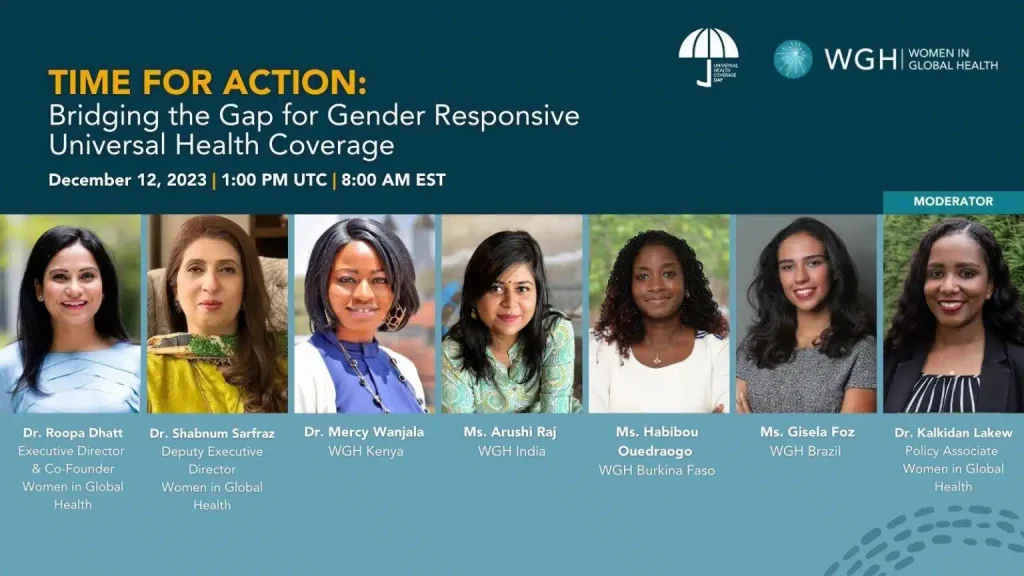
    Recognizing that women constitute nearly 70% of the health workforce but are underrepresented in influential leadership positions (less than 25%), the Lusophone Chapter embarked on a mission to progress women’s leadership in health. The initiative highlighted the urgent need to take action and provide equal opportunities and recognition for women in global health roles.

    Earlier this year, a diverse group of women leaders from Portuguese-speaking countries, including Guinea Bissau, Portugal, Brazil, Angola, and Mozambique, came together to lay the groundwork for the Lusophone Chapter. Their discussions centered on creating a collaborative space that promotes experience exchange, raises awareness about gender equity needs, and challenges prevailing narratives about women’s leadership in global health.

    With the official launch of the Lusophone Chapter, a new chapter begins in the journey towards building a more equitable and inclusive global health system. This landmark event marked a commitment to enable women to harness their expertise and skills to strengthen health systems. By working together, the Lusophone Chapter aims to create a transformative impact within Lusophone communities and beyond.

    Annual count of women Chief Delegates

    As the World Health Organization (WHO) commemorates its 75th anniversary, WGH presents the findings of our annual gender count of Chief Delegates, highlighting both progress made and enduring challenges in achieving gender equity at the World Health Assembly (WHA).

    While it is commendable that almost a third of national delegations at the WHA are now led by women, this milestone must be viewed as just one more step towards an equal voice for women in global health decision-making.

    The count reveals a promising 9% increase since 2022 in women occupying Chief Delegate positions, resulting in an overall representation of 32%. This takes the percentage of women just 1% above the pre-pandemic high point of 31% in 2017. However, considering women constitute the majority of the health workforce, the significant disparity in decision-making power—three men for every woman—underscores the urgency to do better.

    “If leadership roles were allocated proportionally, assuming that women and men have equal merit, the representation of women in health sector leadership would align with their majority presence as 70% of health workers. However, the current scenario is strikingly different, with men constituting less than 30% of the health workforce but holding 75% of leadership positions. The default health worker is a woman, and the default health leader should be too.” says Dr. Roopa Dhatt, Executive Director and Co-Founder of Women in Global Health.

    Help us disseminate the results, you can find some sample tweets and materials here:

    Progress made, but we’re not there yet! 

    @WomeninGH’s count is in, now lead almost one-third of national delegations at the “WHA76. 

    Let’s celebrate the steps forward and keep pushing for true gender equality in health leadership. 

    We can do better!

    ——————————————————-

    A step in the right direction, but still far from the goalpost

    Women’s representation in health leadership at the #WHA76 stands at 3️⃣2️⃣%. 

    It’s time for decision-makers to match words with actions and ensure gender-transformative leadership. 

    @Womeningh won’t settle for less!

    Walk the talk on gender equity with Women in Global Health

    We are launching a campaign to Walk the Talk on gender equity in step with the World Health Organization’s #WalkTheTalk Challenge.

    Join us in spirit and solidarity by participating in our #WalkTheTalk campaign on gender equity. We invite you to take part and show your support, whether virtually or in person we can all step it up for women in health! 

    To join us virtually:

  • Take a photo of yourself, your friends, your family or your fellow chapter members while you are out walking, running, cycling or swimming
  • Post it to your social media, tag @womeninGH, and use the hashtag #WalkTheTalk on gender equity
  • To join us in person in Geneva, please print out the flyer and meet us on Sunday, May 21st, at 8:00 AM outside Rue De Varembé 1, which is conveniently located just 100 meters away from Place des Nations.

    Download printout

    A step towards promoting equity in health leadership: Women in Global Health Nigeria Launch

     In 2020, a group of dynamic women came together to establish the Women in Global Health (WGH) Nigeria Chapter, with the goal of promoting gender-transformative leadership in health. Only three years later, their vision became a reality as the Chapter was officially launched, marking a significant milestone towards promoting equity in health leadership. The launch event was a celebration of the tireless work and dedication of Nigerian women who are shaping global health programming, policy, and advocacy in communities in Nigeria and beyond.

    Distinguished representatives from the Federal Ministry of Health and the Ministry of Women Affairs, health advocates, representatives of civil society organizations, and a range of national and international health-focused organizations gathered to attend the launch.

    “I’m so happy with the launch of WGH Nigeria. Because if Nigeria makes it, if Nigeria recognizes women’s leadership in health, the world would have recognized women’s leadership in global health,” said Her Excellency Toyin Saraki,  Founder and President of Wellbeing Foundation Africa, while pledging support for the organization’s mission to promote gender equity in health. 

     “I hope that we will lead 206 million people in recognizing, appreciating, remunerating, redeeming and replenishing women’s leadership in health and around the world,” she said before officially launching the Chapter. 

    Dr. Roopa Dhatt, Executive Director of Women in Global Health, celebrated the launch by addressing the audience and highlighting the importance of promoting gender equity in health leadership. “It is more and more evident that locking women out of senior leadership positions is severely impacting global health delivery and global health security,” said Dr. Dhatt. “The continued segregation of women into health jobs accorded lower status and lower pay is not only a violation of women’s basic human rights, but also a clear manifestation of the widespread discrimination in the health sector.”

    A panel discussion led by Dr. Peju Adeniran with researchers, Dr. Hadiza Mudi, Dr. Adanna Egwim, and Dr. Fatima Lawal-Lah, examined the root causes of the underrepresentation of women in health leadership in Nigeria, particularly those working as Community Health Workers and the barriers they face to career progression. The panelists shared key findings and recommendations from Nigeria, which have contributed to Women in Global Health’s recent policy report, “The State of Women and Leadership in Global Health.”

    “We are not seeing enough women in leadership positions,” said Dr. Adeniran, Co-Founder of Women in Global Health Nigeria. “Our aim is to see that the work of women in the health sector is well advertised, so that we can have an equal number of men and women making leadership decisions in Nigeria. The health sector is one of the most important sectors in Nigeria. Without health, there is no security, economy and national progress.”

    The launch of Women in Global Health Nigeria has taken a significant step towards promoting gender equity in health leadership and fostering a more inclusive and diverse health and care workforce there. As Dr. Dhatt emphasized, “Change is possible when intentional action is taken, when we get this right, the benefits of gender equity in the health workforce will drive stronger health systems, delivering better health for all.”

    Watch event recording


    World Health Worker Week

    As we mark World Health Worker Week, we are reminded of the critical role that health workers play in ensuring that everyone has access to quality healthcare. Despite the challenges they face, including long hours, limited resources, and, in some cases, dangerous working conditions, health workers continue to be on the frontlines of the global response to health crises. Women make up the overwhelming majority of health workers globally, accounting for approximately 70% of the overall health workforce and 90% of frontline staff. Despite their role working in core health systems roles however, they face unique challenges, including gender-based discrimination, unequal and unfair pay, unsafe work environments and limited opportunities for career advancement. 

    This week, Women in Global Health (WGH) is proud to feature the stories of some of these dedicated women who are making a difference in their communities, these women are part of WGH’s Heroines of Health. The stories serve as a reminder of the need to invest in health workers, to ensure that they have the resources, training, and support they need to continue providing lifesaving services to those who need it most. We also want to take the opportunity to recognize the importance of promoting gender equity in the health workforce and investing in women health workers. Only by enabling and supporting women working in health can we ensure equitable and effective health systems for the achievement of Universal Health Coverage and global health security. 

    Ms. Tigist Molla –  Delivering Health To The Last Mile

    Ms. Tigist Molla is a committed and compassionate Midwife Nurse in Afar Region of Ethiopia, working relentlessly to provide health and care in an area where services are extremely limited. Ms. Molla was trained through Amref Africa’s A’agoa project, a Sexual and Reproductive Health five-year initiative to support pregnant women in remote areas. Using portable medical backpacks and portable ultrasound machines, Ms. Molla works to reach the most vulnerable in hard to reach communities.

    “My favorite part of the job is providing health services in the community I grew up in and, in particular, supporting pregnant women. It is so exciting for me to support the community I belong to. I know their culture, understand their language and many of their norms. It is also easy for me to help out and easy for them to open up and share.”

    Before the project was launched in 2017, ultrasound devices were exclusive to specialized health professionals and confined mainly to hospitals. Now the program is being implemented in seven districts of the Afar Regional State, enabling Ms. Molla and midwives like her to bring health care services to those hardest to reach.

    Through her training and frequent clinical mentorship, Ms. Molla acquired the knowledge and skills to confidently refer high-risk mothers to higher level health facilities for early intervention. “The periodic mentoring and coaching provided by senior health professionals helped strengthen my skills and boost my confidence. I had no capacity or equipment to identify pregnancy anomalies before the training,” she says.

    She is passionate about the need to reach communities where they live, regardless of location. “There is no place we can call unreachable. Communities live there, so it is reachable and we can provide the services they need. That is exciting. We can travel to the remotest parts of Ethiopia. If more medical devices become available and health workers get the training we need to operate, we can widen our reach to support our communities.”

    In addition to the necessary skills and equipment access, health workers working in rural and remote regions like Afar need also to be willing to live among the communities they serve, says Ms. Molla.

    “As long as we are committed to working in the community and living with them, understanding what they need and engaging with them to change their situation, we can improve things. The capacity to do this work at community level has really come as a surprise for me.”

    Ms. Molla is committed to working towards the achievement of Universal Health Coverage, realistic about the inequity that is currently preventing that from happening and pragmatic about the ability to roll out ultrasound programs like hers on a wider scale.

    “If more and more medical devices are available and health workers get the training to operate, we can widen our reach and support our communities. I serve pastoral communities who lack even basic health services. They should be treated fairly to get essential services for us to claim that we are achieving Universal Health Coverage.”

    She believes that health services are a basic human right and health services should reach all communities, including those in remote areas. She has a practical message for decision makers to help inform political commitments.

    “I suggest they go down to communities and see what is lacking, see what the health workers lack in terms of resources that they can use to provide essential health services. We need more resources to reach more communities who live in places where there is no infrastructure. Decision makers must make a political commitment to address these issues”.

    Watch video

    Women Community Health Workers of SEARCH – Bringing door-to-door care in India 

    Ms. Kusum Gadpayale is one of 27 Community Health Workers (CHWs) working in rural India with the Society for Education, Action and Research in Community Health (SEARCH). SEARCH is a non profit organization established in 1985 to reach the vulnerable, semi-tribal and deprived district of Gadchiroli in Maharashtra state.

    In 1994, SEARCH enrolled women like Ms. Gadpayale who could read and write and were willing to train to deliver health care in the community. In 1995, local women became part of an experiment in public health to deliver Home-Based Neonatal Care (HBNC). The experiment attempted to reduce the high rate of neonatal mortality. By the end of 1998, the third year of the intervention, infant mortality had dropped by half.

    The Community Health Workers were drawn from a region covering 39 villages, and were mostly educated to elementary school level. This was one of the conditions of entering the program. The other was family consent.

    “Not all husbands agreed to this, so they chose only those women whose husbands agreed. That was the criteria to get involved. You have to put the work first,” says Ms. Gadpayale, speaking on behalf of the group.

    Ms. Gadpayale and her fellow workers, many of whom are small farmers and also work in the home, serve as health messengers educating the larger community on prevention and treatment of common ailments. During the COVID-19 pandemic, they were eager to learn and work on new health topics.

    Workers (CHWs) working in rural India with the Society for Education, Action and Research in Community Health (SEARCH). SEARCH is a non profit organization established in 1985 to reach the vulnerable, semi-tribal and deprived district of Gadchiroli in Maharashtra state.

    In 1994, SEARCH enrolled women like Ms. Gadpayale who could read and write and were willing to train to deliver health care in the community. In 1995, local women became part of an experiment in public health to deliver Home-Based Neonatal Care (HBNC). The experiment attempted to reduce the high rate of neonatal mortality. By the end of 1998, the third year of the intervention, infant mortality had dropped by half.

    The Community Health Workers were drawn from a region covering 39 villages, and were mostly educated to elementary school level. This was one of the conditions of entering the program. The other was family consent.

    “Not all husbands agreed to this, so they chose only those women whose husbands agreed. That was the criteria to get involved. You have to put the work first,” says Ms. Gadpayale, speaking on behalf of the group.

    Ms. Gadpayale and her fellow workers, many of whom are small farmers and also work in the home, serve as health messengers educating the larger community on prevention and treatment of common ailments.

    During the COVID-19 pandemic, they were eager to learn and work on new health topics.

    Women went door-to-door with surveys, checking for symptoms and quarantining those who were symptomatic. They also provided sanitizer, masks, and information about social distancing. In return for their health service to the rural and tribal families of Gadchiroli, the health workers can access free healthcare for themselves and their families at the tribal friendly hospital at SEARCH. They are paid a fixed monthly wage of 500 rupees, equivalent to $6, along with pay for additional services they provide in their villages.

    “We get paid for work depending on what is needed in the community. Now that we have been working for a while, the needs are not as great as before. It can be from two to six hours per day. We also receive an annual gift. Every year is different, sometimes the gift could be a bicycle or a mobile phone as that helps with the work also.”

    Remembering the situation prior to the formation of her group, Ms. Gadpayale illustrates the harsh reality for children in particular. “There was nothing available in terms of healthcare. Kids were dying. A lot of babies were premature, preterm, malnourished. We have helped those kids. Now they are all adolescents. They say ‘it is because of you that we are what we are today!’”

    Ms. Gadpayale and her group provide home-based advice on care, non-communicable diseases, maternal and newborn health, and nutrition. They distribute iron tablets and folic acid to eligible women, pregnant women and mothers, they treat infection by administering antibiotics and make hospital referrals for those most at risk. So far, they have cared for 19,952 children and their mothers. “We really enjoy this work because it is new and outside of our normal routine. It is a challenge for us and we learn. We are proud of the children we have saved!”

    In terms of ongoing challenges, Ms. Gadpayale says that sanitation is still a concern in the community and she concedes that there is a lot of work to be done. Despite this, she is hopeful and has a word of advice for young people.

    “We don’t have much education and look at what we have managed to do for health in the community. Imagine what you can do with the education you have”.

    Watch video 

    Ms. Monica Batista Teixeira – In the frontlines of a global pandemic 

    Ms. Monica Batista Teixeira is a Brazilian nurse with specialization in obstetrics, women’s health and oncology. Like many of her colleagues, she endured extremely difficult conditions during the COVID-19 pandemic, working around the clock without adequate resources or supplies. Despite this, health workers delivered care in rural, hard to reach areas and saved countless lives.

    With 15 years prior nursing experience, Ms. Batista was working as a Healthcare Manager for chronic diseases at the Amazonas state department when COVID-19 hit. The pandemic has had a devastating impact in Brazil, infecting more than 34 million people and causing an estimated death toll of 685,000. Brazil’s health system struggled under the weight of increased caseloads, limited resources and political instability. At the height of the crisis, health services in the country’s northern region were stretched to breaking point.

    The crisis became personal. Ms. Batista learned that her uncle had suffocated from a lack of oxygen in the intensive care unit in Manaus, in Amazonas state. After his death, she departed on the next flight to save others from the same fate. She coordinated and supported the transport of over 900 COVID-19 patients from Amazonas state to health facilities in neighboring states. Her efforts resulted in a 90 percent survival rate among those she transported. For three months, she didn’t see her eight-year-old daughter or family.

    Recalling the day when she made the decision to move from health management policy to the frontlines of a global crisis, she describes the compulsion she felt to respond. “The trapped, under siege and war-like situation that COVID caused in the community motivated me to join the fight. I knew we (nurses) were needed.”

    Ms. Batista remembers the sense of camaraderie she experienced with fellow workers at that time. She points to the outstanding work of health professionals, specifically highlighting the contribution of women, who make up 65 percent of the Brazilian health force. In some careers, such as nursing, they represent more than 80 percent and were the country’s first line of defense during the pandemic.

    “We were all together in the pandemic, not only as health professionals but as service givers. We left our homes, our family, to be on the frontlines. It was very brave of women to make that move. ” The first person to recognize her extraordinary contribution was her daughter, describing Ms. Batista as a heroine, but she is quick to extend this attribute to all women in health.

    “It was inspiring to see women’s strength at that moment. The nursing profession is characteristically held by women, but even more so in Brazil. These women who are usually treated as expendable are indeed superheroes in a sense. We all went through the fear of leaving our children, our family, our lives, but we overcame it.”

    Ms. Batista is committed to continuing the fight for her community’s right to health and sees women with their unique perspective as essential to that fight. Her advice to all women is simple.

    “Anything is possible once you have passion and thoughtfulness. Those are the qualities that make great women leaders. I think women can achieve whatever they want, whether in health or in other areas. It comes down to personal passion, strength and the compassion we have for others. Having that provides us with vision and insight that we can apply in any area.”

    As we reflect on the inspiring stories of health workers, let us also remember that their work is far from over. To truly recognize and support their contributions, we must advocate for increased investment in their training, salaries, and working conditions. We encourage you to share these stories and join WGH in calling for sustained investments in health workers throughout the week and beyond. Together, we can ensure that all health workers, especially women, have the resources and support they need to continue providing quality care to their communities. Join us in this critical effort.

    Social Media Toolkit


    Women in Global Health Argentina: Empowering Women in Healthcare Leadership

    Women have long been underrepresented in leadership roles in healthcare, a fact that has real consequences for health systems and delays the achievement of Universal Health Coverage. That’s why the creation of Women in Global Health (WGH) Argentina is such an exciting development.

    WGH Argentina is the newest chapter of Women in Global Health in the Americas Region, it was founded by Dr. Julia Ismael and Ms. Emilia Caro, two women with extensive experience in healthcare management and a deep commitment to advancing the role of women in the field.

    Dr. Julia Ismael is an oncologist who has worked extensively in public policy and research related to cancer control and access to healthcare. Ms. Emilia Caro is a molecular biologist who has also worked in healthcare management and data science. Together, they recognized the need for greater representation of women in healthcare leadership and decided to take action.

    In a recent interview, they spoke about their motivation for founding WGH Argentina. Ms. Caro explained that as the executive director of a foundation with a gender program, she was moved by Women in Global Health’s report: “Delivered by women, led by men.” She saw firsthand how the lack of women in leadership roles in healthcare has real consequences for patients and the system as a whole.

    Dr. Ismael, who has held leadership positions in both the public and private sectors, spoke about the challenges that women face in reaching leadership positions in healthcare. She emphasized that even when women do reach these positions, they are often in the minority and face significant pay gaps compared to their male counterparts. This lack of representation, she noted, makes it difficult to generate new ideas and collaborate effectively in decision-making.

    Despite these challenges, Ismael and Caro remain committed to empowering women in healthcare leadership. They see WGH Argentina as a way to create a supportive network of women in the field, share resources and expertise, and advocate for change.

    The formation of WGH Argentina is an inspiring example of how women can come together to effect change in their industry. As Dr. Ismael noted, “I would tell any group of women who are thinking about starting a chapter not to be afraid, to move forward and start, because it will be of integral help to their country.”

    The work of WGH Argentina is just beginning, but its founders are optimistic about the impact they can have. As Ismael said, “We want to do something to ignite change, or at least plant a little seed so that at some point someone else can follow our work and carry out a project that really serves the rest of the women in healthcare.”

    The creation of WGH Argentina is a powerful reminder that when women support each other and work together, they can achieve great things. We look forward to seeing the impact that this new chapter will have in advancing gender equality in healthcare leadership in Argentina and beyond.

    Don’t miss out on the full interview with the Co-Founders and click here to learn more about our newest Chapter in the Americas region.

    Watch interview

    World Tuberculosis Day

     Why Gender Transformative Leadership is Key to Ending TB– for Good

    By Nyuma Mbewe and Swati KrishnaReprint  | Originally posted on Interpress Service News Agency 

    Each year, the UN commemorates World TB Day—March 24– to raise public awareness about the devastating health, social and economic consequences of tuberculosis (TB) and to step up efforts to end the global TB epidemic. The date marks the day in 1882 when Dr. Robert Koch announced that he had discovered the bacterium that causes TB, which opened the way towards diagnosing and curing this disease.

    Despite being both curable and preventable, the TB pandemic is a global health crisis and a leading cause of death worldwide. COVID-19 brought into sharp focus how women bear the brunt of pandemics. In 2021, over three million women and girls fell ill with TB, resulting in 450,000 needless deaths.

    As women leaders in global health, on this 2023 World TB Day, we believe that systematic and sustained investment to tackle gender-related barriers is essential to get the world back on course and end TB by 2030.

    We must confront the root causes of gender inequality and reshape the power dynamics across health systems, promoting the voice of women in their own care, to reach our global goals, for a safer, healthier world for all.

    To better understand how gender norms and inequalities increase the burden, stigma and discrimination on women resulting in the failure to prevent, detect and treat TB infection, adopting an intersectional lens is a necessary step.

    Differentiating the impact of TB based on the intersection of different determinants such as sex, gender, ethnicity, age, location and socioeconomic status can improve health planning, along with confronting legal, cultural and social barriers that are preventing improved health outcomes.

    Using evidence-based knowledge, we can tailor interventions and care strategies for populations with increased vulnerabilities and curb the spread of the disease.

    The Global Fund data has shown that women often face additional barriers to accessing TB diagnosis and treatment in countries with high rates of TB. Women generally wait longer than men for diagnosis and treatment, and may be discouraged from seeking care by a lack of privacy or child-care facilities in health services.

    In some contexts, women have been less likely to undergo sputum smear examinations due to cultural norms and perceptions about femininity as well as gender dynamics of service provision. Young women in high HIV burden settings face increased TB risk.

    The stigma, discrimination and exclusion associated with HIV amplifies and is amplified by TB-related stigma, especially for key populations. This impacts TB detection, access to reliable health services and treatment adherence.

    It is past time to prioritize measures that emphasize women’s fundamental role in building resilient health systems and workforce. Globally, women are 90% of frontline health workers, and 70% of the overall health workforce.

    Despite challenging working conditions, and lack of formal representation, women continue to show outstanding leadership across the health sector. Evidence shows that community-based and ambulatory care results in better TB outcomes compared to hospital-based or inpatient care. Yet their contribution is often undervalued, underpaid, and they occupy less than one quarter of management roles.

    Women are the vast majority of nurses and community health workers (CHW) that play a vital role in the delivery of TB care and people-centered approaches to treatment, yet their voices are more often than not absent from decision-making fora. Valuing women, working at all levels of health, including CHWs is essential for the prevention, detection and treatment success of TB.

    Making health systems fit for purpose means promoting gender parity in management, leadership, and governance. Mechanisms that harness the talent and expertise of women in the health workforce will result in better health systems, and support improved health governance.

    Women in Global Health is committed to work with global health institutions to ensure that structural gender barriers are addressed and promote accountability for resilient health systems that improve health at every level.

    Recent history has taught us that pandemic responses have often overlooked the specific needs of diverse women. Health leaders must promote and create opportunities for gender transformative leadership to strengthen health systems and ensure quality services. It is urgent to both recognize and include women and people of all gender identities for more impactful health interventions.

    As we commemorate World TB Day, we appeal for increased efforts and stronger commitments to promote gender parity in decision-making across the health sector. This must be matched with sustained investments in gender-transformative policies and programs to build resilient health systems and a workforce that adequately represents the diverse communities it serves.

    ——————————————–

    Dr Nyuma Mbewe, a member of the Women in Global Health, Zambia Chapter, is an Infectious Diseases Physician with Zambia’s National Public Health Institute and is based in Lusaka, Zambia.

    Dr Swati Krishna, a member of the Women in Global Health, India Chapter, is Young Investigator at KEM Hospital Research Centre and consultant to the iDEFEAT TB project of the International Union Against Tuberculosis and Lung Disease. She is based in Pune, India.

    2022 Annual Report

    Dear Women in Global Health community,

    As in-person meetings resumed, 2022 was one of WGH’s most active and influential years. This year marked a major landmark with the first in-person Peer-to-Peer meeting of our global movement in Nairobi, Kenya, supported by our partner Amref. Representatives from 41 national WGH chapters met together with the global staff team to envision a future strategy for the WGH movement. The meeting was a major step forward and an inspiring moment for a virtual movement such as ours. As we stand back and take stock following a year of campaigning, evidence gathering, and influencing for gender equity in health, our fast-growing movement and global team have much to be proud of.
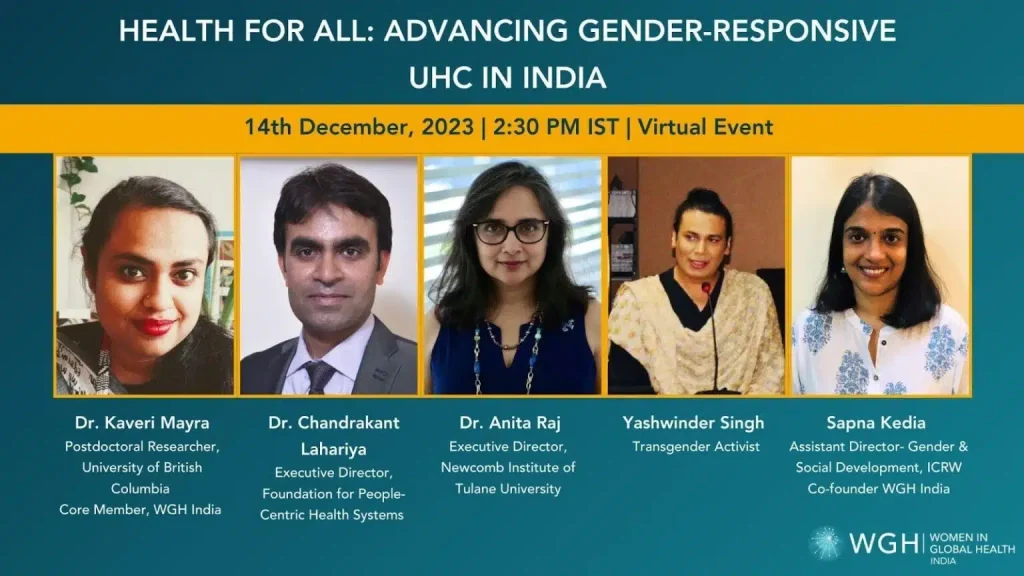
    We kicked off the year proud to be accepted as a Non-State Actor in Official Relations with WHO, which allowed us to advocate for gender-transformative leadership in health with our first historic delegation to the World Health Assembly; 17 outstanding women were recognized for their work as women leaders through the Heroines of Health awards event, held during the World Health Summit in Berlin; and only 18 months since it was launched, the Gender Equal Health and Care Workforce Initiative led by France and WGH has continued to raise the need for gender equity in the health workforce and secure expressions of support —now 16 governments strong, with 8 multilateral organizations and 23 NGOs.

    In 2022 we published three new reports on critical issues for women health workers: protection of women health workers with PPE designed for the needs and bodies of women; uncovering the 6 million women working unpaid and underpaid work in core health systems roles and shining a light on sexual exploitation, abuse and harassment of women health workers in their own words.

    I thank Dr. Magda Robalo for her co-leadership and commitment to the WGH movement as she stepped into the role of Global Managing Director during my maternity leave. This was a great example of the power of women supporting women. I also thank all of you, the WGH team, our chapter leaders and members, our committed partners, and all our supporters for joining us this year to advocate for gender equity in health. This work would not be possible without you.

    As the world comes to the end of the third year of a pandemic, we acknowledge the stress on health systems and on the women who, as 70% of health workers, largely deliver our health systems. We remain deeply concerned about women leaving the profession and the impact this will have on the achievement of global health goals including Universal Health Coverage. 2022 has reminded us that women in health are drivers of change in their spheres but are not always recognized for their professional expertise and knowledge. We have seen women losing ground in health leadership and a growing backlash against women’s rights in global policy fora and at the national level in many countries. We can only make sense of the suffering and the losses of global crises if we treat them as a break in history and change the status quo. Now is the time to move forward together, push back the backlash, and build back equal.

    Stay with us as we move into an action-packed 2023.

    Dr. Roopa Dhatt, Executive Director & Co-Founder, Women in Global Health

    Download the Annual Report

    Gender Equal Health and Care Workforce Initiative

    2022 Impact Report

    The Gender Equal Health and Care Workforce Initiative (GEHCWI), led by the Government of France and Women in Global Health (WGH), is aimed at increasing visibility, dialogue, and commitment to action on gender equity in the health and care workforce. The Initiative convenes the international community to implement existing global commitments and to agree on practical steps to achieve gender equity in the health and care workforce.

    In the third year of a global pandemic, gender inequality in the health and care workforce continues to be a pressing issue. Reports of violence and abuse against women health and care workers, unsafe working conditions, and a lack of women in senior decision-making roles in health, continue to impact negatively on individual health workers and undermine health systems globally. A new and worrying trend is gathering pace, as reports of women health and care workers resigning their jobs in high-income countries continue to surface. Some estimates from the United Kingdom place the number of health and care workers planning to leave at 1 in 5. This “Great Resignation of health and care workers” adds to the WHO’s reported health worker shortage of 15 million globally. Additionally, this Great Resignation is beginning to catalyze what could become a “Great Migration” of health and care workers from low- and middle-income countries to high-income countries. Since women are the majority of health workers and 90% of nurses, both the Great Resignation and any future Great Migration involve women particularly. The pandemic deepened gender inequities that disadvantaged women in the health workforce well before Covid-19. The migration of trained health workers from low-income countries with the most serious health worker shortages threatens to destabilize already weakened health systems in the countries they leave behind.

    The challenges posed by the pandemic make the GEHCWI commitment to gender equity in the health workforce more relevant than ever. After nearly 2 years of unwavering support, the GEHCWI says goodbye to Ambassador Stéphanie Seydoux of France as she steps into the role of World Health Organization’s Envoy for Multilateral Affairs. For France, GEHCWI is now under the new leadership of Ambassador Anne-Claire Amprou, also acting as France’s lead negotiator for the Pandemic Instrument. Additionally, France has announced a commitment of €120 million over five years towards the WHO Academy, enabling the construction of its headquarters, recruitment of a team, and the creation of content. Furthermore, a new €50 million in support for the Health Systems & Response Connector was announced in February 2022. This funding will support the goals of the GEHCWI and  contribute to the achivement of gender equity in the health and care workforce. 

    In 2022, the GEHCWI hosted 6 events with the participation of Ministers, government officials, representatives from multilateral organizations and NGOs, and health workers from around the world. These speakers discussed the importance of safe and decent working conditions for women health and care workers, the need to pay women health and care workers fairly, the importance of women’s leadership in building back better from the COVID-19 pandemic, and the need to work multilaterally to prevent the Great Resignation and subsequent Great Migration of women health and care workers.

    The GEHCWI also saw significant engagement and participation from various stakeholders in the health and care sector. Metrics for the initiative include 12.5 million Twitter impressions, 995 Twitter posts, 635 participants in the conversation and six featured media pieces. Additionally, the initiative received 13 new commitments in 2022, bringing the total number of governments and organizations joining the Initiative to 47: 16 governments, 8 multilateral organizations, and 23 NGOs.

    Last year, the Initiative made significant progress in raising awareness and galvanizing action towards gender equity in the health and care workforce. In 2023, the GEHCWI remains committed to its goal, and with the support of governments, multilateral organizations, and NGOs, the Initiative is well-positioned to continue making progress towards the critical goal of a gender-equal health and care workforce.

    Download Impact Report

    Learn More about the GEHCWI


    Day of Zero Tolerance for Female Genital Mutilation

    According to the World Health Organization, female genital mutilation (FGM) refers to the partial or entire removal or injury of external female genital organs for non-medical reasons. Although the practice does not provide any health benefits for girls and women, it is still widely adopted. It is estimated that 200 million girls and women alive today have undergone FGM, and 3 million girls are at risk of undergoing the procedure every year. Most girls are cut before the age of 15.

    FGM has been reported in 30 countries worldwide. Child marriage, female genital mutilation (FGM) and obstetric fistula are issues still faced by women and girls in Malawi and Sierra Leone on a regular basis.  

    On the occasion of International Day of Zero Tolerance for Female Genital Mutilation (FGM) this year, we spoke with an OBGYN and member of the WGH Malawi Chapter to hear more about her work.

    Dr. Ennet Chipungu works on obstetric fistula repairs with the Freedom from Fistula Foundation in Malawi and has helped hundreds of women and girls since she began working in this field in 2013. She says that when she first began work in Sierra Leone, she encountered young girls, even pre-teens, who had undergone FGM, which motivated her to specialize in fistula repair. 

    It is estimated that 83% of women between the ages of 15 to 49 in Sierra Leone have been mutilated. It is still not against the law to perform FGM in Sierra Leone, but legally, it can only be performed on women over 18. Despite this, it remains culturally acceptable as a practice and parents continue to expose young girls to the procedure.

    When asked about the cultural background of FGM, Dr. Chipungu stated that it is a practice shrouded in secrecy and one that has been transferred from one generation to the next. “The whole issue comes from this idea that as a woman, you need to be just submissive to your husband, then bear children, but not really enjoy the act of conceiving them,” Dr. Chipungu said. 

    As a human rights issue, raising awareness about the dangers and consequences of the practice is key to educating the community. 

    “The practice is indeed a women’s rights violation, especially when done to children. When this happens, girls cannot go to school, therefore they’re being left behind while boys keep moving forward,” says Dr. Chipungu.

    Dr. Chipungu emphasizes that it has been a huge battle to fight FGM in Sierra Leone given the practice has been normalized in society. “Women need to get educated and understand that they don’t have to have it done. It is a harmful procedure with absolutely no benefits,”  she says. 


    Learn more about the Malawi Chapter

    Women in Global Health’s watchlist for WHO’s Executive Board

    This week we interviewed Women in Global Health Policy Associates, Dr. Kalkidan Lakew and Ms. Becca Reisforf ahead of the upcoming WHO Executive Board. The policy team will be tracking discussions relevant to WGH’s policy priorities. In particular, they will be focused on the challenges and opportunities facing women in the health sector and the significance of developments for women health workers.  

    What policy areas are Women in Global Health tracking at the upcoming Executive Board meeting of the WHO? 

    Ms. Becca Reisdorf: This year we are watching three broad areas: Universal Health Coverage, Pandemic Prevention, Preparedness and Response, and Prevention of Sexual Exploitation, Abuse and Harassment. The High-Level meetings on UHC and Pandemic PPR are coming up in September 2023, so we are interested to hear from WHO Member States on these topics.

    What is the representation of women at this year’s WHO EB? Can you say more about the general context and trend for women’s representation at senior level? 

    Ms. Becca Reisdorf: The Executive Board consists of 34 representatives from Member States and this year 21% of them are women. During the pandemic, this number had dropped drastically, reaching a 10-year low of 6% last year, with just two women on the board. We are encouraged to see that we have returned to pre-pandemic numbers, and we are especially glad to see a woman Chair, Dr Kerstin Vesna Petrič, from Slovenia. However, we will continue to call on WHO and Member States to include women in senior decision-making roles, towards the achievement of gender parity.

    What impact is the lack of representation of women having on health systems and health program delivery?

    Ms. Becca Reisdorf: Women make up 70% of the health and care workforce and 90% of patient-facing roles, and they have been applauded for their contributions to front-line health delivery during the pandemic. Women health and care workers are experts in the communities they serve, with nurses, midwives, and community health workers often the first or only point of contact for patients.

    Their firsthand experience means women in leadership are likely to expand public health agendas, prioritizing issues such as sexual and reproductive health services and personal protective equipment designed for female bodies. With more women entering into the leadership space, girls and young women — as well as boys and young men — will have women role models to look up to, breaking the stereotype of men as “natural leaders.”

    Sidelining women leads to a loss of expertise that hurts the decision-making process and negatively impacts the health of populations, as women leaders have reportedly implemented particularly effective COVID-19 responses that are both timely and evidence-based. Also, when women are involved, health discussions are more comprehensive. Due to their extensive experience working in health systems, women are more than qualified to make public health decisions.

    It seems obvious that sector-wide change is needed, what measures should be taken?

    Ms. Becca Reisdorf: National policies that mandate quotas to advance gender parity in global health decision-making bodies are effective. Countries must step up and nominate women for WHO’s executive board and other international bodies, such as the forthcoming intergovernmental negotiating body for the pandemic treaty, and nomination processes need to be transparent.

    Official development assistance should be tied to performance on gender parity in global forums. Governments must work to provide child care and other gender-responsive mechanisms that enable women to balance their lives and lead. Deliberate action must be taken toward closing the gender pay gap that sees women earning 23% less than their male counterparts.

    Two women on WHO’s executive board were representing the health interests of nearly 4 billion women and girls, and this is unacceptable. Power and privilege must be recognized and disrupted. The systemic bias and discrimination keeping women in subordinate roles within the health and care sector must be ended to ensure that gender is mainstreamed and that global health benefits fully from the talent and expertise of women.

    Women in Global Health recently published its #HealthToo report related to the sexual exploitation, abuse and harassment (SEAH) of health workers. What is the impact of SEAH on the health workforce?

    Dr. Kalkidan Lakew: Sexual Exploitation, abuse and harassment (SEAH) among female health workers has an impact on their physical and mental health. It also hinders their career development and progression and in the long term contributes towards the great resignation of health workers. This will further widen the leadership gap we witness in the sector.  SEAH among health workers compromises the quality of care provided to clients and affects the overall provision of health services. Unless SEAH is addressed proactively, it will carry a healthcare and societal cost. At a bare minimum, health institutions must ensure a safe work environment for health workers. 

    What are you asking of the WHO Executive Board on this point?

    Dr. Kalkidan Lakew: We want two things, one: we want member states to warrant a safe work environment for their health workers, including eliminating SEAH, and two: we want zero-tolerance policies converted into action and accountability measures at all levels. 

    In terms of accountability on SEAH, what more needs to be done?

    Dr. Kalkidan Lakew: Leaders have been turning a blind eye to the problem of SEAH in the health sector. Our recent report on #HealthToo, highlighted the depth of the problem through the lived experience of female health workers. What we need is zero tolerance on SEAH and swift action against leaders who tolerate it. It is important that all stakeholders including governments, multilateral agencies, global health organizations, CSOs and professional associations work together and share responsibility for eliminating it.

    We know that the political declaration at the 2019 United Nations High-Level Meeting on UHC included strong commitments on gender equality. Are you satisfied that these commitments are being delivered? What are the challenges currently facing the achievement of gender equal UHC?

    Dr. Kalkidan Lakew: No, we are not satisfied and we don’t believe enough is being done. In general, UHC progress is not on track. Especially since the COVID-19 pandemic, the world has moved further away from the 2030 targets set in the political declaration including those commitments made on gender equality. For example, sexual and reproductive health services have been deprioritized and removed from essential services list, policies on women’s health and rights are being overturned and women are still excluded from decision-making roles despite their majority representation. 

    It is known that women make up 70% of the overall health workforce and 90% of frontline staff. However, they continue to deliver health, while men lead it. We need stronger commitments with in-built accountability measures to implement them on time. 

    Watch the video interview and stay tuned to WGH’s social media platforms where we will be posting live updates from Geneva.

    An interview with Women in Global Health Mexico

    Entrevista con Women in Global Health México – Español

    El capítulo de Women in Global Health (WGH) México celebró su primera reunión presencial en enero de este año y después de un gran y muy productivo encuentro. Ana Guterriez del equipo de Comunicaciones globales de WGH se reunió con las codirectoras, la Dra. Alhelí Calderón Villarreal y Roseli Dzib García, para escuchar más sobre las aspiraciones futuras de las diversas mujeres que han dirigido su establecimiento.

    Alhelí Calderón, originaria de Coahuila, es médica y salubrista,  y Roceli Dzib, originaria de Quintana Roo, es licenciada en salud comunitaria. Ellas son dos de las diversas mujeres líderes que componen WGH México.

    La motivación detrás de la creación del capítulo mexicano de Women in Global Health (WGH) surgió en 2017 cuando algunas compañeras acudieron virtualmente en el primer Congreso de Mujeres Líderes de Salud Global en Stanford. Sin embargo, fue hasta el Congreso en Ruanda donde surgió la motivación para crear una red mexicana de WGH. En el año 2019, algunas compañeras tuvieron comunicación con el equipo internacional en distintos eventos y empezaron a identificar a mujeres líderes en salud o contrabajo relacionado con la salud y comenzaron a reunirse.

    Según Roceli Dzib, “Se decidió crear esta red para trabajar en el liderazgo en salud, tanto nacional como global, para que se pueda promover la sororidad e impulsar los liderazgos emergentes desde una perspectiva feminista, interseccional e intercultural.” El objetivo de esta red es contribuir a disminuir las brechas de género en el liderazgo en salud en México.

    En cuanto a la situación actual de las mujeres en la salud en México, Alhelí señala que “En la mayoría de los espacios vemos que la participación de mujeres en la toma de decisiones está más limitada”. A pesar de que la mayoría de las personas estudiando y trabajando en el área de la salud son mujeres, la toma de decisiones sigue estando casi exclusivamente en manos de los hombres.

    Las Co-Directoras de WGH México compartieron con nosotros los detalles del proceso de creación de este nuevo capítulo. Según Roceli, el proceso fue lleno de aprendizajes y desafíos, ya que se llevó a cabo de manera virtual debido a la pandemia de COVID-19. “Este ha sido un proceso muy desafiante y muy enriquecedor también. Nos sirvió como aprendizaje sobre nosotras, sobre cómo funciona una red de mujeres y también cómo funciona el equipo internacional. Poder formalizar el capítulo fue inolvidable.”

    Para Alhelí, el primer paso para formar un nuevo capítulo sería entrar en la página de Women in Global Health y ver qué es lo que hacen para ver si es algo que les gustaría crear en su propio país. Sin embargo, también recomienda identificar las problemáticas específicas de cada país y enfocarse en la incidencia de éstas. “Es importante identificar a mujeres que tengan la misma inquietud y el interés de vincularse y generar redes. Algo muy importante cuando hablamos de salud global es que no estamos hablando de algo exclusivamente médico, es importante la integración de todos los enfoques posibles, cómo otros profesionales de la salud y carreras que típicamente no son asociadas a la salud, cómo las ciencias sociales, son perfiles que son importantes para el desarrollo integral del capítulo.”

    Women in Global Health México tiene grandes planes para el 2023. Uno de los primeros pasos es analizar una encuesta que ayudará a generar su plan de trabajo para el año y expandir su equipo de líderes, miembras y mentoras. También tienen como meta utilizar las redes sociales para difundir su trabajo y presentar a las líderes fundadoras del capítulo. Además, planean iniciar el proceso para crear un Observatorio Mexicano de Liderazgo de Mujeres en Salud, el cual será un proyecto clave para el capítulo, ya que les permitirá públicamente mostrar las brechas de género en la toma de decisiones en salud y desarrollar estrategias para cambiarlas. Además, planean crear un programa de mentorías para conectar a mujeres en diferentes etapas de sus carreras y fortalecer su presencia en el capítulo, buscando perfiles diversos para tener una mayor incidencia y representación.

    Mira la entrevista completa para conocer más sobre WGH México y únete a ellas enviando un correo electrónico a WGHMexico@womeningh.org

    Ver entrevista en YouTube

    Más información de WGH México

    —————————————–

    An interview with Women in Global Health Mexico

    The newly founded Women in Global Health Mexican Chapter held its first face-to-face meeting in January 2023. Ana Guterriez from the WGH global Communications team caught up with the co-Directors, Dr Alhelí Calderón Villarreal and Roseli Dzib García, to hear more about the future aspirations of the diverse women who have steered its establishment.

    Alheli Calderón, originally from Coahuila, is a physician and MPH, and Roceli Dzib, originally from Quintana Roo, has a degree in community health. The motivation to start a Mexican chapter arose in 2017 after they encountered like-minded women at the first Women Leaders in Global Health Congress at Stanford, US. When they met again at a Congress in Rwanda in 2019, they decided to take the next step and create a Mexican WGH network that could contribute to reducing gender gaps in health leadership in Mexico. 

    According to Roceli Dzib, “We decided to create this network to work on leadership in health, both nationally and globally, so that we could establish a sorority for emerging leadership from a feminist, intersectional and intercultural perspective.” 

    Despite the fact that the majority of people studying and working in the health field in Mexico are women, decision-making is still mostly in the hands of men. According to Alhelí Calderón, “In most spaces we see that women’s participation in decision-making is limited.” 

    The process of creating the chapter virtually during the COVID-19 pandemic was full of learning and challenges, but it also had its rewards, Roceli explains, “This has been a very challenging and a very enriching process. We have learned about ourselves, about how a women’s network works and also about how intersectional teams work. Being able to formalize the chapter was momentous.”

    For Alhelí, the first thing she recommends to anyone interested in starting a new chapter is to visit the WGH website for guidance. She also emphasizes the importance of identifying specific local issues to prioritize and advocate for. 

    “It is important to identify women who have the same concerns and interests in influencing and networking. When we talk about global health, we are not talking about something that is exclusively medical. Instead, we must consider all profiles that are important for the development of comprehensive chapter development,” she says.  

    Women in Global Health Mexico has ambitious plans for 2023. One of the first jobs is to analyze the results of a survey to inform their work plan for the coming year and expand the number of leaders, members, and advisors. Some key initiatives in the pipeline include: the establishment of a Mexican Observatory of Women’s Leadership in Health, to publicly demonstrate the gender gaps in health decision-making and develop strategies to change them; the establishment of a mentoring program to connect women of diverse profiles and at different stages of their careers and to strengthen their presence in the chapter to ensure greater advocacy and representation. In addition, chapter members will use social media channels to help spread the word about their work and bring new allies on board. 

    Watch the full interview to learn more about WGH Mexico and join them by sending an email to WGHMexico@womeningh.org

    Watch YouTube interview

    Learn more about WGH Mexico

    Aiming high in 2023 and not compromising on gender equity in health

    Women in Global Health 2023 Policy Priorities

    The start of 2023 marks the start of the fourth year of the COVID-19 pandemic. In 2023 health will continue to be center stage at global political level. Heads of state and government will meet in three health-related UN High-Level Meetings to agree global action on Universal Health Coverage; Pandemic Preparedness and Response; and Tuberculosis. The pandemic has devastated economies and health systems and deepened the inequality between and within countries, especially gender inequality. 2023 will be an opportunity for the world to regroup, take stock and get global health goals back on track. Women in Global Health will be advocating for investing in gender transformative change as the only way to secure strong health systems and future global health security. There can be no compromise on gender equity in global health.

    In 2023 Women in Global Health will be focusing on five main priorities: 

    1. Gender equal and diverse leadership in global health based on Gender Transformative Leadership

    At the start of the pandemic women were side-lined in global health decision-making, with women from the Global South particularly underrepresented. Women have lost ground since the pandemic began.  In 2023 we will focus on leadership at all levels from CHWs to global governance, issuing two new reports asking women in health what leadership means for them. Equal leadership for women in health is not a luxury, it will drive better health for all.

    Sign up to our newsletter, follow our reports, attend our events, join Women in Global Health and campaign with us for gender equal leadership in global health. Campaign with us to ensure all leaders in global health are gender transformative leaders, intentionally addressing gender inequality in health. 

    2. New social contract for women health and care workers

    Women health workers, who make up 70% of the workforce, are burnout and exhausted after three years on the pandemic frontlines. There are estimates that 1 in 5 health workers, especially nurses, are planning to leave the profession in high income countries. WGH will report on the evidence and advocate for urgent action on gender equity to stem this ‘Great Resignation’ of women health workers and the subsequent ‘Great Migration’ as health workers from low-income countries leave to fill vacancies in better resourced countries. Against the background of a global shortage of more than 10 million health workers, we cannot afford to lose even one health worker from the profession.

    This year we will continue to convene the international community in the Gender Equal Health and Care Workforce Initiative (GEHCWI), which we co-lead with France, to implement existing global commitments and agree on practical steps to achieve gender equity in the health and care workforce. More than 40 governments and international agencies have joined the Initiative.

    Follow GEHCWI, read our reports, attend our events and raise your voice with ours to ensure that the contribution of women health workers to global health is recognized, valued and manifested in a new social contract based on equal leadership and safe and decent work for women. 

    3. Gender-responsive Universal Health Coverage (UHC)

    Gender-responsive UHC will transform the health and lives of billions of people, especially women and girls.  In 2023 WGH will campaign to retain the strong commitments to gender equality, equity in leadership, sexual and reproductive health and rights (SRHR) and gender equity in the health workforce in the 2019 UHC Political Declaration, and build on these to ensure the Political Declaration from the 2023 High-Level Meeting (HLM) puts UHC back on track. Women must have an equal role in leadership of UHC at all levels if it is to succeed. 

    In 2023 the Women in Global Health network will campaign at national, regional and global levels to ensure gender equality is central in the Political Declaration from the 2023 UHC HLM. We will also campaign as a co-convenor of the Alliance for Gender Equality and UHC and raise our collective voice for gender equality, women’s leadership, SRHR and for the rights of women health workers. Join us, join the Alliance, follow our campaign and ask your government to champion gender equity in UHC.

    4. Gender Equity in Health Emergency Preparedness and Response

    This year, WGH is engaging with global processes on preparedness and response to health emergencies – Pandemic Accord, International Health Regulations, Financial Intermediary Fund, High-Level Meeting on Pandemic Preparedness and Response. We are advocating for continuation of essential health services, including SRHR, and the protection of health workers to be central in these political agreements. Gender equity is central to strong preparation and response to health emergencies. We must learn from COVID-19.

    Follow our advocacy, campaign with us and ensure your government knows why gender equity and the leadership of women must be central in future pandemic preparedness and response. 

    5. Movement and alliance building for gender equity in global health  

    WGH will continue to expand our own global network of 45 WGH chapters and build alliances  to push back the global backlash on women’s rights in health.  Some countries have made impressive progress on the rights of women and girls but others have regressed significantly with growing restrictions on SRHR, including women’s access to safe abortion. We will only achieve UHC and other global health goals when we address all areas of health and rights, including SRHR, and treat safe abortion as health care. Women and girls cannot achieve their full potential and health if they are excluded from wider society and the economy. Women health workers are critical to the delivery of health services for all people, especially women.  In 2023, with our partners, we will fiercely resist the backlash on gender equality, and the rights of women and girls. 

    Join the WGH movement, join our alliances and campaign with us against the backlash. Our voices are louder when we speak together. In 2023 WGH will aim high, challenge power and privilege, and not compromise because gender equality in global health creates stronger health systems and global health security. We are creating a better future, not living in the past.


    Sincerely, 

    Dr. Roopa Dhatt 

    Executive Director and Co-Founder,

    Women in Global Health


    DOWNLOAD LETTER

    2022: The Year of Action

    Dear Women in Global Health community, 

    As December comes to an end, I want to thank you for being with us this year and invite you to join us as we celebrate the impact of Women in Global Health (WGH) in 2022. As in-person meetings resumed, this year was one of WGH’s most active and influential years. This year marked a major landmark with the first in-person Peer-to-Peer meeting of our global movement in Nairobi, Kenya, supported by our partner Amref. Representatives from 41 national WGH chapters met together with the global staff team to vision future strategy for the WGH movement. The meeting was a major step forward and an inspiring moment for a virtual movement such as ours. As we stand back and take stock following a year of campaigning, evidence gathering, and influencing for gender equity in health, our fast-growing movement and staff team have much to be proud of. Please take a look at our key highlights from 2022, drawn from many achievements, listed in the timeline below. 
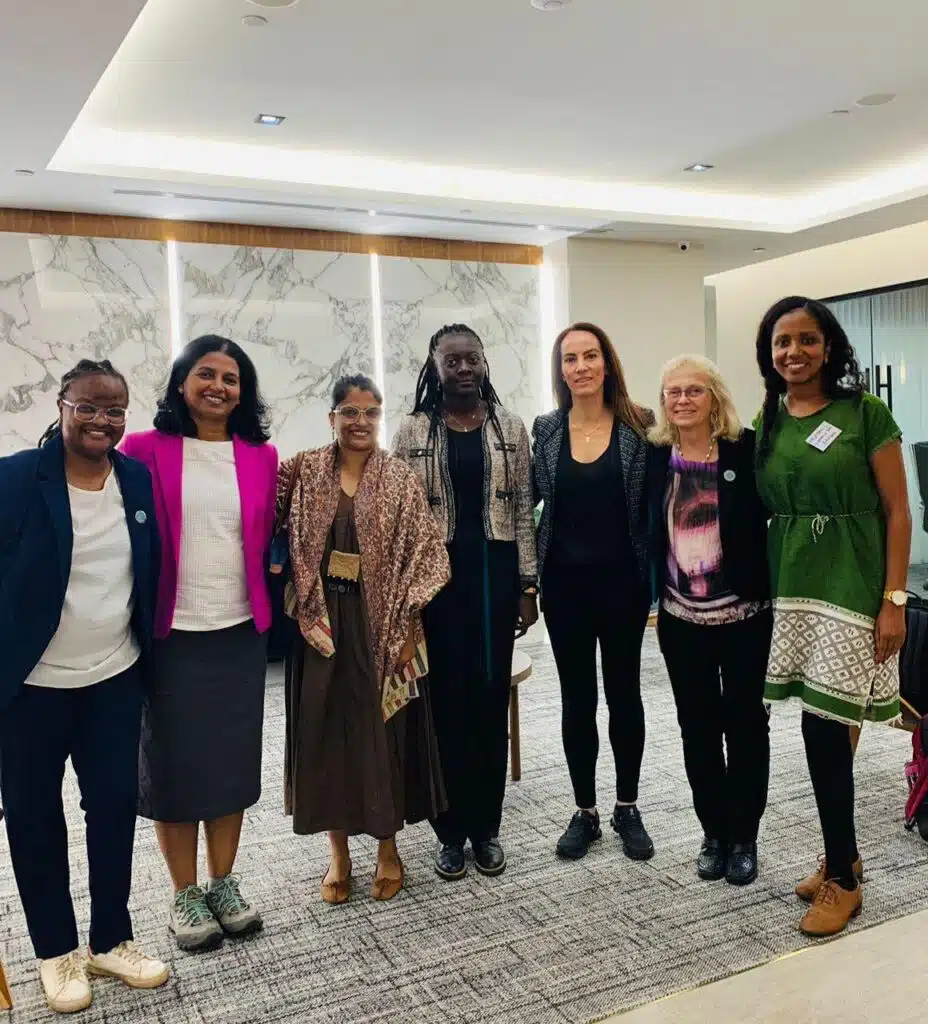
    We kicked off the year proud to be accepted as a Non-State Actor in Official Relations with WHO, which allowed us to advocate for gender-transformative leadership in health with our first historic delegation to the World Health Assembly;  17 outstanding women were recognized for their work as women leaders through the Heroines of Health awards event, held during the World Health Summit in Berlin; and only 18 months since it was launched the Gender Equal Health and Care Workforce Initiative led by France and WGH has continued to raise the need for gender equity in the health workforce and secure expressions of support —now 16 governments strong, with 8 multilateral organizations and 23 NGOs. 

    In 2022 we published three new reports on critical issues for women health workers: protection of women health workers with  PPE designed for the needs and bodies of womenuncovering the 6 million women working unpaid and underpaid work in core health systems roles and shining a light on sexual exploitation, abuse and harassment of women health workers in their own words. 

    I thank Dr. Magda Robalo for her co-leadership and commitment to the WGH movement as she stepped into the role of Global Managing Director during my maternity leave.  This was a great example of the power of women supporting women. I also thank all of you, the WGH team, our chapter leaders and members, our committed partners, and all our supporters for joining us this year to advocate for gender equity in health. This work would not be possible without you. 

    As the world comes to the end of the third year of a pandemic, we acknowledge the stress on health systems and on the women who, as 70% of health workers, largely deliver our health systems. We remain deeply concerned about women leaving the profession and the impact this will have for the achievement of global health goals including Universal Health Coverage. 2022 has reminded us that women in health are drivers of change in their own spheres but are not always recognized for their professional expertise and knowledge. We have seen women losing ground in health leadership and a growing backlash against women’s rights in global policy fora and at national level in many countries.  We can only make sense of the suffering and the losses of global crises if we treat them as a break in history and change the status quo. Now is the time to move forward together, push back the backlash and build back equal.

    I wish you season’s greetings and a Happy New Year. Stay with us as we move into an action-packed 2023.
     
    Dr. Roopa Dhatt,
    Executive Director and Co-Founder
    Women in Global Health

    Download 2022 highlights


    The #HealthToo report is published

    Women in Global Health’s latest policy report Her Story: Ending Sexual Violence and Harassment of Women Health Workers is the culmination of our #HealthToo research project and online platform. It reveals the prevalence of sexual exploitation, abuse and harassment (SEAH) experienced by significant numbers of women health workers. 

    Read the Executive Summary

    Download the report

    In the absence of comprehensive data on SEAH in health, our report uses the testimony of women as data to bring the reality and nature of sexual violence and harassment to life, as well as the conditions that enable it. Women submitted stories to #HealthToo from 40 countries, in ten languages and we have collected accounts through literature and partners from many other countries. 

    “Personal stories are harder to ignore. They describe the compliance of colleagues, the lack of reporting, fear of reprisal and job loss, the lack of mechanisms for receiving complaints, the absence of laws to prosecute. The testimonies present a clear view of an enabling environment for perpetrators,” said Dr. Roopa Dhatt, Executive Director, Women in Global Health.  

    Learn more about our work on sexual exploitation abuse and harassment in health. 

    Although SEAH of women health workers appears to be universal, legal frameworks, cultures and socio-economic contexts vary widely. Action needed to end SEAH in the health workforce must follow broad principles and approaches but be closely tailored to the country context. The proposed solutions below outline approaches and critical points that have emerged from #HealthToo that should be addressed in all contexts.

    Solutions

  • When the behavior of perpetrators of sexual violence and harassment are sanctioned, then men who choose to sexually abuse women health workers will know for sure that their actions will be made public and the shame and blame will fall on them and not on their victims. 
  • Organizational leadership is critical. Gender parity in health leadership will drive change but since most perpetrators are men, we should regard SEAH as a men’s problem and not a problem for women to fix. We advocate for all leaders to be gender transformative leaders intentionally addressing gender inequality. Measures to prevent, report and sanction sexual harassment should be included in organizational performance measures and the performance of leaders. 
  • Listen to women and learn from platforms like #HealthToo. Organizations should take a survivor centered approach to ensure the rights of survivors are clear, well known and that they are protected from retaliation. We must ensure survivors have access to legal, mental health and other services they need to rebuild their lives and careers. 
  • All countries need to put in place the legal framework to protect women workers. Many countries still lack laws to prohibit work-related sexual harassment. ILO Convention 190, that came into force in 2021, is the first global convention to address work-related violence and harassment. To date only 23 countries have ratified C190. Ratification is a first step for countries to bring their laws in line with a global standard. 
  • To make this abuse visible, we must set baselines and measure progress. We cannot give figures on prevalence of sexual harassment in the health workforce globally or on most countries because countries and organizations do not collect data routinely or they use different terminology so data is not comparable. International agencies, such as WHO and ILO, should work with member states, women’s organizations, trade unions and professional organizations to set a standard for collecting sex-disaggregated data for the health workforce based on definitions in ILO C190. Then abuse will no longer be invisible.
  • We hope for five main outcomes from this report 

  • To end denial about a problem made invisible to policy makers by lack of data (sex disaggregated) and no transparent reporting of cases and their outcomes. We want to put this on the policy table as an issue women talk about and men acknowledge needs to be prevented.
  • To encourage women to work collectively through women’s organizations like WGH, trade unions and professional associations to raise this issue as an unacceptable violation of women’s and employment rights. We want to fight the ‘normalization’ of such abuse that women feel they have to manage.
  • To encourage men to step up both as organizational leaders to set a culture that doesn’t just state ‘zero tolerance’ but makes that happen. We also want other men to become active bystanders and step in to say that sexual harassment is unacceptable. Everyone needs to own this problem.
  • To increase momentum for gender parity in health leadership, recognizing the positive impact of women’s leadership. Women’s marginalization in health leadership (holding 25% senior roles) enables sexual harassment. It is rare for women leaders to perpetrate sexual harassment. Since women are 70% workers in the health sector there is no reason why men should dominate leadership.
  • To raise awareness of the costs of sexual harassment of women in the health sector, for women and for health systems. And more, for political decision makers and organizational leaders to recognize the costs of inaction. It does not make human or economic sense to protect a few men who choose to abuse women over protecting women health workers who just want to do their jobs.
  • Health for All Can Be a Reality: Steps Toward Gender-Responsive UHC

    As we commemorate Universal Health Coverage (UHC) Day on the 12th of December, the Alliance for Gender Equality and UHC calls on governments to act on the UHC promise of health for all and to advance gender equality, women’s rights, and sexual and reproductive health and rights (SRHR). In 2019, governments agreed to the UN Political Declaration on UHC, the most comprehensive global agreement on health ever, but it has not been adequately implemented. And, it did not go far enough to meet the needs of every person and ensure health for all.


    1. Stand by and deliver on the commitments made in the Political Declaration at the 2019 United Nations High-Level Meeting on UHC, including the strong commitments made to gender equality, the rights of women and girls, and women health workers.

    2. Commit to and act on delivering comprehensive sexual and reproductive health (SRH) services as central to the UHC essential package of services.

    -The full spectrum of SRH services, including those that can be self-managed/self-administered, must be integrated in primary health care (PHC) and UHC, and must be of high quality, available, acceptable and accessible to all women and girls in all their diversity.

    -Prioritize inclusion of comprehensive sexuality education (CSE) as part of the comprehensive SRH services in the UHC essential services package, and ensure that adolescents have access to information and CSE in and outside of school.

    3. Address gender inequities in leadership and ensure fair and equal compensation and opportunities in the health workforce, and support health workers in health budgets.

    -Women health workers must have safe and decent work and those in the informal sector integrated into formal jobs. Women health workers, as 70% of health workers and 90% nurses and midwives, are delivering UHC. They have made an exceptional contribution during the COVID-19 pandemic, but significant numbers are now burned out and planning to leave the profession. Without women health workers there will be no UHC.

    -Ensure access to training and leadership opportunities for women health workers. There is evidence that women, who were already marginalized to 25% of leadership roles, have lost ground in health sector governance during the pandemic.

    4. Ensure women’s meaningful participation in UHC design, implementation and monitoring, and ensure their perspectives and voices are fully reflected. Engage with and fund women’s rights organizations, feminist leaders and community groups to understand the priorities of diverse girls and women, especially from marginalized groups.

    5. Reinforce and reinvigorate the promotion, protection and fulfillment of women’s and girls’ human rights as crucial to advancing achievement of UHC. Despite significant progress in many countries on women’s rights, there is a backlash against the rights of diverse women and girls and gender equality at the global level and in many countries. No country can prosper or achieve UHC if women and girls lack fundamental rights or bodily autonomy. Lack of political will that hinders women’s and girls’ rights and bodily autonomy, also limits UHC.

    6. Approach health financing with a gender equality lens as fundamental for the path toward UHC. Health financing for UHC must ensure adequate funding for SRH services to safeguard against out-of-pocket expenditures for services that largely impact women and girls. Health financing must be gender-responsive and transformative, using gender budgeting at the whole of government and the systems level, leaving no women or girls behind. Financing decisions should be made based upon the needs and realities of girls, women and gender diverse people.

    7. Collect and analyze data disaggregated by sex and gender, as well as other intersecting characteristics such as age, race, class, (dis)ability, ethnicity and sexual orientation, in order to effectively identify and break down barriers that prevent girls and women from accessing health promotion, prevention, diagnosis, treatment, and care.

    This year’s UHC Day theme is “Build the world we want: A healthy future for all.” The world we, the Alliance and our partners, want is a world with the full realization of gender-responsive UHC. This means a world in which health systems are transformed to address determinants of health, build in climate resilience, and work for all people across the life course. On this UHC Day, the Alliance calls on governments, as the primary duty bearers for delivering health and securing human rights, to urgently act on the above priorities.

    Comments on Gender Equity and Universal Health Coverage

    On the occasion of Universal Health Coverage Day, December 12 – Women in Global Health spoke to recent awardees of the 2022 Heroines of Health, Dr Sara Saaed Khurram and Dr Iffat Zafar Aga. As co-founders of Sehat Kahani, a telemedicine start-up in Pakistan, the 2022 Heroines have reached 1.8 million people with remote health consultations and services across their native country. Here they comment on the importance of gender equity towards the achievement of UHC, and their role in addressing a gender-sensitive health response in Pakistan. 

    How are you currently addressing gender equity toward the achievement of Universal Health Coverage in your work?

    It is imperative to highlight women’s role as providers, beneficiaries, leaders, and advocates for access to adequate health care. At Sehat Kahani, not only do we focus on empowering female physicians and other female health care professionals to optimize their medical practice through digital mediums, we also enable more and more female patients to access services through our telemedicine platform.  

    There is much to be done to ensure adequate support to front-line health workers, to meaningfully engage all stakeholders in decision-making and to ensure gender-equitable responses.  A gender-sensitive response to disease outbreaks is crucial, and responses will be more likely to be effective for everyone if there is diversity in leadership panels. 

    Through Sehat Kahani, a women-owned and led telemedicine initiative with 75% women leadership in place, we have created a network of 7,500 healthcare professionals; 80% of which are females. Similarly, to date Sehat Kahani has successfully catered to 1.8 million consultations out of which around 68% are female patients who were unable to access services otherwise.  

    What are the biggest barriers for women that you see when we think about making progress on Universal Health Coverage?

    Limited geographic access to primary care is one of the most important and hardest challenges for achieving UHC and improving population health in developing countries. Women and girls are still struggling to access health services, and are disproportionately affected by barriers to accessing and using health services. For example, women and girls experience structural barriers, including financial hardship, lack of transport (especially if they live in rural areas) and lack of time because of a care burden or other unpaid labor.

    In addition, a significant proportion of women globally do not participate in waged employment and for those who do, they work mostly in the informal sector. Social insurance schemes are therefore likely to exclude a vast majority of women except those who are covered as dependents of formal sector employees, resulting in exclusion from universal health coverage. Most health programs are targeted at maternal and child health services. What this means in practice is that adolescent girls and older women are among subgroups of women often excluded from coverage. This is because of the almost exclusive focus on maternal health needs in services covered by prepayment schemes and essential service packages.

    You are working on providing access to a range of services, including sexual and reproductive health and rights services (SRHR) in Pakistan. What are the biggest challenges?

    Pakistan struggles with high maternal mortality ratios, adolescent birth rates and unmet need for contraception. The country has the third highest burden of maternal, fetal and child mortality globally. It is considered a great taboo to access SRH services even today whether it is a married or an unmarried female. Then other major gaps remain at both service delivery and policy level, preventing adequate access to basic health facilities. Denying these rights have grave consequences that exacerbate poverty and inequality. It can lead to greater vulnerabilities to gender-related ill health, unintended pregnancies, maternal death, harmful cultural practices and sexual and gender-based violence

    One of the challenges is that millions of girls and women are currently “invisible”, preventing them from fully participating in their communities and restricting their access to rights and opportunities. Their invisibility is exacerbated by incomplete, missing or underutilized data about the barriers that girls and women face, their potential to transform societies, and what works to improve their wellbeing. The challenges are more deeply felt at the bottom of the socioeconomic pyramid. Girls deprived of opportunities at home are vulnerable in their communities and marginalized in society

    For the achievement of UHC, gender equality is critically important to redress gender power dynamics and ensure and protect women’s and children’s rights, including: supporting women’s empowerment in the health workforce, advancing sexual and reproductive health, changing harmful gender norms, and eliminating political, economic and social gender barriers that prevent all people from enjoying their right to health

    What steps can countries take to advance towards UHC and universal access to quality SRHR services and interventions?

    Sehat Kahani has been an advocate for promoting SRHR in marginalized communities through the implementation of SRH services. We are working to realize SRHR needs of marginalized populations in Pakistan that is free from discrimination, coercion, and violence. We have conducted several projects that have focused on gaining insights on common factors for poor SRH practices in low-income communities and have provided SRH education and services to the beneficiaries via our telemedicine platform. Our goal is to strengthen effective community based action and joint advocacy for improved SRHR. 

    The integration and better coordination of SRHR in health and policy interventions and programs play an important role in improving health and wellbeing for all. Delivering on SRHR ensuring that citizens are free to make their own choices about their bodies without any forms of discrimination, stigma, violence or coercion. Another crucial element is the establishment of resilient health systems, which allow for task shifting to different facilities and community-based cadres to deliver quality health care and services.

    Q&A with Ms. Aine Markham on gender equity and Universal Health Coverage

    We spoke to Ms. Aine Markham, Program Director of the Gender Transformative Leadership Program for Women in Global Health. Aine has worked for over 25 years in several countries in Africa, Asia and Latin America in medical humanitarian assistance and global health. Here she talks about the gender component of Universal Health Coverage (UHC), and the barriers facing women that must be addressed if countries are to make progress on achieving UHC.

    We know that there’s a very strong gender component to Universal Health Coverage that sometimes gets overlooked. How can we address gender equity towards the achievement of UHC in your view?

    All steps and every building block necessary to achieve UHC has to be approached through a gender lens. Gender is intrinsically linked to health in every sense. The best and most obvious example of this is the health workforce, 70% of which are women. Some 90% of all health workers that provide direct care to patients are women, but less than 30% of women are in health leadership. Realistically, Universal Health Coverage cannot be achieved without women and girls having a seat at the table and actively using their voice in decision-making on issues pertaining to health policies and practices.

    You’ve worked in several contexts over the past 25 years. What, in your view, do you see as the biggest barriers for women when we think about making progress on Universal Health Coverage?

    Women not only make up the majority of health workers, they are also the main care providers in families and in communities across the globe. A common and significant barrier for women is the lack of self autonomy, the ability of women to make decisions about their own bodies. The most obvious example is access to safe abortion and contraception.

    Then in the health workforce we see that health workers are frequently exposed to harassment and violence. WGH is working to bring attention to the threat that women health workers face from sexual harassment and violence on a daily basis. We’re releasing a report next week on our #HealthToo platform and research project. Women need legal frameworks that protect them both at home and at work, and assures their right to make decisions about and for themselves.

    You’re a strong proponent of the need for a people centered approach to healthcare to achieve UHC. So can you talk about why that’s important in terms of gender equity and health?

    I think often people don’t realize when we use the term “people-centered” healthcare, we use it to refer not only to the patient, but also their families, the health workers that care for them, and in many cases, the community that they live in, so everyone that is involved with the patient’s care. As we already know, women make up the majority of carers worldwide. Using a people-centered approach without taking gender into consideration isn’t possible, so it has to be done. Health care is fundamentally gendered. So, by using a gendered approach, a gender lens, we can ensure better health outcomes for everyone.

    What steps do you think countries in general can take to advance gender equity towards the achievement of UHC?

    Two main things come to mind. Obviously there are many others, but the two I’d mention here would be, one: to put women at all levels where decisions get made, as it has already been shown that this results in better policies, improved health outcomes, is more inclusive of vulnerable population groups and reduces discrimination. It’s more inclusive of areas that tend to be forgotten. Women are not part of these decision making bodies and it also reduced discrimination. So definitely putting women at all levels of decision making, can help and would be one thing I’d recommend. And two: driving policies and legal frameworks that create gender equity. It won’t happen by itself. It needs frameworks within a region and it can happen.

    Ms. Anita Kouvahey-Eklu on the issue of GBV in Togo

    Ms. Anita Kouvahey-Eklu is the Deputy Country Director for Integrate Health in Togo and Heroine of Health 2022. On the occasion of 16 Days of Activism against Gender-Based  Violence, Women in Health reached out to Ms Kouvahey-Eklu about the problem of gender-based violence in Togo, her native country. As an experienced medical provider and advocate, she has championed LGBTQIA+ rights, women’s rights and Universal Health Coverage there for more than two decades. The following is a summary of Ms Kouvahey’s points. 

    Can you tell us a bit about the problem of GBV in Togo, how prevalent is it?

    In Togo, just like in other sub-Saharan countries, gender-based violence is very much present and deeply embedded in the patriarchal culture and social norms of the country. Togo’s Demographic and Health Survey 2013-2014 reveals that 29 percent of women aged 15-49 have experienced physical violence from an intimate partner or husband. Some 11 percent report having experienced some sort of sexual violence at one point in their lives. Finally, 28 percent of women surveyed consider that being hit by their husbands is justified in several cases for example, burning a meal, leaving the house without permission, refusing to engage in sexual intercourse. 

    The results of this survey clearly show that in Togo, the idea of gender-based violence deeply affects women. In many cases, it is limited to their relationship with their husbands and is widely normalized by women themselves. 

    It is important to note that the government has deployed various strategies, policies and programs to protect women and defend their rights in line with international standards. Yet, despite progress on the issue, the narrow definition of GBV in Togo means that many are excluded from these efforts. 

    The LGBTQI+ community is especially vulnerable as discussions about sexual orientation in Togo are almost non-existent. This leads to much suffering and injustice for a population that lacks legal recognition and has no legal remedies with regard to the violation of their fundamental rights. 

    What impact does gender-based violence have on women that you see?

    Most of all GBV is present in women’s daily lives. At home or within their communities, the law is disregarded, and local norms and traditions take over. This is where the deepest injustices and violations of women’s rights occur. 

    What are you working on in GBV?

    I’m an activist and I’m convinced that everyone’s basic fundamental rights should be respected. That’s why my work focuses on supporting groups and individuals. I use my skills as an educator in sexual and reproductive health, HIV and GBV to organize trainings for people and gender-focused organizations to identify at-risk behaviors and enable women to safely access the care they need.

    My work is focused on:

    -Capacity development of gender-focused organizations 

    -Support with project development and funding 

    -Coaching members of these organizations in sexual and reproductive health

    What is your top ask of governments?

    The government must strengthen the legal framework and support civil society organizations in the fight against gender-based violence. The organizations in turn must train, educate and sensitize community members to take ownership of the legal framework against GBV. They must implement actions and mechanisms within their communities guaranteeing the preservation of rights and respect for gender-based diversity. 

    Read more: Heroine of Health 2022 Awardee, Ms. Anita Kouvahey-Eklu

    In Conversation with Ms. Ann Keeling on the upcoming #HealthToo Policy Report

    We spoke to Ann Keeling, Senior Fellow with Women in Global Health (WGH) about WGH’s upcoming report, Her Story: Ending Sexual Violence and Harassment of Women Health Workers.  Due for publication on December 13, the report is the culmination of testimonies collected through #HealthToo, an online platform and research project on sexual exploitation, abuse and harassment (SEAH) in the health workforce. The report analyzes the testimonies of 230 women in 37 countries to determine the root causes of SEAH in health, and puts forward recommendations for driving reform to end it. 

    Tell us about the upcoming report #HealthToo: What led to Women in Global Health publishing this report?

    We’re launching this new report #HealthToo because violence and sexual harassment against health workers, especially women health workers is a long-standing and really serious issue. Male health workers are also subject to violence, but sexual violence and harassment is mainly directed at women. It has very serious impacts for the women concerned, but also for health and health systems. It’s under-recorded, it’s under-reported, and it’s not often sanctioned. It’s an abuse of power and it can be stopped. We want to bring this to light, so we can catalyze action.

    When you talk about prevalence of sexual exploitation, abuse and harassment in the health workforce –  how prevalent is it? 

    Sexual exploitation, abuse and harassment of health workers is very common, particularly some forms of violence against health workers and sexual harassment of women health workers. 

    The figures are very difficult to get and there are no global figures. There are some small studies of nurses in one country, or health workers in another country but some of it is not disaggregated by sex. But what we do know when we speak to women health workers is that it’s extremely common. Women are facing violence and sexual harassment from three sources: from male colleagues; from male patients; and from men in the community, depending on what their jobs are, but particularly those women health workers who are outreach workers. It’s almost normalized. It’s almost seen as a very unpleasant part of the job that women health workers have to manage and we think that’s totally unacceptable.

    Why did you take the approach of storytelling? 

    For two main reasons, one because the data simply isn’t there. Very few employers and very few countries are routinely collecting data of sexual harassment against health workers disaggregated by sex, and then keeping information on what actually happened in those cases and what the outcome was. When that happens, then this very widespread abuse is simply invisible and policy action isn’t taken. So, we want women’s testimony to be treated as data.  

    We also felt that with storytelling, real abuse against real women actually becomes real. If you read a bunch of statistics, it’s not nearly the same as reading some of those women’s stories about the things that actually happened to them, in their own words. 

    Quite often sexual harassment is trivialized, it’s treated as something that’s not very serious, it’s just a bit of banter, it’s just a bit of a joke, and women can’t take a joke. But when you realize what happens to women, you realize that this shouldn’t happen to anyone when they come to work to do a serious job. There’s absolutely no justification for the sort of abuse women are facing routinely, and real stories bring that to life. 

    What are the top causes of SEAH in the health workforce?

    From the data that we have, it seems that sexual harassment of women in the health sector is actually more prevalent than it is in some other economic sectors. We believe that’s because medicine is very hierarchical. This is an abuse of power.  It’s an abuse of power more than it is motivated by sexual attraction, for example, it’s an abuse because of where women are in the health workforce. 

    And that’s the second point, this is a reflection of gender inequality. It’s about where women are in society, and it’s about the lower status jobs that women tend to have in the health workforce, which means women are in a weaker position to complain when they are sexually harassed.

    And thirdly, men do this because they know they can get away with it. If men knew they would be sanctioned and if senior male health workers would lose their jobs and that they would be publicly shamed, they almost certainly wouldn’t do this. It’s because they know they can get away with it and that women are in a weaker position to complain, and that’s why they do it. 

    What is the impact of SEAH on women? Are there secondary impacts?

    For women affected by sexual violence and sexual harassment, there are all sorts of physical and psychological harms. The psychological harm can manifest in stress, depression, absenteeism and it really breaks the bond of trust with an employer. 

    Because women who are harassed at work feel they don’t have any form of redress,  fear they may face retaliation if they do report, or there’s just no mechanism for them to report, they lose trust completely in their employer because everyone should be receiving that basic protection from their employer. 

    So the secondary effects are really upon health services, not just on women, because women are the majority of health workers at 70 per cent of the overall workforce, with 90 percent working as midwives and nurses. So if those women that we all rely on for health services are feeling distracted, unhappy, or their morale is low, then we can’t expect them to be doing their jobs in the best way they’d want to be as health professionals. It has impacts on systems and everyone’s healthcare. And it can have a direct impact too, because where cases are taken forward, women may end up winning large sums of compensation against employers, so there can be real financial costs to health systems for inaction and not doing something about this.

    What is being done to address the problem?

    Last year, we had a landmark step forward and that was when the International Labor Organization launched a new global convention called ILO190 on work-related violence and harassment. That’s the first time that we’ve ever had any sort of global standard that says that work-related violence and harassment is a human rights abuse and actually details what that abuse is and how it should be eradicated. Around 20 countries have ratified that convention and we’re urging all countries to ratify that convention to bring their domestic law into line with the convention so that women have the protection of law in many countries. Sexual harassment at work is still not a legal offence in many countries and women don’t have the protection of law. 

    The other thing that needs to happen is that women are coming together, just as they did with the #MeToo movement, and they are talking more about the abuse they’re suffering. This is why we’re calling our platform and report #HealthToo, because the issue is coming out of the shadows and eventually that will make this sort of abuse less normalized and less socially acceptable. 

    What more needs to be done?

    Starting from the global perspective, we’d want every country to ratify the convention and then every country to review their employment legislation and employment rights in light of that convention. Then we’d want those measures to trickle down to every single employer so that they can put policies in place to enable women or anyone subject to violence and harassment to report their experiences confidentially and be taken seriously. We’d want to see the convention feeding through into how perpetrators are being sanctioned, so these sanctions can serve as a lesson to other would-be perpetrators. So this has got to go from global level to institutional level down to personal level, so there’s a culture change and men feel they don’t have a right to abuse women in this way. 


    Listen to recording


    Ms. Chioma Oduenyi on the Universal Nature of Gender Based Violence and her work in Nigeria

    On the occasion of the 16 days of Activism against Gender-Based Violence (GBV) Women in Global Health talked to Ms Chioma Oduenyi, recent Awardee of Heroines of Health 2022, about her work in Nigeria. Ms Odenyi has pioneered gender integration and mainstreaming through her work for Jhpiego, an international non-profit health organization affiliated with Johns Hopkins University.  

    A summary of the interview is provided below.

    How prevalent is the problem of GBV in Nigeria?

    In Nigeria, the national demographic and health survey tells us that three out of every ten Nigerian women over 15 years have suffered one form of GBV or another. When you begin to drill down into the different forms of violence, such as intimate partner violence, which can include sexual, emotional, physical and socioeconomic abuse, it gets even deeper. Then you begin to see that many women aged up to 49 years have suffered this violence at the hands of their partners. Statistics also reveal that one in four girls are abused before age 18 in Nigeria, with many experiencing their sexual initiation through rape. 

    What impact does it have on women that you see? 

    First of all, we know it’s something done to anyone because of their social differences, and it’s a human rights violation. This has huge impacts, depending on the violence experienced. If anyone survives sexual abuse, it has huge impacts on their health and their entire wellbeing. Then the emotional, psychological, social abuse will have different dimensions that we may not see. 

    In intimate relationships, women are at high risk of contracting HIV/AIDS, at high risk of not using contraceptives, at high risk of death or murder. Around 40% of women who have been murdered, have been murdered by their intimate partners. Evidence has shown that when women are pregnant, violence increases. They become at risk then of miscarriage and further complications. The fetus is unsafe also. It can lead to stillbirths, premature delivery. It can lead to deaths of the unborn child. If you look at it from the point of view of intimate partner violence, GBV has huge impacts. We’ve read accounts from women who have suffered rape from a young age. It lives with them throughout their whole life. It affects them in the sense that they are unable to get education from the psychological challenges they face. The list is endless. It can make monsters out of people. Many cannot understand why they should be living. They would prefer not to live than live with that experience. Some can become suicidal. Any form of GBV carries a huge impact. As human beings, as societies, we need to begin to call a spade a spade, and look at gender-based violence for what it is, a human rights experience.

    What are the drivers of GBV that you see in your work?

    I am currently Project Director for the USAID-funded MOMENTUM Country and Global Leadership project in Nigeria, led by Jhpiego, where I lead work to prevent and respond to gender-based violence, including reducing child early and forced marriage. 

    Evidence has shown us that certain social norms are driving GBV. So I work with the communities, through local leaders, national government leaders in Nigeria, the Federal Ministry of Women Affairs–that has federal mandates to work to address GBV, and the Federal Ministry of Health, who also work in all the health facilities around the country. We look at GBV as a complete package of primary and secondary prevention. Most survivors of GBV visit health facilities first, and that health center might be the only point of contact. We work with partners and stakeholders to provide a holistic set of services that complement each other, such as non-clinical services including mental health, social support, legal services. The target of my project is to create a platforms to bring survivor-centered GBV approaches under this holistic program to reach those affected. We know that prevention is better than cure and so a large part of the work also focuses on tackling the social norms that are underpinning the issue of GBV in our communities. 

    What is your top ask of decision-makers and governments?

    Let’s not just do this for the news. Let’s ask if we can put our minds and our hearts to this work, recognizing that justice for one, is justice for all. This shouldn’t be about ticking off activities. We should keep interrogating ourselves and asking ourselves, are we reaching GBV survivors with services? Are we able to prevent it from happening by tackling gender norms that drive GBV? 

    Most of our leaders are men. We need to tell ourselves the truth first. No-one deserves to suffer GBV of any form and there are actions we can take. Leaders should support laws and policies that create an enabling environment for perpetrators to be brought to justice. Then irrespective of who the perpetrators are, the laws should work. We should make sure our services and infrastructure is strengthened so we can provide the special kind of care that is needed. For that, we need capacity building of service providers. And finally, communities need to be sensitized about the norms driving GBV. If we can do little bits of all of this, we can change the current narrative on GBV. 

    Watch full interview

    Read more: Heroine of Health 2022 Awardee, Ms. Chioma Oduenyi


    In Memoriam of Nicole Schiegg

    Nicole Schiegg

    1977 – 2022

    It is with great sadness that Women in Global Health announces the passing of Ms Nicole Schiegg, founder and first Chair of the Women in Global Health Washington, DC chapter and renowned global health strategist, advocate, and advisor.  

    Ms Schiegg passed away at her home on November 5, 2022. She is survived by her loving family, and commemorated by the entire membership of the Women in Global Health movement. Nicole will be missed. 

    Throughout her career, Nicole demonstrated a determination and commitment to improving the lives of others, particularly women and children. Traveling and working extensively throughout Africa, Europe, and Asia as an independent consultant, she worked with a range of clients from UN agencies to universities and NGOs. Notably, Nicole served as a communications advisor to Dr Tedros Adhanom Ghebreyesus’s successful campaign for the post of Director-General of the World Health Organization. 

    Nicole was a founding partner of the C5 Collective, a consulting firm led by women partners. Prior to her work as a consultant, Nicole served as a senior advisor to the U.S. Agency for International Development and is known for her leading role in the “Every Child Deserves a 5th Birthday” campaign to end preventable child deaths. 

    Nicole was an alumna and strong supporter of the Auburn University community, serving as a mentor and friend to countless rising professionals across Washington, DC and the Auburn network.  At the time of her death, she was working on an initiative with Auburn University to enable women from America’s South to elevate the voices of women and provide a special focus on advancing global cancer care and treatment. In line with her commitment to health equity, prior to her death, Nicole was providing strategic communications support to the WHO Council on the Economics of Health For All.

    In addition, prior to her death, Nicole established an internship bursary linking Auburn University with Women in Global Health. Through her legacy she hands the torch to the next generation of women leaders in global health.

    Donate to Nicole Schiegg Fund for Excellence

    Heroines of Health 2022

    Heroines of Health 2022: Leading change for generations of women to come 

    Download 2022 Booklet

    Photo Gallery

    Heroines of Health 2022 Animation

    Watch Animation

    About Heroines of Health

    The Heroines of Health Awards began in 2017 to amplify the platform for women’s contributions to health, which are immense, but go largely unrecognized. Women deliver health, men lead it.

    Inspired by the wealth of talent of women working in health, Women in Global Health launched this one-of-a-kind recognition to celebrate women from all walks and backgrounds. The event provides Heroines with a platform to voice their greatest concerns to global leaders and to transform our societies to be more gender equitable in health.

    To date, Women in Global Health have recognized 53 inspirational leaders as Heroines of Health from all over the world. Each Heroine has made outstanding contributions to health, and to the campaign for gender equity in global health. This year, we have the great pleasure to introduce the women receiving the 17 Heroines of Health Awards in 2022.

    The 2022 Leading Change: Heroines of Health Gala will take place on the sidelines of the World Health Summit in Berlin, on Monday, October 17 – 2022.

    Learn more about Heroines of Health

    Meet the 2022 Heroines of Health 

    The diverse group of Heroines selected this year come from Africa, Americas, Middle East, Asia and Europe and from different specialties within the health sector. We trust you will enjoy reading their remarkable stories. A common theme is overcoming adversity to deliver the best possible services to patients.

    Although women are the majority of health workers, they are frequently marginalized in leadership; underpaid and unpaid; and not adequately protected from physical and mental harm. We celebrate Heroines of Health today and beyond applause, call for a new social contract for women in health that recognizes their contribution. Women in the health sector want the means – decent work, safety, dignity, fair pay and equal leadership – to do their jobs better so they can deliver the best possible health services for everyone. We honor them and value their work.

    [pt_view id=”83e5ef4zd5″]


    Remarks by our Executive Director at the 69th WHO Regional Committee for the Eastern Mediterranean Region

    Panel Discussion On Leveraging Partnerships For Collective And Transformative Action To Achieve Health For All By All

    This is the first time Women in Global Health delivers remarks the EMRO region since being in official relations with WHO. Dr Roopa Dhatt represented the Movement with the following remarks: 

    Thank you for inviting me to be part of this EMRO Regional Committee Meeting.  My name is Dr Roopa Dhatt, I am the Executive Director of Women in Global health and one of its four founders.

    I have been invited to speak about working in partnership with WHO to leverage health for all. Let me start with some background on our global movement. 

    In 2015 I was one of four early career women in the health sector who met on social media asking why there were so many expert women in global health but so few in global health leadership. We met at the World Health Assembly in 2015 and counted the number of women heading country delegations to be sure of our facts. We have recently calculated that since the start of the WHO in 1948 only 8% of country delegations to the World Health Assembly have had an equal number of women and men. Yet women are half the world’s population and 70% of the health workforce. Health systems would collapse without the work of women and decisions are better informed when the talent and expertise of women is included equally.  

    Ours is a simple message – this has to change – and I am particularly pleased to be speaking to EMRO because your region often lags behind other WHO regions on gender equality – there is scope for strong collaboration and a great deal we can achieve together. 

    Women in Global Health has grown very rapidly in our first seven years and this has been a landmark year despite the pandemic. We were delighted in January when the WHO Executive Board announced we had been accepted as a Non State Actor in special relations with WHO.  And two weeks ago, women from over 50 countries, representing 41 national WGH chapters, met in Nairobi at the first ever face to face meeting of our virtual global network. I am delighted that three national chapters from the EMRO region – Somalia, Pakistan and Egypt – were with us at that meeting. 

    So let me give you three reasons why we were pleased to be accepted into special relations with WHO:

    First, we respect the role of WHO and its inspirational mandate, rooted in human rights principles. We believe that a strong and well-funded WHO is essential to global health security. As a not for profit global network we stand to benefit from a strong WHO, including its regional offices, setting standards and driving global priorities such as Universal Health Coverage that are the world’s best chance of achieving Health for All.  It is an essential part of our mission to support WHO with technical advice and knowledge grounded in the expertise of the women in our movement.

    Second, Women in Global Health is a small, virtual organisation but with a global vantage point. We have no office and minimal funding so have always relied on working with others – governments, UN agencies and likeminded international NGOs – to leverage our respective strengths and magnify our messages. As governments you have clear roles, responsibilities and accountabilities, so does WHO and so do we.  Non State Actor status recognises both our respective roles and also our independence.  Non State Actor status also recognises that a mission as large as Health for All needs all sectors to deliver it and that as an NGO, we complement WHO and governments and can add value.

    Third, WHO has the power to convene, notably the power to bring member states around a table to debate life and death issues where they may be no consensus. We also have the power to convene within civil society and can bring coalitions of NGOs                                                                                                                                                                                                                                                                                                                                                   to support WHO.  Since 2017 we have co-chaired, with WHO, the Gender Equity Hub of the Health Workforce Network, convening a group of over 250 experts on gender equity in the health workforce. Guided equally by us and WHO colleagues, these experts have drafted landmark WHO policy publications and guidance on issues such as equalising leadership for women and men.  Since women are the majority of the health workforce, we must understand the challenges faced by women if we are to fix critical issues like the Great Resignation of women health workers currently underway in many countries. In a world with severe health worker shortages, we need to know why women particularly, are choosing to leave the health profession and take steps retain them by meeting their employment needs and rights. 

    In closing, the challenges we face in a deeply unequal world, made worse by the pandemic, mean we must work together if we are to have a chance to succeed. On top of the pandemic are a series of other major humanitarian crises, caused by conflict or by climate change driven flooding and drought, all negatively impacting human health. It makes no sense in such challenging times to leave the voices of women out of decision making and leadership. And that is why we are here.

    Thank you.

    Learn more about our work on health workforce

    Learn more about our chapters in the EMRO region

    #HealthToo Project

    Nearly two thirds of 330,000 health workers surveyed across a range of countries reported exposure to work-related violence and harassment (WRVH) in a single year, according to the Journal for Occupational and Environmental Medicine.  However a lack of disaggregated of the data means that we don’t know how much of this relates to Sexual Exploitation, Abuse and Harassment. We do know from various reports such as the Independent Commission on sexual abuse during the Ebola response in the Democratic Republic of Congo, and from whistleblower stories in the media that women health professionals are exposed to abuse from their colleagues, superiors, patients, patient family members, and others in the community. 

    The severity and form of the problem for women health professionals varies in different contexts–particularly those in conflict and humanitarian contexts–but can be found in all areas of the sector.  After holding two town halls, communicating with dozens of other CSOs and hearing from hundreds of women, it is clear that despite promises of reform, decision makers are not moving fast enough to ensure protection for workers. 

    In response, we have launched a new platform and research project entitled “#HealthToo” to seek, compile and document stories from women health workers who have experienced work-related SEAH. By submitting their stories anonymously, women will be able to share their experiences freely without risking job security or personal repercussions in their place of work.

    The #HealthToo project aims to address the absence of data and provide information and analysis on the scale and type of SEAH as a way to make workplace abuse visible and drive the necessary policy reform to end it. It will be a safe space for all women in the health sector to share their experiences in any language and be part of the global movement against SEAH in global health.


    Go to the platform

    Joint Statement Pandemic Instrument Working Draft WHO CaII


    The Pandemic Instrument Working Draft (WHO CAII) dated July 13, 2022 sets out a strong intention to protect the public, set up governance and financing mechanisms and provide systems and countermeasures. Being the second draft of this instrument, it has developed, and now includes Universal Health Coverage as a key element to ensuring robust health systems for pandemic preparedness, response and recovery (PPR). It includes gender equality as a Principle, marking an important shift to prioritize this issue. Finally, it has incorporated a section on the health workforce under the Specific Provisions, demonstrating a recognition of the crucial role healthcare workers play in PPR.

    However, while it acknowledges health service users and issues of equity between and within countries, it unfortunately misses a major lesson learned from the COVID-19 pandemic, that the healthcare workforce, (70% of whom are women and 90% of frontline healthcare workers who are women) faced underpaid, unpaid, and unsafe conditions. There is now a consequent and alarming ‘Great Resignation’ of healthcare workers coming on top of the predicted 10 million healthcare worker shortfall prior to the pandemic.

    Protecting healthcare workers who are essential for strong health systems and global health security is crucial for PPR. This requires sustained and needs-based investment in health systems and the healthcare workforce. Supporting both the recruitment, motivation, deployment and retention of healthcare workers and the delivery of safe, affordable and accessible health care services and robust workforce planning measures is key to ensuring that the supply of healthcare workers is sufficient to meet population health needs.

    As Member States and the Intergovernmental Negotiating Body (INB) prepare to meet next week for the second session to discuss the Working Draft (WHO CAII), the International Council of Nurses (ICN), the Frontline Health Worker Coalition and Women in Global Health call on decision makers to consider our recommendations for WHO CAII, specifically on:

  • fair and equal pay for healthcare workers;
  • safe and decent working conditions for healthcare workers
  • fit for purpose personal protective equipment and infection controls for healthcareworkers, especially frontline workers.  
  • The support to, protection of and investment in healthcare workforce is central to future pandemic prevention, preparedness, response and recovery and indeed to strengthening global health in general.

    Requested additions:

    WORKING DRAFT, PRESENTED ON THE BASIS OF PROGRESS ACHIEVED, OF A WHO CONVENTION, AGREEMENT OR OTHER INTERNATIONAL INSTRUMENT ON PANDEMIC PREVENTION, PREPAREDNESS AND RESPONSE (THE “WHO CAII”) FOR THE CONSIDERATION OF THE INTERGOVERNMENTAL NEGOTIATING BODY AT ITS SECOND MEETING

    Preamble

    ADD: Recognizing that the health and care workforce, 70% women, are central to strong health systems and pandemic preparedness and response and therefore robust workforce planning measures must be in place to ensure the supply of health and care workers and these must be provided with safe and decent working conditions and equal pay.

    Part III. General obligations

    (9) ensure long-term, sustainable and predictable financing and mobilization of human resources, including necessary surge capacity, for pandemic prevention, preparedness and response at the national level;

    ADD: ensure healthcare workers have safe and decent working conditions and fair and equal pay;

    (10) ensure sustainable and predictable financing of global systems and tools, and global public goods through relevant international organizations, institutions and partners;

    ADD: ensure financing covers safe and decent working conditions and fair and equal pay for health workers

    Part IV. Specific provisions/areas/elements/obligations

    1. Achieving equity

    (a) measures to ensure availability and accessibility to quality, safe and effective affordable health care services (including clinical and mental health care ADD: for health service users and healthcare workers), and pandemic response products through primary health care and universal health coverage;

    (d) measures to ensure priority of access to pandemic response products ADD: including fit for purpose PPE and infection controls by health care workers, other frontline workers and vulnerable persons;

    ADD: measures to ensure healthcare workers receive equal pay;

    6. Health workforce

    An adequate, skilled, trained, competent and committed health workforce, at the frontlines of pandemic prevention, preparedness and response, is central to achieving and sustaining the objective(s) A/INB/2/3 13 of this WHO CAII. In developing international, regional or national legislative, executive, administrative, technical and/or other measures for pandemic prevention, preparedness and response, the following should be taken into account, among others:

    (a) measures to strengthen pre-, in- and post-service training of adequate numbers of health workers, at the national and local levels, equipped with public health competences and to ensure laboratory capacity for conducting genomic sequencing through sustainable funding support, deployment and retention for health workforce resilience that can be mobilized for pandemic response;

    ADD: ensure healthcare workers have safe and decent working conditions and equal pay;

    ADD: Policy to safeguard health workers in accordance with ILO 190 Eliminating Violence and Harassment at Work

    ADD: Fully implement the WHO Global Health and Care Worker Compact

    (b) measures to ensure recovery and restoration of resilient health systems through sustaining universal health coverage and primary health care capacity, including systems for a rapid and scalable response, notably through sustainable support and adequate deployment of health workforce with public health competencies;

    (c) measures to ensure an available, skilled and trained global public health emergency workforce that is deployable to support affected countries, through scaling up of training and capacity of training institutes, upon request;

    ADD: ensure sustained and needs based investment in health systems and the healthcare workforce to support both the recruitment of and retention of healthcare workers and the delivery of safe and accessible healthcare services. This includes education (postgraduate and CPD) and non-monetary incentives as means for recruitment and retention.

    DOWNLOAD LETTER

    Women in Global Health’s report on the 75th World Health Assembly

    Every May, for about ten days, Geneva dresses up for its key role as a major global health hub. It is the time of the World Health Assembly (WHA), the largest, most important, and most unique annual gathering of the highest health policy decision-makers. Representatives of the 194 member states that constitute the World Health Organization (WHO) meet in Geneva to shape public health policies and strategies that impact the health of populations, worldwide.

    Unlike in previous years, the 2022 WHA had particular meaning.

    Firstly, it was the first in-person meeting of WHA after the devastating impact of COVID-19, which had presented a global crisis of unprecedented levels.

    Secondly, Member States were meeting for the 75th time since the establishment of the WHO following World War II. Even today, WHO and its constituents are still grappling with health problems like those affecting the world about 25 years before it was established.

    Thirdly, Europe was in the third month of a war in its own backyard, the outcomes of which are far from certain but whose consequences will undoubtfully have a negative impact for global health. The theme of the 75th WHA could not be more purposeful: “Health for Peace, Peace for Health”.

    Fourthly, the first African elected as WHO Director General in 70 years of the organization, was standing for re-election for his second term in office.

    It was amidst these important landmarks that Women in Global Health (WGH) led its inaugural and historic official delegation to the WHA, after gaining Non-State Actor status with WHO in January 2022, approved by the Executive Board.

    WGH’s attendance of the WHA was impactful. Its four-pronged strategic positioning for the WHA was seasoned by the professionalism, excitement, passion, and dedication of its delegation, which comprised some of its core team members and representatives from its country Chapters.

    The four pillars of our participation consisted of about more than fifty meetings with Member State delegations, and Heads, and representatives from health organizations; two well received virtual side-events; delivery of two statements on critical agenda items (health workforce and pandemic preparedness and response) and a strong presence and engagement on social media.

    But not all achievements for Women in Global Health were positive. Principally was a backsliding on the proportion of women leading WHA delegations, the lowest in almost a decade.

    Overall, it was a WHA with a mix of déjà vu and new events. A war and a pandemic for the former and the first African to lead a 75-year-old organization and a brand-new Non-State Actor (NSA) in official relations with the WHO entering the ecosystem, on the latter.

    WGH went to Geneva with its determination to challenge power and privilege for gender equity in global health. WGH left the WHA with a boosted resolve to strengthen the battle, spurred by the enthusiasm and appreciation demonstrated by member states and partners for the work it is doing.

    In the next pages of this report, we bring you the summary of our eventful, historic participation in the 75th WHA, our first official participation and one of many more to come.

    Enjoy the reading.

    Best wishes,

    Dr. Magda Robalo
    Global Managing Director Women in Global Health

    DOWNLOAD REPORT

    Unpaid work violates women’s rights and threatens global health security

    Six million women are currently subsidizing health systems

    Global health security and women’s rights are being undermined by the lack of payment or gross underpayment of women health workers, according to a new report, launched July 7th, 2022, from Women in Global Health. 

    “Subsidizing global health” found that upwards of six million women worldwide are subsidizing health systems with their unpaid or grossly underpaid labor.

    “We know that women make up 90 percent of frontline health workers globally and there is a very clear connection between the failure to adequately pay health workers, mostly women and what’s being termed The Great Resignation of health workers, putting health systems under extreme stress,” said Dr Magda Robalo, Managing Director, Women in Global Health. 

    “Women would choose to be paid if they had that choice. Under paying or not paying them is not only a violation of economic justice, it is poor policy to engage a large proportion of your workforce under unacceptable working conditions. It is no wonder that so many are leaving the profession.”

    The report – compiled from existing research and interviews with women health workers in Ethiopia, India, Malawi, Mexico and Zambia – found a serious absence of data about women working unpaid in health systems. At the start of the pandemic, some countries were unable to estimate their need for personal protective equipment (PPE) due to lack of data on the number of health workers delivering critical public health programs in communities.

    “It seems a paradox that very poor women with heavy work commitments should agree to take on additional unpaid work in health systems,” said Ann Keeling, Senior Fellow with Women in Global Health and main author of the report. 

    “But opportunities for paid work for women may be limited by lack of mobility or cultural ideas of decent occupations for women – under these circumstances, even unpaid work may seem like an opportunity.”

    The pandemic has exposed the magnitude of the ‘informal’ workforce in health, particularly in low income countries where female workers  are often titled ‘volunteers’ or ‘community activists’ and generally unrecorded in formal labor market statistics. 

    The findings in “Subsidizing global health” mirror those of the Lancet Commission on Women and Health which calculated that women’s contribution to the global economy was $3 trillion, with half of that in the form of unpaid work. 

    It recommends that unpaid and underpaid workers working in core health systems roles need to be counted to reflect the true figure of health workers delivering services. Creating decent jobs for all women in the formal health workforce would address the projected 10 million gap that is threatening global health security. It would also have the wider benefit of increasing gender equality and women’s economic empowerment. 

    Learn more and download report

    Statement from U.S. Chapters of WGH on the U.S. decision to reverse Roe v. Wade

    Following the U.S. Supreme Court decision to overturn Roe v. Wade, ending the Constitutional right for women and pregnant people to have an abortion, the U.S. Chapters of Women in Global Health (WGH) urge the passage of new state and national laws to protect women’s rights to safe, evidence-based health care. Banning abortion only impedes safe abortion. Unless states act, primarily women and girls, will die from unsafe abortions and pregnancy complications.

    We will always stand with women and all pregnant people and their right to choose. People should have the right to choose the reproductive health services they want and access to those they need, and healthcare providers should have the right to provide those services without fear. We demand that the healthcare provider-patient relationship must be protected and that clinicians who provide reproductive health services are not punished by law.

    U.S. WGH members will continue to fight alongside our fellow WGH chapters around the world to advance the fundamental rights of women and girls everywhere. Around the globe, countries increasingly recognize abortion care as an essential part of health care and the human right to bodily autonomy. The U.S. Supreme Court decision is contrary to this movement. This is a public health and equity issue since abortion bans disproportionately impact poor women, racial and ethnic minority women, adolescent girls, and gender non-conforming, non-binary, and transgender individuals.
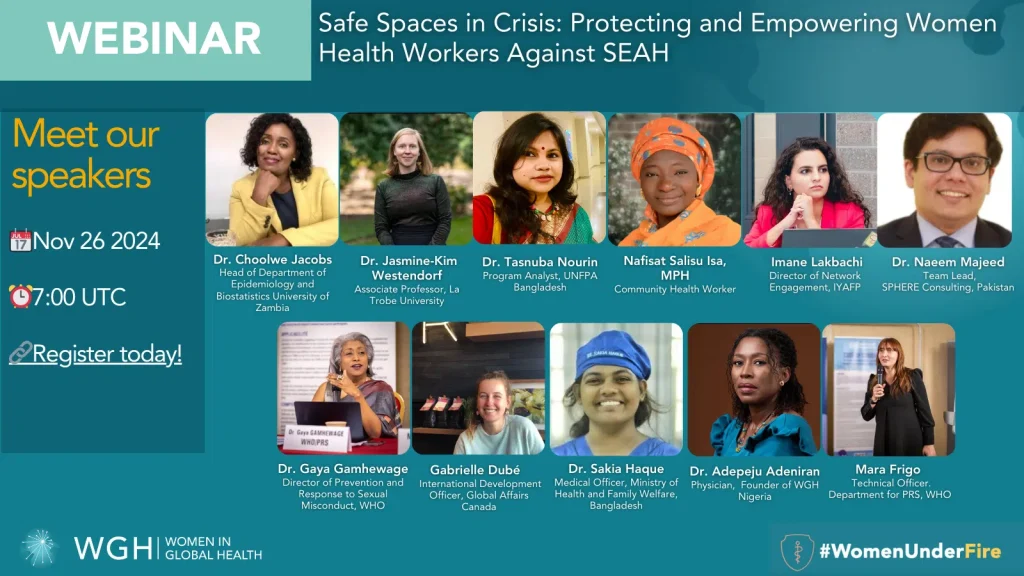
    WGH D.C., in collaboration with other US chapters, has conducted a series of policy forums with members of the Executive branch and Congress on a range of gender issues. In the coming months, we will host events and speakers’ series on matters of reproductive health, challenges faced by healthcare providers in the wake of restrictive laws on abortion, and other topics of concern. We strive to inform and mobilize local, state, and national advocates to mitigate the impacts of the U.S. Supreme Court decision on the funding and provision of sexual and reproductive health. We will also develop measurable indicators to hold officials accountable for action on policies and practices. We strive to ensure that all people have access to the full range of comprehensive reproductive health services and that providers are free to offer the best, safest, and most appropriate health care options available.

    Access to comprehensive reproductive health services is a human rights issue for more than half the population, impacting the lives of individuals, their families, and communities as well as health security for all people.

                                         
    DOWNLOAD STATEMENT

    Call to action to G7 leaders

    Ahead of this month’s G7 Leaders’ Summit and in the face of multiple global challenges, civil society groups (CSOs) from around the world urge G7 Leaders to take action on pandemics to both align the global response to make COVID-19 a controllable respiratory disease across all countries and step up efforts to prepare the world against the next pandemic threat. 

    While the outcomes of the last Global COVID-19 Summit and G7 Ministerial Meetings showed renewed political commitment and a much needed reset to the global response, ending this pandemic still demands further action. As noted in May’s G7 Foreign, Health, and Development Ministers communiqués, the pandemic won’t be over until it is over for all. Echoing their words, nearly 40 CSOs call on G7 Leaders to invest now to end the current crisis and prevent the next, including by addressing poverty and inequality as barriers to ending pandemics and through investment in national health capacity and…

    We encourage G7  leaders to prioritize the following actions:

    1. Fill the financing gaps to advance the delivery of COVID-19 tools still needed such as tests and treatments, increasing transparency to foster coordination and enhance value for money

    2. Advance new, equitable, inclusive, and innovative sources of financing for pandemic preparedness and response, including through the new Global Health Security and Pandemic Preparedness Fund (Pandemic Prep Fund)

    3. Build on the G7 Pact for Pandemic Readiness Concept Note of May 20 to drive support for a whole-of-government and whole-of-society approach to pandemic preparedness

    The CSOs also strongly urge G7 Leaders to capitalize on the opportunity at the G7 Summit to publicly endorse the Independent Panel for Pandemic Preparedness and Response’s recommendation to establish a Global Health Threats Council and commit to advancing the proposal during the upcoming United Nations General Assembly.

    DOWNLOAD LETTER

    Signatories 

    • The Access Challenge
    • AVAC
    • CARE USA
    • CDC Foundation
    • Center for Global Health Security & Diplomacy CISDI
    • CORE Group
    • Every Breath Counts
    • Fast-Track Cities Institute
    • FIND
    • Friends of the Global Fight
    • Frontline AIDS
    • Global Citizen
    • Global Health Advocacy Incubator Global Health Advocates
    • Global Health Council
    • Global Health Technologies Coalition
    • Global Vaccination Advisors
    • International Association of Providers of AIDS Care
    • International Rescue Committee Internews
    • IntraHealth International
    • Korean Advocates for Global Health Management Sciences for Health ONE
    • Pandemic Action Network Panorama Global
    • PATH
    • ReSurge
    • Right to Health Action
    • SAMOCRI
    • Stowarzyszenie Higieny Lecznictwa (SHL) Spark Street Advisors
    • Speak Up Africa
    • The Task Force for Global Health
    • THENet
    • University Research Co., LLC (URC) VillageReach
    • Women in Global Health

    Virchow €500,000 global health prize committee announced

    Ms Roopa Dhatt, Executive Director of Women in Global Health has been elected to the Virchow Prize Committee to oversee the annual laureate selection for the Virchow Prize for Global Health – a major international award that honors outstanding achievements in addressing global health challenges faced around the world

    The Virchow Prize ceremony will be held in Berlin on October 15, before the World Health Summit.

    Endowed with €500,000, the prize for Global Health is awarded by the Virchow Foundation for Global Health and recognizes individuals or organizations who dedicate their lives to improving global health. Aligning these efforts with the United Nations 2030 Agenda and the Sustainable Development Goals. 

    As the first appointed Virchow Prize Committee, elected members have the special and important role of selecting the inaugural laureate of the Virchow Prize for Global Health; representing a milestone towards improving awareness of global health issues and achieving our common mission of health for all.  

    Laureates will be announced on September 12.  

    Nominations for the Virchow Prize for Global are open through June 30. All information can be found here: https://virchowprize.org/nominations/  

    Learn more


    Pandemic treaty needs fair deal for health workers

    June 15, 2022 – The absence of health workers from an international pandemic instrument under discussion today by country governments has caused alarm among organizations calling for a fair deal for health workers.

    The Pandemic Instrument is a potentially legally binding treaty which all governments would use in preventing and responding to future pandemics.  However, while the draft outline covers governments, products and patients, it does not cover health workers.  

    “The document under negotiation seems to protect everyone and everything except the health workers on whom we depend.  It calls for strong health systems but doesn’t address problems which were starkly highlighted in the COVID-19 pandemic. 

    “We can’t have strong health systems without strong health workers and we can’t have global health security without security for health workers,” said Dr Magda Robalo, Global Managing Director of Women in Global Health.  

    “Health workers faced dangerous conditions without proper protections, they worked phenomenal hours in unrelenting shifts. Before the pandemic there was already a shortfall of 18 million health workers and now we hear more are leaving the profession.”.

    “It is essential principles of fair and equal pay, as well as safe and decent work underpin the treaty so that frontline health workers, 90% of whom are women, can go back to work for the next pandemic with the necessary support in place. There is now a consequent and alarming ‘great resignation’ of health workers.”

    The White Paper, dated June 7, 2022, sets out a strong intention to protect the public, set up governance and financing mechanisms and provide systems and countermeasures to future pandemics.

    Women in Global Health have put forward recommendations to the paper for fair and equal pay, safe and decent working conditions and fit for purpose personal protective equipment and infection controls.

    The Intergovernmental Negotiating Body, which includes the 194 member states of the World Health Assembly is in session today on the draft framing document which will govern the delivery of health for future pandemics. The instrument would enable countries around the globe to better prevent and respond to future Pandemics.

    Join us in advocating for immediate action to include health workers on the Pandemic Instrument. Click on the following links to share, or just copy and paste directly to tweet posts:

    The world needs women health workers and women health workers need the #INB to protect them in the #pandemictreaty.

    Health workers need:

    • fair pay
    •  equal leadership
    •  decent work
    •  safety

    Join @womeningh’s call to action!

    Click here to share this tweet

    ———————————————————————————-

    Why would women health workers go back to work for the next pandemic if they continue to feel dispensable?
    The #PandemicTreaty must deliver equal leadership, fair pay, and safe and decent work for health workers!

    Click here to share this tweet

    Hosting Events – Zoom Skills Training for Chapters


    Hosting Events – Skills Training for Chapters

    WATCH RECORDING
     

    This was an invitation-only workshop aimed at chapter members looking to improve their event hosting skills on the ZOOM platform.

    ABOUT THE WORKSHOP

    In this workshop, we’ll provide an overview of the technical do’s and don’ts when setting up zoom events and hosting them online. We’ll talk about what makes a good event, how to prepare in advance and how to increase your engagement both pre and post event. We’ll cover things like best practices in zoom hosting, how to interact with your audience launching live polls and other surveys, posting to chat, managing breakout rooms and livestreaming.


    Social Media – Skills Training for Chapters

    Social Media – Skills Training for Chapters

    Date: June 23, 2022

    Time: 15.00 to 15.45 CET / 9.00 – 9.45 EST

    This is an invitation-only workshop aimed at chapter members looking to improve their social media skills. Please register here to access the live workshop. We will be posting a recording of the session on our YouTube channel with private access for chapter members. We are also hosting a second workshop on event hosting on zoom. To find out more and register for the second workshop, click here.

    About the workshop

    In this workshop, we’ll provide an overview of our presence online and the ways you can interact and build pressure on decision makers and influencers in your context. We’ll take you step by step through our communications assets and simplify the actions you can take to be effective. We’ll cover things like best practices in posting on social media, how to optimize images and other media in Canva. The dos and don’ts of posting online. You’ll learn how to take full advantage of our toolkits to help build momentum around Women in Global Health advocacy points for our shared movement.
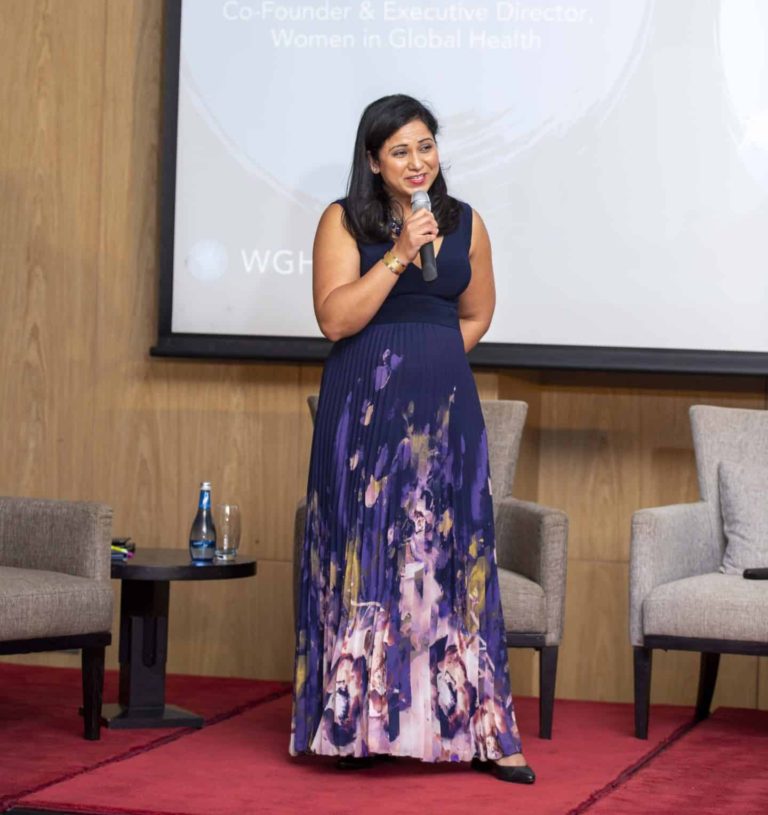
    WATCH RECORDING


    Resources 


    Gender Parity in Leadership at the World Health Assembly

    Less than a quarter of the 194 governments of the world sent delegations headed by women to the World Health Assembly this year, continuing a trend of a woman dominated sector, almost completely controlled by men.

    The annual count by Women in Global Health, an organisation which campaigns for gender equal leadership, pay and better conditions for women health workers, showed a 3% decline on last year, and a continuing trend of decisions taken at the highest health body being largely made by men.

    “Given 70% of health care workers, and 90% of frontline health care workers are women, this is an unacceptable downward trend”, said Dr Magda Robalo, Managing Director of Women in Global Health. “For every woman’s voice in health, there are three men making decisions for her”.

    “What it means in practice, is the decisions taken will affect community health workers, nurses, doctors, public health workers, nearly all of whom are women, as they suffer disproportionate, unrecognized and unaddressed impacts in their working conditions. When men control decision making, expert committees and governance seats, programmes have outcomes which largely favour men and are not sensitive to women’s needs, resulting in better paid work and promotions going to men.”

    Dr Robalo pointed out that the decisions also influence women health workers at a personal level, with lack of discussion and commitments around reducing work based violence, having enough infection control equipment available or ensuring personal protective equipment was made and purchased in women’s sizes.

    “This alarming result is even more disappointing, given commitments from the World Health Organisation during the Generation Equality Forum just last year to promote and encourage gender parity in WHA delegations, WHO panels and advisory groups,” she said. “The World Health Assembly is the highest norm and standard setting body in global health, and as they are operationalised, decisions taken can influence working conditions or affect health workers for years.”

    Women in Global Health have been conducting a Head of Delegation gender count since 2015 and have challenged all governments of the world to send women led delegations and have equal representation of women in delegations to the World Health Assembly 76 and its Executive Boards in Geneva in 2023.

    Download Statement


    Women in Global Health at the 75th World Health Assembly

    The 75th World Health Assembly is a momentous occasion for Women in Global Health, as we are sending our first ever delegation since achieving Official Relations status with the World Health Organization (WHO) earlier this year. The overarching theme of WGH’s WHA advocacy is women’s political representation and participation in global health. 

    We’ll also be hosting two events on the sidelines of the WHA:

  • May 24: Safe and Decent Working Conditions for Women in Times of Crisis
  • May 25: Policy Priorities for Gender-Responsive UHC
  • Visit our events section to register for those events.

    Our delegation will be working throughout the Assembly to advocate policy change and push the agenda towards these key areas:

  • Health Workforce
  • Universal Health Coverage
  • Pandemic Gender Responsiveness (all related Pandemic Treaty initiatives)
  • Sexual Exploitation, Abuse and Harassment in Health
  • Gender Equity in Leadership
  • During the week of the assembly we’ll be sending daily updates to our supporters on the five above agenda items that we’re tracking throughout the event. We invite you to join our movement if you haven’t already in advocating for women worldwide on these issues! Please download pre-generated social media messaging via our campaign toolkits to help amplify our key demands during WHA75. 

    Our Upcoming Gender Parity Country

    Women in Global Health has monitored the number of women-headed WHO member state delegations since 2010 and will be publishing these results during WHA75. Our findings in past years, reveal that progress remains unremarkable and unacceptably slow.

    In a continued bid to push for gender parity in WHA leadership, our annual count last year revealed the number of women-headed WHO member state delegations had climbed from a paltry 23% to just 26%. We’ll be publishing results of this year’s figures to demand better outcomes for women in global health leadership, in recognition of the following facts:

    • Women are form around 70% of the health workers but only 25% of senior roles. Around 70% of global health organizations are headed by men, and 80% of board chairs are men.
    • Women’s underrepresentation in health leadership means systems lose critical perspectives, knowledge and expertise, limiting the ability of health systems to keep communities healthy.
    • If current trends persist, gender parity will not be reached among global health CEOs for 40 years.

    About Women in Global Health

    Women in Global Health started in 2015 when four early career women who initially met online encountered an overwhelming response on social media on a range of issues.  Five years after launching as a not-for-profit that was entirely powered by volunteers and had no income, Women in Global Health now has 41 Chapters in 36 countries, and expects to have 100 by 2023.  With around 5,500 members and 70,000 supporters, we are nurses, midwives, doctors, public health professionals, health policy makers, community health workers, researchers, pharmacists and private sector health workers.

    The clear need for the organization is demonstrated by the spontaneous formation of many of our Chapters, our accelerating growth through the pandemic and the high representation of members in lower- and middle-income countries.

    Our goal is to remedy the inequities of leadership, pay and working conditions as well as the impacts of policy and programme decisions on gender.  This local to global movement is not just for the benefit of the health workforce but serves as one of the most far-reaching and cost-effective interventions that can be made in improving health care generally.

    Walk the Talk on Gender

    On the occasion of the World Health Assembly 2022 beginning Sunday 23, Women in Global Health are launching a campaign to Walk the Talk on Gender in step with the World Health Organization’s #WalkTheTalk Challenge.

    We’re challenging our chapter members to join our Official Delegation in spirit and solidarity at the 75th WHA to #WalkTheTalkOnGender.

    To join our campaign simply:

  • Take a photo of yourself, your friends, your family or your fellow chapter members while you are out walking, running, cycling or swimming
  • Post it to your social media and tag our campaign #WalkTheTalkOnGender
  • Do it before May 31!
  • We’ll be collecting your photos along with the progress on our key asks before, during and after the World Health Assembly. Join us in demonstrating the legwork behind our movement! We’ll use your photos to amplify our message that women are acting in solidarity to put pressure on political leaders, policy makers and WHA75 delegations to Walk the Talk on Gender.

    Let’s step it up for women worldwide!

    2019/2020 Annual Report

    Members of the WGH Community, Supporters, and Allies,

    Words cannot capture the immensity of the challenges we faced as a world in 2020. As a physician, I have seen the suffering of hospital wards this year, and how COVID-19 has devastated the world, exposing deep inequalities within and between countries. The pandemic has left women to bear the biggest impacts of the pandemic as shock absorbers in families, communities and societies. This gender inequality we have seen in the health and social workforce is one of those longstanding inequalities that weakens health systems everywhere, especially during a pandemic.

    But our community, the Women in Global Health movement, has been on the pandemic frontlines working and advocating.

    2020 was a milestone year for our movement, as we celebrated 5 years since four early-career women met on Twitter and decided to form Women in Global Health, determined to catalyze change.

    Having run our global movement on volunteer ‘woman power’ for four years, in 2020 we raised funds to support a small staff and a new 5-year strategy committed to challenging power and privilege for gender equity in global health.

    Our organizational development from 2019 to 2020 was our largest growth yet, receiving the first of several grants and additional funding sources, hiring our first team of paid full-time staff, and groundbreaking new research and events that have influenced policy and engaged high-level global health leaders. In 2020 alone, we have increased from 12 to 24 global chapters, widening our global reach and expanding from the policy level to grassroots engagement, including engaging with national governments and directly influencing policy change.

    This year, we will channel our energies into expanding our work and deepening our impact. The voices of talented women leaders in global health have not always been heard during COVID-19 – we will focus on fixing systems and not women – we will demand more opportunities for women, especially women from underrepresented groups. And we will create more opportunities for women to lead change, through our national chapters and working groups.

    COVID-19 is a global wake-up call, including for WGH. It is now time for a new social contract for all women. This next year, we plan to learn and grow with all of you by mobilizing global chapters, garnering commitment, holding leaders accountable, and advocating for change. You are the movement. When we work together we can transform global health and achieve a gender-equal world.
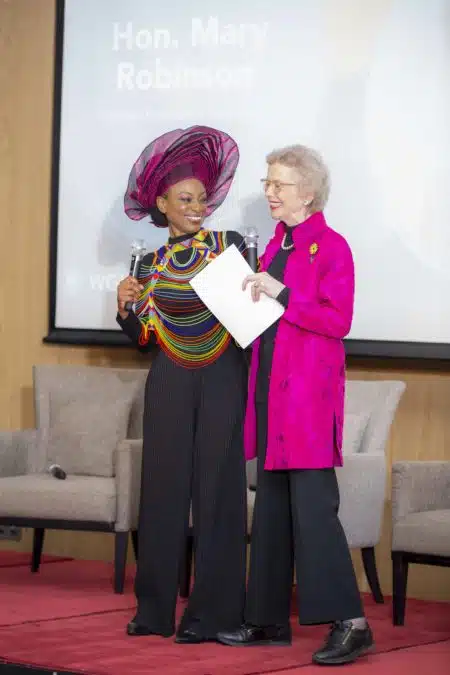
    Sincerely,

    Dr. Roopa Dhatt, Executive Director


    Download

    Beyond bandaids: Fixing sexual harassment, bullying and abuse of power in UNAIDS

    ‘The UNAIDS Secretariat is in crisis, a crisis which threatens its vital work. The leaders, policies and processes at UNAIDS have failed to prevent or properly respond to allegations of harassment including sexual harassment, bullying and abuse of power in UNAIDS’.

    – Independent Expert Panel on Prevention of and Response to Harassment including Sexual Harassment, Bullying and Abuse of Power at UNAIDS Secretariat, 2018[1]


    Women in Global Health has been tracking allegations relating to UNAIDS and congratulate the Independent Expert Panel (IEP) on Prevention of and Response to Harassment including Sexual Harassment, Bullying and Abuse of Power at UNAIDS Secretariat, for their comprehensive and frank report. It is a significant and hard-hitting report that needs immediate action.

    We have studied the IEP Report along with the UNAIDS Management Response to the IEP Report, both published on 7th December 2018 on the UNAIDS website. The Panel’s findings and recommendations are summarised below[2]:

    The Management Response from UNAIDS does not change our view that UNAIDS has ‘a broken organisational culture’[3] . We believe that was correctly identified by the surveys and other evidence gathering by the Panel.

    In particular, the IEP identified:

    ‘.. a vacuum of accountability. The leadership of the UNAIDS Secretariat fails to accept responsibility for a culture of impunity becoming prevalent in the organisation, a culture that does not ensure a safe and dignified workplace for its staff, and one that fails to respect human rights in line with law and United Nations values.’

    ‘.. a work culture of fear, lack of trust, and retaliation against those who speak up about harassment and abuse of power’ reported by many staff and in many country offices.

    ‘ The formal and informal processes for complaints handling are confusing, non-confidential, slow and ineffective, and not independent of the management.’


    Delivering Transformational Change

    Although the 5+ Point Plan in the UNAIDS Management Response[4] contains laudable and innovative activities, we agree with the Panel that:

    ‘ Recent initiatives taken by the UNAIDS Secretariat, particularly the 5+ Point Plan, are little more than bandaids that do not address serious, long-standing and systemic problems. ‘[5]


    Five key action areas:

  • Putting staff at the center
  • Strengthening compliance and standards
  • Galvanizing leadership, governance and oversight
  • Investing in management systems and activities
  • Enhancing capacity
  •  

    And we note the IEP’s comment that:

    ‘The Panel has no confidence that the current leadership can deliver cultural change when that leadership has been largely responsible for the current malaise.’[6]

    Any proposal that the current leadership should lead the transformation of UNAIDS is questionable and could further damage the bond of trust between UNAIDS staff, particularly female staff, and leaders who had a duty to ensure staff a safe and dignified working environment. It is far from clear that a leadership team who allowed and enabled the toxic work environment described by the IEP would have the moral authority to lead change to put it right. We therefore support the IEP’s conclusion that ‘the organisational culture of UNAIDS is something for which the leadership of the organisation must be responsible and held accountable‘[7] and support the call to ‘Recondition the Leadership Team’.


    Going beyond gender parity to gender transformative leadership 

    Sexual harassment of women in global health is widespread and largely unreported but sadly, it is not new. Inspired by the #MeToo movement in 2017-18 women in all sectors, including the UN, aid and global health sectors, are speaking out about the abuse they have suffered and witnessed – and they are being believed.


    UNAIDS Gender Action Plan driving results

    UNAIDS launched its first Gender Action Plan in 2013. It is a comprehensive framework to advance gender equality and women’s empowerment in the organization and integrates gender-responsive action across UNAIDS’ work. This has led to progress to parity:

    UNAIDS presents an apparent paradox. Known for a strong focus on rights and gender equality, UNAIDS is the only UN body to have achieved all 15 performance indicators of the UN’s System-Wide Action Plan on Gender Equality and the Empowerment of Women. In addition, UNAIDS has taken steps to achieve gender parity within the leadership of its country offices. Female Country Directors in UNAIDS increased from 27% in February 2013 to around 50% today. UNAIDS has been regarded as a leader in gender equality within the UN system. Yet evidence from the IEP report suggests success on gender equality in programmes and increasing gender parity in leadership existed side by side with ‘a patriarchal culture tolerating harassment and abuse of authority’[8].

    The UNAIDS example demonstrates that it is possible for organisations to have centres of excellence in gender equality programming and also have organisational cultures that tolerate sexual harassment of staff and/or sexual misconduct.

    Last month, Women in Global Health addressed this paradox in an article ‘A New Vision for Global Health Leadership’[9] outlining a Gender Transformative Leadership approach going beyond gender parity in leadership and focusing on organisational and cultural change. We wrote:

    ‘Women in Global Health assumes that a gender transformative approach will include gender parity in leadership but will go beyond gender parity to advance gender equality within organizations and in the work of those organizations.’

    As UNAIDS now grapples with the organisational transformation urgently needed to address the findings of the IEP we recommend adopting the principles of Gender Transformative Leadership proposed by Women in Global Health:


    10 principles of Gender Transformative Leadership:

  • Grounded in a vision of gender equality and women’s rights.

  • Challenges privilege and imbalances in power to eliminate gendered inefficiencies and rights deficiencies that undermine global health.

  • Is intersectional, addressing social and personal characteristics that intersect with gender — race, ethnicity, etcetera — to create multiple disadvantages. In global health, gender transformative leadership would drive equal participation of all genders from all geographies.

  • Applies to leaders from any gender, not exclusively to women leaders.

  • Covers leadership at all levels in global health from community to global.

  • Recognizes different forms of leadership, such as thought leadership, which are not based on simple hierarchy and people managed.

  • Can be used to describe individuals, institutions, and health systems.

  • Follows the principle of “progressive realization” allowing for different starting points and contexts but prioritizing inclusion of the most marginalized and excluded.

  • Always a “work in progress” since power dynamics are constantly changing.

  • Assumes that gender equality equals smarter global health and that gender transformative leadership is therefore necessary for the achievement of #healthforall

  •  

    Reflections from Women in Global Health on the findings of the IEP 

  • Global health rests on the work of women since women form 70% of the global health and social care workforce and 55% of the staff of UNAIDS. All UN organisations have an obligation to provide a decent work environment free from discrimination, sexual harassment, bullying and abuse of power and to treat staff of all genders with dignity at work in line with human rights and UN values. The IEP found that the working environment in UNAIDS fell below these standards and must be addressed urgently.

  • Sexual harassment, bullying and abuse of power, investigated in UNAIDS by IEP, are longstanding issues in the UN system and global health generally that must now be addressed across the board. The costs of inaction are felt significantly by individual survivors but inaction also weakens global health generally as organisations lose female talent, morale, income, trust and reputation. Finally, the moral standing of the UN system and its work is undermined. The UN cannot be the guardian of human rights whilst failing to protect the rights of its own staff.

  • Power imbalances between women and men in leadership, pay and contract terms leave groups of female staff vulnerable to abuse of power and harassment. Gender parity in leadership is a critical first step but beyond that, all leaders (male and female) should follow a Gender Transformative Leadership approach based on gender equality, women’s rights and challenging gendered privilege and imbalances in power.

  • Many of the deficiencies identified by the Panel in UNAIDS are also reported by staff in other UN agencies, including processes for investigating complaints that are not independent of management and not fit for purpose and organisational cultures and gendered power imbalances that increase the risk of sexual harassment, bullying and abuse of power. The UN system under the leadership of the UN Secretary General should review the lessons from the IEP report on UNAIDS and apply them to transform the whole UN system.

  • Although the UNAIDS 5+ Point Plan in the UNAIDS Management Response contains many positive initiatives, we believe the Panel were correct to question whether the leaders who enabled the present culture and systems can now lead the transformation to fix them. We support the Panel’s recommendation to change the leadership team and bring in new leaders with appropriate skills and values.

  • We call for a revaluation of the standard of proof and creating a system that puts people first. While the International Labour Organisation’s Administrative Tribunal (ILOAT) has been used as the standard by UNAIDS and WHO, there is precedence in the United Nations that disciplinary cases do not require proof beyond a reasonable doubt. Moreover, the Panel stress that sexual harassment is different from other forms of abuse of power, harassment and bullying and requires an approach that is sensitive and survivor centred.

  • We call on the UNAIDS Programme Coordinating Board, meeting 11-13 December 2018 to support implementation of the recommendations on UNAIDS in the Independent Expert Panel Report.

  • In conclusion, we recognise that discrimination, sexual harassment, bullying and abuse of power are societal wide challenges but it is time for UNAIDS to go beyond putting bandaids on a problem that requires radical action. Given its mission, the United Nations system and all its bodies have a responsibility to set the highest standards of behaviour and practice them. UNAIDS may be viewed as an exception, given its unique governance model discussed by the IEP but the Panel’s report points to UN wide deficiencies that must be addressed. All UN agencies, including the WHO, should be assessing their policies and processes against the Panel’s recommendations on governance, leadership and management and doing things differently through Gender Transformative Leadership.

    References

    [1] . Independent Expert Panel (IEP) on Prevention of and Response to Harassment including Sexual Harassment, Bullying and Abuse of Power at UNAIDS Secretariat, 2018 www.unaids.org/en/whoweare/pcb/iep

    [2] IEP as 1 above

    [3] IEP as 1 above

    [4] UNAIDS Management Response to IEP Report, 2018 www.UNAIDS%20report/management-response-to-iep-report_en.pdf

    [5] IEP as 1 above

    [6] IEP as 1 above

    [7] IEP as 1 above

    [8] IEP as 1 above

    [9] Women in Global Health A New Vision for Global Health Leadership, 5 November 2018, Devex www.devex.com/news/opinion-a-new-vision-for-global-health-leadership-93772

    Ten asks: Doing things differently in gender equality and global health

    ‘Good health is essential for sustained economic and social development and for poverty reduction. This requires universal health coverage, underpinned by a strong health system..’

    UN Secretary General August 2018 [1]

    As momentum builds on addressing Non-Communicable Diseases (NCDs) and Tuberculosis (TB) – it is important to also look at the foundation that will support the achievement of the SDG 3 Health and Wellbeing targets, including Universal Health Coverage (UHC). If the World Health Organization (WHO) is able to achieve its Triple Billion Goal [2] – one billion more people benefiting from UHC, one billion more people better protected from health emergencies, and one billion more people enjoying better health and wellbeing – #HealthforAll could be realized by 2030.


    Global health: Doing things differently

    21st century global health challenges, however, require us to do things differently. The World Bank and WHO estimate that 40 million new jobs in global health and social care must be created by 2030 to meet rising demand. [3] 18 million new health and social care jobs are needed in low income countries alone, where the burden of disease is greatest and health worker shortages most severe, to meet SDG and UHC targets. There is a lead time for creation of such skilled jobs and in some low income countries the pipeline of youth, particularly girls, finishing secondary school is insufficient to feed into the tertiary training needed. We can harness IT, robotics, e-health, new medicines, better medical devices and task shift to release capacity but most health prevention and care will continue to be delivered by human beings. Without people to fill those new jobs the post 2015 global health goals will not be achieved and a global scramble for health workers is likely with low and middle income countries losing skilled health workers to richer parts of the world.

    Although women are often portrayed as victims in global health, they comprise over 70% of the global health and social care workforce. [4] Women currently deliver health and social care to around 5 billion people and their work contributes around 5 % global GDP (approximately US$3 trillion). [5] Remove women from the global health system and there is no system. But the irony is that in this majority female profession, men hold an estimated 75% of global health decision making roles. [6] Men lead global health and women deliver it. It is also ironic that the gender pay gap in global health (estimated at 26% for high income countries and 29% for upper middle income countries) is higher than the global average for all other employment sectors. [7] In other words, the men who reach the top in global health reward themselves well compared to the women segregated into the lower paid, lower status and less secure parts of the profession. And to compound that inequality, around half the work women in health and social care remain unrecognized and unpaid, seen as a natural extension of the caring role socially assigned to women everywhere. And the burden of that unpaid care work impacts their own health, income and life chances.

    The 40 million new health and social care jobs needed by 2030 will not be created without urgent and serious investment in the female health and social care workforce. Doing things differently does not mean creating more jobs on current terms and putting more women into underpaid or unpaid roles in health and social care systems overwhelmingly led by men. Business as usual will not achieve the transformation needed to deliver #HealthforAll. Currently global health is flying on one wing, not drawing its leadership from 100% of the talent pool. Evidence from other sectors show that diverse leadership teams are likely to be more innovative and more successful. We have untapped potential in global health. Quality and outcomes suffer because the women who deliver health and social care are too often unable to contribute diverse ideas and perspectives from their professional experience and lived experience as women. As women form the majority of medical and allied health graduates in an increasing number of countries, we cannot afford to lose female health workers due to the pressure of insecure job terms, discrimination, harassment or violence. New and existing health and social care jobs must be created as decent work for women where women and men enter leadership posts based on merit. Gender equality must be a goal in health outreach, programs and delivery, as well in leadership at all levels.


    Realizing the triple gender dividend in global health

    Since our formation in 2015, Women in Global Health, has advocated for gender equality in global health leadership at all levels. In 2017, recognizing the crucial role of the health workforce in health systems and achieving UHC and the SDGs, WGH formed the Gender Equity Hub with WHO, under the umbrella of the Global Health Workforce Network. The Gender Equity Hub, convenes a critical group of partner organizations and experts to

    ‘accelerate large-scale gender-transformative progress to address gender inequities and biases in the health and social workforce through evidence and data, policy tools, advocacy and implementation.’

    A report issued by the UN Secretary General [8] recognized that

    ’…..as 70 per cent of the global health workforce is female, creating jobs in the health sector is an investment in women’s empowerment and gender equality.’

    We welcome this statement. Investment in the female health and social care workforce must be an urgent priority. For example, in case of NCDs and TB, a recent focus of the UN, both shift the focus to the primary health care level, where prevention and management is generally carried out by female nurses and community health workers. Moreover, investment in the female health and social care workforce has a wider multiplier effect, offering a Triple Gender Dividend comprised of:
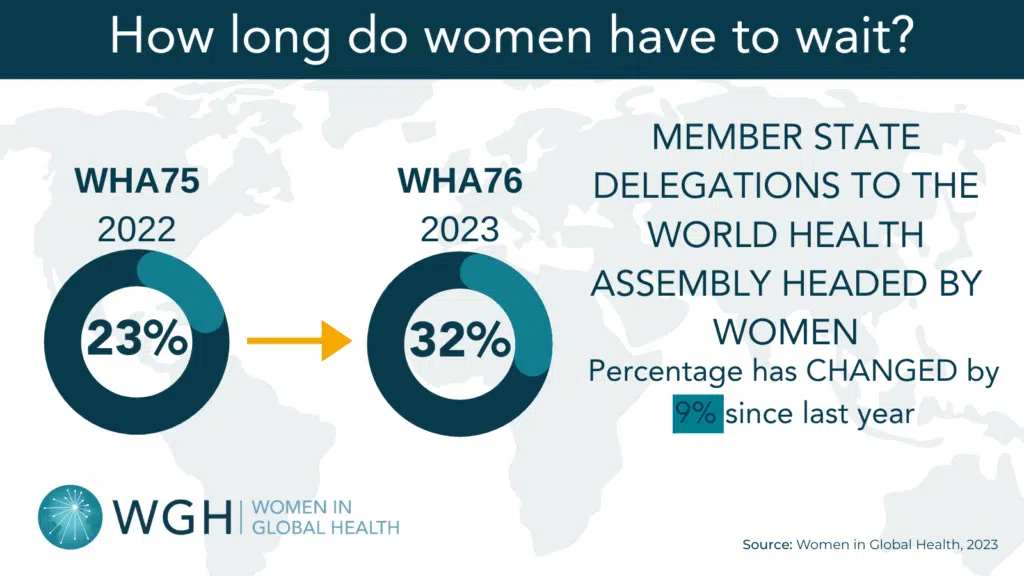
    1. Health Dividend: since expanding women’s work in health and social care is the only way to fill the millions of new jobs that must be created to meet growing demand and reach UHC and health related SDGs by 2030;

    2. Gender Equality Dividend: investment in women and the education of girls to enter formal, paid work will increase gender equality and women’s empowerment as women gain income, education and autonomy. And in turn this is likely to improve family education, nutrition, women’s and children’s health and other aspects of development.
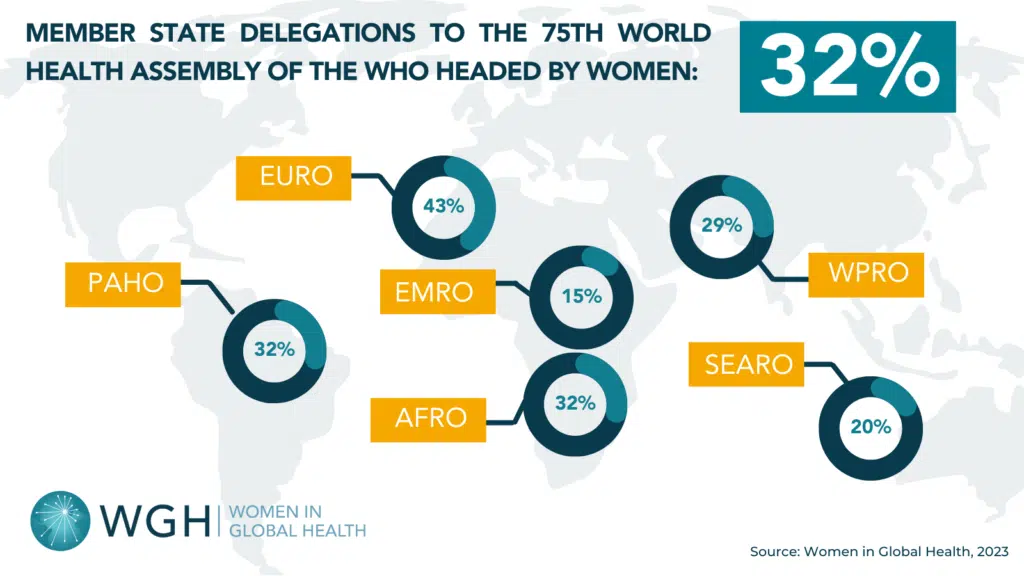
    3. Development Dividend: New jobs created will fuel economic growth.

    This gender dividend, if realized, will improve the health and lives of people everywhere. The health and social care worker shortage is global. This is everybody’s business.

    We are delighted to see growing commitment to invest in the health workforce, including women, but IS THE TIDE TURNING? Will greater investment in the female health and social care workforce be agreed on? Such commitments must then follow through into the “Working for Health” five-year action plan for health employment and inclusive economic growth, created by ILO, OECD and WHO and into national health workforce plans. [9]


    Ten asks: doing things differently in gender equality and global health

    Finally, we have 10 asks for UN Member States and international organizations:

    1. Change the narrative: women in global health are change agents and drivers of health, not victims.

    2. Shift the mind-set: take advantage of 100% of the talent pool, especially women, all genders, marginalized groups and people from diverse backgrounds.

    3. Include voices from the South: especially women from the South, as central to global health decision making.

    4. Record and value unpaid health and social care work by girls and women in order to move that work into the formal labor market.

    5. Adopt gender transformative strategies with programs and policies that are enabling for all genders in global health work and organizations. Focus on changing the environment, not on fixing women to fit into unequal organizations and cultures.

    6. Root out inequity: address the power relations and structures that promote inequity in our work and organizations, especially all forms of discrimination, harassment and violence, which commonly affect women.

    7. Close all gender gaps including the gender data gap, gender pay gap, and gender leadership gap.

    8. Customize policy solutions to fit the societal and cultural context, but do not comprise on the goal.

    9. Support collective action through movements and partnerships, to accelerate progress, particularly on employment rights such as parental leave to enable all parents to take paid work.

    10. Understand that gender equality in global health is everyone’s business: this is not a ‘women’s issue’, it applies to all sectors, countries and people.

    Business as usual will not achieve the transformation in global health needed to kick start long term change. Too much is at stake and the price is too high – in addition to the human cost of preventable death and suffering, the World Bank estimates gender inequities cost US $160 Trillion in wealth and social capital. [10] To do things differently and deliver #HealthForAll, we must invest urgently and seriously in the female health and social care workforce.

    Acknowledgements: We would like to acknowledge the global health civil society and workforce organizations also voicing the importance of addressing the gender dimensions of the health workforce, RinGS, FIP, Intrahealth International, Frontline Health Workers Coalition, JPHIEGO, HRH2030, Nursing Now and many other members of the Gender Equity Hub, Global Health Workforce Network.

    References

    [1] UN General Assembly 73rd Session Report of the Secretary General ‘Implementation of the Third United Nations Decade on the Eradication of Poverty (2018-2027)’ 8 August 2018

    [2] WHO Draft thirteenth general programme of work 2019–2023, Accessed at: http://www.who.int/about/what-we-do/gpw13-expert-group/Draft-GPW13-Advance-Edited-5Jan2018.pdf

    [3] WHO- Global Strategy on Human Resources for Health Workforce 2030 (2016). Note: Health workers data refers to physicians, nurses, midwives and a limited group of other health occupations, based on WHO databases.

    [4] Improving employment and working conditions in health services – ILO 2017. Accessed at: https://www.ilo.org/wcmsp5/groups/public/—ed_dialogue/—sector/documents/publication/wcms_548288.pdf

    [5] Langer, Ana et. al. (2015). Women and Health: the key for sustainable development. The Lancet , Volume 386 , Issue 9999 , 1165 – 1210

    [6] Women in Global Health 2018

    [7] This refers to an unadjusted gender wage gap. Data available from 40 countries (27 high-income; eight upper middle-income; four lower-middle-income; one low-income); latest available data: 2011–13. Source: ILOSTAT based on national labour force surveys and official estimates of each country.

    [8] UN General Assembly 73rd Session Report of the Secretary General ‘Implementation of the Third United Nations Decade on the Eradication of Poverty (2018-2027)’ 8 August 2018

    [9] Working for Health: A Five-Year Action Plan for Health Employment and Inclusive Economic Growth (2017–21), WHO, 2018. Accessed at: http://apps.who.int/iris/bitstream/handle/10665/272941/9789241514149-eng.pdf?ua=1

    [10] Globally, Countries Lose $160 Trillion in Wealth Due to Earnings Gaps Between Women and Men, World Bank 2018. Accessed at: https://www.worldbank.org/en/news/press-release/2018/05/30/globally-countries-lose-160-trillion-in-wealth-due-to-earnings-gaps-between-women-and-men

    A fireside chat: The 5 ‘C’s for women’s leadership in global health – lived experiences across a generation

    This week Women in Global Health’s Executive Director Roopa Dhatt and Board of Directors Member/Senior Fellow Ann Keeling sat down to discuss questions on women’s leadership in global health posed to WGH for a presentation. We recorded the conversation and decided to turn it into a blog. This conversation spans a generation and reflects a multitude of lived experiences.

    Roopa is an Indian-American, early career global health advocate who entered the space as a youth leader She is now practicing international health and is a primary care physician, in addition to leading WGH.

    Ann has over 35 years’ experience in human and social development working for UN, Commonwealth and governments of UK, Papua New Guinea and Pakistan. Ann was Head of Gender Equality for the UK government, CEO of the International Diabetes Federation and founded the NCD Alliance.


    Question: How has your experience in global health been different because you are a woman?​

    Roopa: Speaking as a medical practitioner and a global health advocate with social identities of being a woman, a woman of color and an immigrant, my reflections are shaped both by my personal journey and the journeys of the people I have met. Foremost, I feel I can empathize with the women and girls who are the most marginalized in global health and understand some of the gendered and cross-cultural issues they face. I am more convinced them ever before, that a diverse world needs diverse thinking. The dominance of one group in decision-making in global health leads to group thinking which fails to recognize and challenge the social determinants of health for women and girls – specifically, the gendered determinants of health – and fails to recognize the health needs of women and girls. The upside of being a woman in global health is being able to bring issues to the decision-making table that always should have been a priority, but simply weren’t because the needs of women both as patients and as health workers were not considered important.

    Ann: Agreed! We have been working on global health for decades but to give an example, it is only in the last couple of years that menstruation as a political, economic, social and a health issue has been put onto the global health agenda and spoken about publicly. I am delighted to see groups advocating on menstruation and leveraging action. I can’t think why we didn’t make menstruation central to reproductive health and rights a long time ago. We all know women and girls menstruate but the taboos surrounding menstruation have kept millions of girls out of school and until recently, meant that supply kits for refugees did not include sanitary protection. If men menstruated it would be revered and not treated as a cause for shame. As women in global health we have an opportunity to flip the narrative and bring different perspectives that will strengthen global health for all genders.

    Roopa: At the same time, the downside for women in global health is that we face the paradox of being the majority of global health and social care workers, but being in the minority in decision-making. Leadership in global health still has a male face despite health being an increasingly feminized profession. Women can expect to face additional barriers, micro aggressions, unconscious biases etc. that keep us in second place. And the gender disadvantage is multiplied many times for women of color, some religions, transgender women and for women from the global South. We don’t start with a level playing field and women who question the status quo risk being branded troublemakers. We believe, based on individual reports, that female health and social care workers commonly face sexual harassment and violence from male colleagues, community members and even their patients. This creates a toxic working environment for women in global health that their male colleagues rarely face.

    Ann: I’ve just read the report just out from the UK House of Commons on ‘Sexual Harassment in the Workplace.’ [1] It estimates 40% of working women in the UK experience unwanted sexual behaviour at work despite it being unlawful. It generally isn’t reported, is often regarded as a ‘normal’ part of office culture and many male managers seem genuinely unaware – that in itself is a compelling argument for gender parity in leadership. Even in UK there is no reliable data and the burden of calling abusers and employers to account falls on the victim. Ensuring zero tolerance of sexual harassment in global health is essential if, as you say, we are to level the playing field at work between women and men. It is also essential to fill the 40 million new health and social care jobs needed to reach Universal Health Coverage. We need women to fill those jobs and that won’t happen if they battle sexual harassment and violence as an everyday reality at work.

    Roopa: The #MeToo movement has taken the lid off this particular Pandora’s box and the secrets mainly shared by women are now becoming public knowledge. It’s also true that we have very little research and data on incidence in the global health and social care sector. Although there has been push back and we are told uncertainty has been created for some men who now feel unsure how to behave with female colleagues. But that uncertainty cannot compare with the stress and suffering women have endured and continue to endure as a result of workplace sexual harassment and violence. The two aren’t equal in the balance. I’m encouraged that these issues are out in the open now. Momentum has been building to advance gender parity in global health leadership and gender equality in global health. Awareness is growing that gender equality brings smart global health. We are gaining ground and bringing both men and women with us. This is the very best time as a woman to be working in global health.


    Question: What one piece of advice would you give another woman looking to enter the global health field?

    Roopa: Go for it! We can’t wait for someone else to step forward and bring change so be the change you want to see.

    Ann: As Helen Clark said, know that there will be no red carpet laid out for you when you take up a leadership role and second, join Women in Global Health to advocate for change and for support and inspiration.

    Roopa: Tips that I have learned along the way or that have been passed along: 1) Be a part of a community – join a group or network that can support your journey; 2) Build relationships that matter – invest in professional relationships, they help you grow and find opportunities; 3) Explore your interests- don’t be afraid to diverge from the classic path; 4) Integrity matters – stay true to your values; 5) Most importantly, take care of yourself—resilience is a learned practice and much needed in this space!


    Question: How can we advocate for ourselves as women leaders?

    Ann: We must advocate for ourselves as individuals and advocate for all women as a group to have equal access as men to leadership opportunities.

    Roopa: We must be evaluated on our merit, but we know that access to opportunities is a much bigger issue of privilege and power.

    Ann: As women we must recognize there are deeper power dynamics, patriarchal culture, policies, practices of the organizations and systems in which we work. We need to be both competent and have the courage to speak out, put forward ourselves and other women, while working with others, men and women to address the root causes of inequity.

    Roopa: The more I work in global health, especially in gender, in addition to viewing everything through a gender lens, I have learned to also look through the political lens. The spaces we operate in are always political – learn how to read the political dynamics. An organization not only has a unique culture and set of values, but it likely operates by a set of gender norms and bias, which affects all people. Be aware and responsive– take advantage of opportunities to challenge gendered norms and expectations when possible.

    Ann: Keep trying! Learn how to stand up again and again, when you are knocked down.


    Question: How can we serve our fellow women as mentors and role models?

    Roopa: I believe we can serve both MEN and women by being role models and mentors. It is essential that men also see women in positions of leadership and that women’s leadership becomes normalized and accepted by all genders as something unremarkable.

    Ann: We need to distinguish between mentoring and championing. It’s common for men in leadership to champion the careers of younger men, which rarely happens for women. Men champion men in their own image, younger versions of themselves, and do it in the name of mentoring. I have frequently seen senior men make contacts for other men, put a word in for them when they apply for promotion and encourage them to apply for promotion while no-one encourages their better qualified female colleagues. For me mentoring is more about guidance and identifying skills gaps, rather than advocating for career advancement. I am concerned that mentoring schemes for women will focus on guidance and building skills but will not help women advance if the male to male version of mentoring continues to be one group of men championing younger men to succeed them.
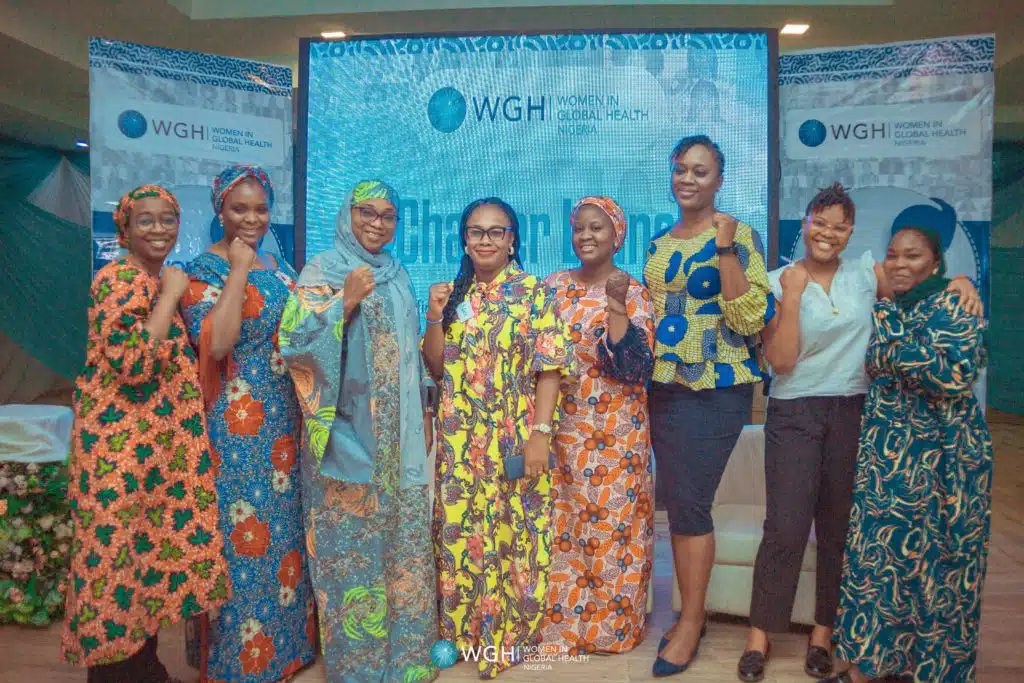
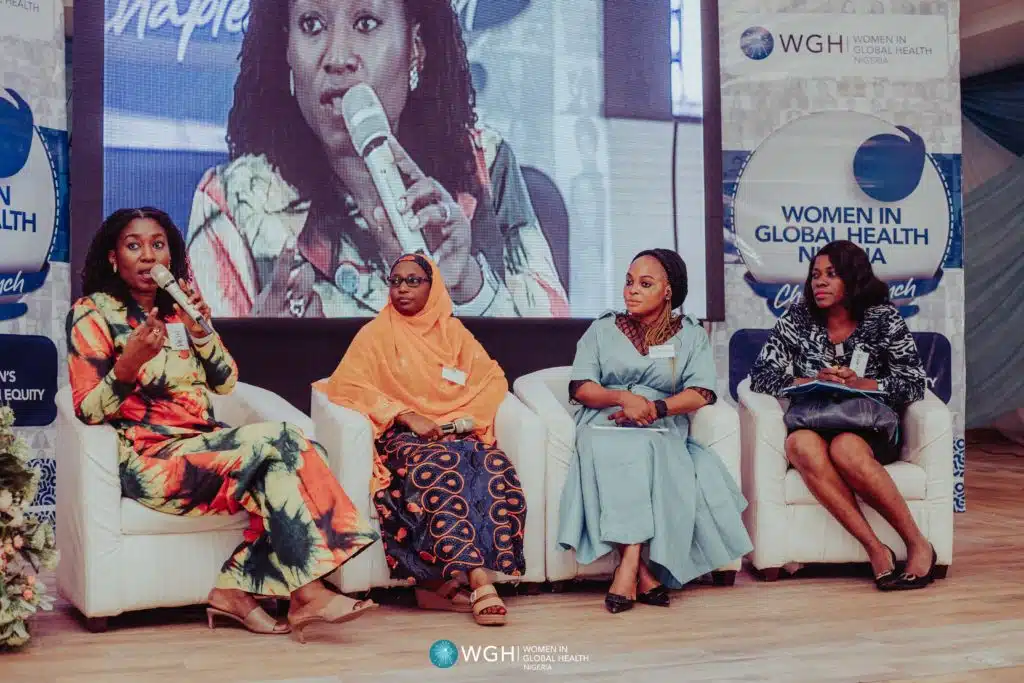
    Roopa: It is critical when we think of mentoring that we don’t try to change ourselves as women to fit into systems designed for men. It’s not women that have to change, it’s the power dynamics of the patriarchal systems designed to exclude women. This is a very important message when we are mentoring both men and women. When you find yourself excluded don’t ask ‘what’s wrong with me?’, instead ask ‘what’s wrong with the system and how does it need to change?’ We must aim not only to join the system but also to transform it so it is fairer, merit based, diverse and therefore better. We also need to engage men in senior roles to mentor early career women as well as men.

    Ann: When I started in my career overseas with the UK government there were almost no women in senior jobs to be role models for me. The British government had a ‘marriage bar’ until the early 1970s meaning women in the overseas service had to resign when they married. We understood that to be one of the few women, like Margaret Thatcher, who made it into leadership, we had to be better than all the men around us and play by men’s rules. We have come a long way in the last 40 years and as you say, we now aim to change the system and not just join it. As role models we can best inspire both women and men by demonstrating the four ‘Cs’- Competence, Commitment, Courage and Change.

    Roopa: And I would add a fifth ‘C’ – Compassion. And say that those five ‘Cs’ are what we are looking for in all leaders, all genders, to drive global health leaving no-one behind.

    References

    [1] House of Commons Women and Equalities Committee ‘Sexual harassment in the workplace’

    Fifth Report of Session 2017–19, HC 725 Published on 25 July 2018 by authority of the House of Commons www.parliament.uk/womenandequalities

    Forty years later – Let’s not be gender blind in primary health care

    Statement by Women in Global Health on

    Draft Astana Declaration on Primary Health Care: 

    From Alma-ata towards Universal Health Coverage and the Sustainable Development Goals 

    Women in Global Health (WGH) strongly supports the commitment made by world leaders in in the Declaration of Alma-Ata 1978 to achieve health for all through Primary Health Care (PHC). We believe that the commitment to Universal Health Coverage (UHC), agreed to by world leaders in the 2015 Sustainable Development Goals (SDG 3, Target 3.8), is the visionary goal that can deliver health for all.

    PHC and UHC are mutually reinforcing. PHC is essential to meeting the right to health for all people everywhere and therefore essential to achieving UHC. In turn, UHC rests on the foundation of effective and equitable PHC. WGH therefore applauds the resolve expressed in the draft Astana Declaration to reaffirm high level political commitment to PHC and confirming PHC as ‘a necessary foundation to achieve UHC.’

    WGH, however, notes that the Draft Declaration fails to note the critical importance of addressing gender equality in both PHC and UHC. Gender equality will determine the achievement of PHC and UHC for three major reasons:

    First, the ‘Universal’ in UHC means that it must reach everyone regardless of gender, ethnicity, caste, income or any other social or personal characteristic. UHC must reach all women and girls everywhere if it is to succeed in leaving no one behind. Success in achieving UHC will be measured by who is included and able to access the care they need. Women and girls from disadvantaged social groups will generally be the hardest to reach, not least because on average women have lower incomes than men and less control over money.

    As the draft Declaration states: ‘societies do not automatically gravitate toward health and health equity. To be successful, we need to take deliberate actions to reinforce the three components of PHC, emphasizing greater equity, quality and efficiency’. WGH supports this statement. Given the historic political, economic and social marginalization of women and girls in many contexts deliberate action will be needed to address gender equality in both PHC and UHC.

    Secondly, to achieve UHC and the SDGs, an estimated 40 million new health and social care jobs will be needed globally by 2030, and an additional 18 million health workers, primarily in low income countries. The majority of these new jobs should be in PHC to meet changing demographics and burden of disease.

    In many countries women hold over 75% of jobs in the health sector but are greatly underrepresented in senior and decision making roles and over represented in lower ranking, less well paid jobs and sectors.

    An investment in UHC requires an investment in women in the health and social care workforce. Governments must address gender equality and invest in women to ensure decent working conditions, particularly for frontline health workers at community level. Women are backbone of health systems, particularly at PHC but often underpaid and marginalized. This is inequitable and also weakens health delivery since the health workers who know most about the health systems they run have the least say in their design and management.

    Effective health systems must ensure gender parity at all levels of decision making to harness women’s perspectives and talent.

    Thirdly, both PHC and UHC rest on the unpaid work done by women in social care. Women provide the majority of unpaid care globally for their families and communities, estimated to be worth over $3 billion per annum. Much of this care for children, the disabled, older people and community members is unrecorded.

    The burden of this care may fall on girls and interrupt their schooling and future economic opportunities. Similarly, this burden of unpaid care work can keep women in poverty because they are unable to take paid work. Countries implementing UHC must recognize and address the unpaid health care work performed by all genders. It has implications for individuals but also has major negative impacts upon the economy and economic growth.

    WGH therefore recommends three additions to the Draft Declaration: 1. Page one, Para four under To address the health and development challenges of the modern era, we need PHC that ADD

    4) ensures equity of access, particularly for the poorest and most marginalized women and girls

    2. Page one, Para six under Our success will be driven by ADD

    Equality, particularly gender equality and addressing the gendered determinants of health, the needs and rights of the female health workforce and the burden of unpaid health and social care that largely falls upon women. Women, as the majority of workers in global health, currently deliver care to around 5 billion people and will deliver both PHC and UHC if enabled to do so.

    3. Page two, Para two under To address today’s challenges and seize opportunities for a healthy future, we must: ADD

    Invest in the female health and social care workforce. We will create 40 million new health and social care jobs globally by 2030 to reach UHC, and an additional 18 million health workers, primarily in low income countries. The majority of these new jobs will be in PHC to meet changing demographics and burden of disease. Globally women hold over 70% of jobs in the health and social care sector but are greatly underrepresented in senior and decision making roles. We will address gender equality and invest in women to ensure decent working conditions, particularly for frontline PHC workers at community level. We will work with partners in all sectors to ensure gender parity at all levels of decision making in health to harness talent from the whole of society.

    In conclusion:

    Forty years ago world leaders resolved in the Declaration of Alma-Ata to achieve health for all through PHC. Implementation of that commitment, however, has not been fast or extensive enough. Millions of people die prematurely and suffer every year because they lack access to efficient, affordable and quality PHC. The commitment by world leaders in the SDGs to deliver UHC by 2030 provides a significant opportunity to deliver the Alma-Ata Declaration commitment on PHC within the broader framework of UHC. WGH strongly supports this ambition.

    However, the Draft Declaration is gender blind. Gender blind approaches to delivering PHC and UHC will fail because they overlook the gendered determinants of health and the contribution made by women as the majority of the workforce in global health and social care. Women currently make an essential contribution to delivering global health and social care and will be equally essential to delivering PHC and UHC. It is time to change the narrative and recognize women as drivers of change in global health, and not only as beneficiaries.

    We urge political leaders and partners in all sectors to invest in PHC now to ensure today’s young populations in low and middle income countries enter old age healthy (realizing the youth dividend and the dividend from healthy ageing). We also urge political leaders and partners to realize the gender dividend from investing in women’s health and their work in health and social care. By taking action on gender equality now world leaders can ensure this anniversary of Alma-Ata will be different from past anniversaries, marking serious progress on the road to UHC and health for all.

    Women in Global Health Contact: info@womeningh.org

    Links:

    Global Conference on Primary Health Care

    Forty Years Later – Let’s Not be Gender Blind in Primary Health Care (Download)

    Opinion: A new vision for global health leadership

    The Sustainable Development Goals, with universal health coverage at the center, set an ambitious agenda for global health to reach by 2030. But progress continues to be held back by the narrow base from which global health leadership is drawn — and specifically, the widespread exclusion of women from decision-making.

    Last year, 400 leaders from 68 countries called for “a new vision for leadership in global health” to address gender inequity and the gender gap in leadership. We propose that gender transformative leadership be used to deliver that vision — both for the advancement of women and to achieve health for all.

    Global health: Delivered by women, led by men

    Often portrayed as victims in global health, facing sexual harassment, violence, and at times threats to their lives; women form 70 percent of the health and social care workforce. Women are the main drivers of health care delivery and are potentially powerful agents of change. But they hold only around 20 percent of senior posts and are generally segregated into lower status, lower paid, or unpaid sectors.

    Despite decades of global targets on gender equality, including SDG 5 on gender equality and empowering all women and girls, the 2017 Global Health 5050 report found that 45 percent of 140 global health organizations surveyed had no commitment to gender equality in their strategies or policies.

    Data from Women in Global Health and the global health report have also shone a light on the gender gap in health leadership. Exclusion of women from the majority of health decision-making roles is inequitable, but more than that, it weakens global health since the women workers who know most about health systems have the least say in their design and management.

    Women from low- and middle-income countries face the greatest barriers accessing senior posts in their home countries and globally, due to lesser autonomy, gender discrimination, bias, greater vulnerability to harassment and violence, disparities in education and health, and greater burden for domestic and child care. Health policy decisions are not influenced equally by the priorities and experiences of men and women and global health is diminished by lost female ideas, innovation, expertise, and talent.

    The roots of gender transformative leadership

    Gender transformative leadership is based on concepts of transformative leadership, feminist leadership, and gender transformative approaches. The concept fills critical gaps in current definitions of leadership that are predicated on traits or behaviors, skills, and power relationships between leaders and followers; but have overlooked the question of what leadership looks like.

    As the name suggests, there are two main constructs in the definition of gender transformative leadership: “gender” and “transformative leadership.”

    Gender transformative leadership is transformative leadership with a gender-inclusive lens. In the global health context, this model addresses the gender inequities in power that undermine health systems’ design and delivery. Gender transformative leadership is driven by the vision of gender equality and women’s rights embodied in international conventions and agreements, including SDG 5, and addresses social and cultural norms, conscious and unconscious bias, and deep-rooted structures of inequality.

    Rather than expecting women to “lean in” to professions and organizations that have largely excluded them from leadership and senior roles, gender transformative leadership addresses discrimination, bias, and inequities in the system so women are included on an equal basis to men. The term “gender transformative” can be applied to decision-makers, the institutions they work in, and to the health system itself.

    Gender transformative leadership takes an intersectional approach, analyzing how gender intersects with other facets of identity, such as race, disability, sexual orientation, caste, and class, to multiply vulnerability and disadvantage for particular groups.

    Additional action is needed to identify and address such multiple, intersectional forms of disadvantage that may affect any gender. In the context of global health, geography is a significant factor for professionals, especially women, from low-income countries, facing structural barriers to participation in global health.

    Gender transformative leadership applies to all leaders at each level of health system, from community to global, regardless of their gender. Women in Global Health acknowledges that organizations operate in diverse settings and start from different points so approaches to address gender inequities must be customized to the context. Women in Global Health assumes that a gender transformative approach will include gender parity in leadership but will go beyond gender parity to advance gender equality within organizations and in the work of those organizations, resulting in better global health.

    The 10 principles of gender transformative leadership

    Gender transformative leadership is predicated on these concrete principles:

    1. Grounded in a vision of gender equality and women’s rights.

    2. Challenges privilege and imbalances in power to eliminate gendered inefficiencies and rights deficiencies that undermine global health.

    3. Is intersectional, addressing social and personal characteristics that intersect with gender — race, ethnicity, etcetera — to create multiple disadvantages. In global health, gender transformative leadership would drive equal participation of all genders from all geographies.

    4. Applies to leaders from any gender, not exclusively to women leaders.

    5. Covers leadership at all levels in global health from community to global.

    6. Recognizes different forms of leadership, such as thought leadership, which are not based on simple hierarchy and people managed.

    7. Can be used to describe individuals, institutions, and health systems.

    8. Follows the principle of “progressive realization” allowing for different starting points and contexts but prioritizing inclusion of the most marginalized and excluded.

    9. Always a “work in progress” since power dynamics are constantly changing.

    10. Assumes that gender equality equals smarter global health and that gender transformative leadership is therefore necessary for the achievement of #healthforall.

    Gender transformative leaders in global health aim to leave no-one behind in access to health and equally, aim to leave no-one behind in leadership and decision-making.


    This article was initially published on the devex.com website

    https://www.devex.com/news/opinion-a-new-vision-for-global-health-leadership-93772


    Regional Director, EMRO WHO: Why elect another man?

    One of the items of business at the upcoming World Health Assembly in Geneva on May 19th, 2018 will be the election of a new Regional Director (RD) for WHO’s Eastern Mediterranean Regional Office (EMRO) following the untimely death in October 2017 of RD Dr Mahmoud Fikri.

    In 2017 the election of Dr Tedros Adhanom promised a new approach and renewed focus on gender equality both in WHO’s leadership and programming based on the understanding that gender equality is smart global health. The achievement of gender parity in leadership at WHO headquarters has not yet been matched by similar progress at regional and country levels. WHO currently has four women Regional Directors out of six (EMRO is the sixth WHO Regional Office).

    Since its establishment in 1949 EMRO has had five Regional Directors, all of them men. Appointing a female Regional Director in EMRO would show that this region of WHO is shifting its mindset. After nearly 70 years of male leadership in EMRO it is time to ask:

    Why elect another man as Regional Director EMRO?

    Gender Equality is Critical for Health in the EMRO Region

    WHO EMRO serves the WHO Eastern Mediterranean Region, with 21 Member States and Palestine (West Bank and Gaza Strip), and a population of nearly 583 million people. The 21 countries of the EMRO region [1] are highly diverse ranging from some of the richest countries in the world (Qatar, Kuwait) to some of the poorest (Yemen, Sudan). Many countries in the region are currently affected by conflict (Syria), others are emerging from conflict (Afghanistan). Despite advances in the region since EMRO was established, many countries score low on indices of gender development and equality.

    In 2015 only 4 countries in the EMRO region were ranked amongst the top 50 countries globally on the Gender Inequality Index [2] and none made it into the top 25 [3]. Seven EMRO countries had female labour force participation rates of 20% or less in 2015 [4] (those figures indicate women’s autonomy and access to income but do not record women’s substantial unpaid work). And the maternal mortality rate amongst EMRO countries ranged from 4 maternal deaths per 100,000 live births in Kuwait to 396 in Afghanistan in 2015. [5] There is therefore, strong reason for the EMRO region to prioritise both women’s health and gender equality as a key determinant of women’s health.

    Currently at global level, women make up around 70% of the global health and social care workforce. In the EMRO region female doctors, nurses, midwives and community health workers play a vital role on the frontlines of health, delivering health and social care to millions, often in insecure and high-risk contexts, yet only 6 out of 21 (28%) Ministers of Health in 2018 were women and 8 out of 18 (44%) WHO Head of Country Offices Staff are women. [6]

    In most regions of the world, female medical students now outnumber their male counterparts. And although not so everywhere in the EMRO region, it is a growing trend. Female medical postgraduates, for example, have outnumbered male in Kuwait since 1993 [7] and a recent study in Oman noted that 61.5% graduate resident doctors were female in 2015. [8] These figures partly reflect a culturally gendered trend in some EMRO countries for women to study at university in their home country while their brothers are sent overseas. The entry of large numbers of women into medicine also reflects a cultural taboo in some socially conservative societies against female patients consulting male health providers. Where this is the case, it is critical for women and men to work in equal numbers in health and social care to reach all sections of the population and therefore realise the Universal Health Coverage goal of leaving no-one behind.

    The conclusions of the Oman study on the feminization of the medical profession are relevant for the countries of this region and beyond:

    “The trend is expected to have important consequences on future planning, given that women doctors differ from men in how they participate in the workforce. It may also potentially contribute to a shortage in supply due to difference in preferences and consequently affect the skill-mix and productivity. The cultural, social context and dimensions need to be explored and feasible options to be provided for better planning.” [9]

    It is critical that women’s contribution to the health and social care sector in EMRO be recognized, counted and enabled. Currently, as elsewhere in the world, women working in health are clustered into particular specialisms and sectors (often lower status and lower paid) and women are not represented equally in decision making jobs. Typically, the health sector is staffed by women and led by men and health systems are undermined by loss of talent and loss of diverse perspectives.

    The Race for the Next EMRO Regional Director

    The race for the next RD EMRO is reaching its final stages and women are already handicapped as female candidates are outnumbered four to one by male. This is the first time in history that women are running for the RD EMRO position. Eight candidates for the RD post have been proposed by Member States from EMRO [10], two women and six men.

    This does not reflect the role played by women in the largely feminized health and social care profession.

    And the process has not followed the more transparent precedent set by the race for the position of Director General WHO in 2017 where candidates set out their manifestos, were interrogated by civil society and Member States and where the candidate selected could later be held to account for the commitments they had made. In the race for the DG WHO those commitments included commitments on gender equality and women’s health since both are critical to delivery of global health goals.

    Our Asks

    In deciding which candidate to vote for as Regional Director EMRO at the World Health Assembly, Women in Global Health ask the following:

  • Member States recognise the role of women as drivers of change in health in EMRO.

  • Member States recognise that gender equality is smart global health everywhere but particularly in EMRO given the needs and cultural norms of many countries in the region which impact upon the health of women, men and children.

  • Member States recognise the importance of women leaders as role models for both men and women in health. The fundamental change needed to deliver quality health and social care to diverse EMRO countries and to reach Universal Health Coverage will not be achieved by business as usual. Diverse ideas and new models of leadership are needed.

  • Member States interrogate candidates specifically on their record on promoting gender equality, ask how they propose to achieve gender equality in health in EMRO, ask for specific commitments and hold the selected candidate to account.

  • Member States base your decision on the criteria agreed within EMRO for the RD selection, particularly technical, professional merit and integrity, rather than political considerations

  • Candidates for Regional Director EMRO: declare your commitment to gender equality and state what you will do to lead change to achieve gender equality within WHO EMRO and to support the countries of the EMRO region in this area.

  • Civil Society Organisations in EMRO: work in your countries and at regional level to stress to your governments the importance of electing a gender transformative leader as the next EMRO Regional Director.

  • In previous competitions for leadership posts in global health the question asked has often been ‘why give the job to a woman?’ But after nearly 70 years of male Regional Directors in WHO’s EMRO, the question should be ‘why another man?’

    References

    [1] Countries in EMRO Afghanistan; Bahrain; Djibouti; Egypt; Iran, Islamic Republic of; Iraq; Jordan; Kuwait; Lebanon; Libya; Morocco; Occupied Palestinian territory; Oman; Pakistan; Qatar; Saudi Arabia, Somalia, Sudan, Syrian Arab Republic, Tunisia, UAE, Yemen.

    [2] UNDP Gender Inequality Index is a composite measure reflecting inequality in achievement between women and men in three dimensions: reproductive health, empowerment and the labour market.

    [3] UNDP 2016 Human Development Report, Table 5

    [4] UNDP 2016 Human Development Report, Table 5

    [4] UNDP 2016 Human Development Report, Table 5

    [6] Women in Global Health Data.

    [7] Al-Jarallah, Khaled F., and Mohamed A. A. Moussa. 2003. Specialty choices of Kuwaiti medical graduates during the last three decades. Journal of Continuing Education in the Health Professions 23: 94–100. [PubMed]

    [8] Nazar A. Mohamed1*, Nadia Noor Abdulhadi1 , Abdullah A. Al-Maniri2 , Nahida R. Al-Lawati1 and Ahmed M. Al-Qasmi1 2018 The trend of feminization of doctors’ workforce in Oman: is it a phenomenon that could rouse the health system? Human Resources for Health (2018) 16:19 https://doi.org/10.1186/s12960-018-0283-y

    [9] Source Nazar A. Mohamed1*, Nadia Noor Abdulhadi1 , Abdullah A. Al-Maniri2 , Nahida R. Al-Lawati1 and Ahmed M. Al-Qasmi1 2018 The trend of feminization of doctors’ workforce in Oman: is it a phenomenon that could rouse the health system? Human Resources for Health (2018) 16:19 https://doi.org/10.1186/s12960-018-0283-y

    *Based on publicly available data.

    [10] Dr Ahmed Salim Saif Al Mandhari (proposed by Oman), Dr Hamad Abdullah Al-Manie (proposed by Saudi Arabia); Dr Mustafa Osman Ismail Elamin (proposed by Sudan); Dr Maha El Rabbat (proposed by Egypt); Dr Muftah M. Etwilb (proposed by Libya); Dr Rana A. Hajjeh (proposed by Lebanon); Dr Mohammed Jaber Hwail (proposed by Iraq); and Dr Mohamed Abdi Jama (proposed by: Somalia).

    Engaging men in the gender equality discussion: An interview with Mr. Peter Sands, Executive Director

    Mr. Peter Sands is the Executive Director of the Global Fund to fight AIDS, Tuberculosis and Malaria, and was formerly the CEO of the Standard Chartered Bank. Women in Global Health’s Executive Director Roopa Dhatt and Senior Fellow Ann Keeling sat down with Mr. Peter Sands to ask him some questions surrounding his experience in working towards gender equality.

    [Women in Global Health]: What was your experience of gender equality in your career before joining the Global Fund? Can you tell us about any policies or programs you have led to advance gender equality?

    [Mr Peter Sands]: At Standard Chartered Bank (SCB), I came into an organization that somebody described as a bit ‘pale, male and stale’ and I was keen to develop more diverse management teams, not only in gender but by nationality. So l instructed that every short-list for external recruitments had to include female candidates and introduced various forms of flexible working that were unusual in some of the countries SCB operated in. The aim was to make it easier for people at mid-career stage with children. In some of our new buildings we added creches, not limited to women but probably benefiting women disproportionately who were often the primary carers. We set up women’s networks and mentoring relationships where senior women and external women mentored women earlier in their careers. By the time I finished as CEO of SCB, 50% of the top business roles were occupied by women, inspiring change and creating role models. At the time, very few banks in the world could have said that. In that sector there are far fewer women coming through the pipeline than there are in global health. I was lucky because I found and helped mentor some extremely talented women. It’s easier in some fields and countries to attract and retain women. Some cultures make it easier for women to maintain their careers throughout motherhood but there are paradoxes. We think of the Middle East as a region where it is harder for women to pursue careers but in SCB we found a large number of very talented women from that region. They were attracted to foreign companies partly because it was more difficult for them to work in government.

    [Women in Global Health]: Of all the measures that you put in place were there any you would say were most effective?

    [Mr Peter Sands]: It was several measures combined but also that we said from the outset we were interested in solving the problem. Career development in an international bank means being mobile and that can be a particular challenge for women. So we had to problem solve around the issue of children’s mobility and mobility of spouses. It was a combination of measures plus signals that we were serious about gender equality and prepared, for example, to fire anyone guilty of sexual harassment.

    [Women in Global Health]: And did you find it straightforward to engage other senior men in this?

    [Mr Peter Sands]: Yes, a number of the strongest mentors of women were men who saw it as an important objective. I sold it to the Board, shareholders and senior management team not as political correctness but about recognizing underrepresented female talent. If SCB could make itself attractive, we would get disproportionately good people (women) in a field, banking, which is completely talent-based. Some male managers felt threatened and there was resistance but it proved to be a good business decision.

    [Women in Global Health]: You recently took up your post at the Global Fund, what are your initial impressions of gender equality in the work of the Global Fund and also in the internal management of the Global Fund?

    [Mr Peter Sands]: I have been struck by the importance of gender inequalities as drivers of disease. The most striking example is HIV infection among adolescent girls and young women. Women and adolescent girls in some parts of eastern and sub-Saharan Africa face multiple risks. The underlying root causes are a mix of sexual violence, exploitation, economic disempowerment and educational gaps. We recognize gender inequality as an important driver of HIV and must address it to beat HIV/AIDS, TB and Malaria. But its not as simple as supplying the latest antiretroviral drug, this means dealing with issues beyond classical clinical solutions.

    [Women in Global Health]: This question isn’t new so how do you feel the Global Fund has addressed it to date?

    [Mr Peter Sands]: Correct, it isn’t new. We have had success addressing HIV/AIDS in specific target populations such as sex workers and men who have sex with men but now we need to scale up prevention. The growth in young populations means a growth in the number of girls in younger age groups and therefore, a greater number of girls to protect. The problem with prevention is that it is easier to measure the impact of treatment and this may bias programs towards treatment.

    GF has launched a program called HER – HIV Epidemic Response – including HER Voices, empowering adolescent girls and young women. PEPFAR has done good work in this area, via their DREAMS program and we work closely with them. The most successful interventions involve the young women themselves and peer education. These programs have to be nationally led and locally owned.

    [Women in Global Health]: What role can you play as a male champion for gender equality?

    [Mr Peter Sands]: My biggest speaking engagement during the World Health Assembly this year was at an event the GF hosted where I talked about the scale of the challenge preventing HIV in young women and the opportunities to address it. We have to be prepared take risks and try things that are a bit different. I think we are furthest behind on the young men who are infecting these very young women. Interventions have been focused on girls/women but we also need to get to the young men who do not show much interest in health messaging. The average young man thinks he is immortal and data shows their access to HIV testing tends to be lower than any other social group.

    [Women in Global Health]: Can we turn to the GF and ask your initial impressions on gender equality in GF management after a few months in post?

    [Mr Peter Sands]: Women are over half GF staff, 44% managers and 21% of executive management. It is not bad but we have some way to go in senior management. The Global Health 5050 report put us in the top ten in their ranking. GF is going through the process of getting certification on Gender Parity from the Equal Salary Foundation. We have gender parity on the GF Board members and alternates, which is good. And 40% of our Country Coordinating Mechanism (CCM) members are women or transgender.

    [Women in Global Health]: Generally, in global health organizations we see a similar pattern with women forming the majority of staff but under represented at senior levels. Have you considered following the precedent set by DG WHO, Dr Tedros who has appointed a senior leadership team with 60% women?

    [Mr Peter Sands]: I have decided to approach it differently – as a longer term process developing talent, mentorship and sustainable leadership.

    [Women in Global Health]: In the case of SCB you talked about making the organization attractive to female talent to get women into the pipeline. Global health, however, is a majority female profession and talented women are in the leadership pipeline. Would that change your approach?

    [Mr Peter Sands]: No because a lot of the talent I am looking for is not classic public health talent – we need more women in technology, data analytics, financial control and procurement in global health. Those fields are less gender balanced than global health.

    [Women in Global Health]: Universal Health Coverage (UHC) is the most visionary global health goal. Women are 70% of the global health workforce so will be critical to delivering UHC. How will the Global Fund address gender equality in supporting UHC?

    [Mr Peter Sands]: The Global Fund’s Gender Equality Strategy has been in place since 2008. We are working hard to weave gender equality into individual grants eg where we are funding community health workers (CHWs), who are mostly women. We get involved in compensation and equality in pay. Many CHWs work under insecure conditions and many are unpaid. The ethos of the Global Fund encourages active involvement of CSO partners in all aspects of our programs from CCMs to our Board. Human resources for health are a critical success factor for health systems and gender issues are part of that. The Global Fund can make an important contribution to gender equality with partners but we can’t solve it alone since we are just one player, with a particular focus. We can have an important influencing role for women delivering UHC.

    [Women in Global Health]: You will be aware of the #MeToo campaign which has brought to light sexual harassment in all sectors, including the aid sector. How will you ensure the Global Fund has an organizational culture that respects gender equality and has zero tolerance for harassment of women at all levels?

    [Mr Peter Sands]: Even before joining the Global Fund, I asked for a comprehensive review of this area. We have taken a range of measures and have others in hand including updating our code of conduct, brown bag sessions, workshops and reviving the employee handbook. We are asking donor organizations and bilaterals to work with us as it will be much more powerful to adopt common approaches. I have made it clear that we do not tolerate any form of harassment or bullying in the GF. We are setting appropriate expectations with partners but that is more complex than working on internal GF processes which we control.

    [Women in Global Health]: What role do you see for NGOs like Women in Global Health (WGH) in supporting the work of the Global Fund?

    [Mr Peter Sands]: I see NGOs like WGH supporting the work of Global Fund by holding us to account and surfacing the issues women face. I am familiar with the banking sector but it will be helpful for me to hear how these issues play out in global health. Medicine is more hierarchical than many of the sectors I have worked in. In the private sector, performance and talent are paramount and oddly, that means at times it can be easier for women to advance to senior posts. I will think more about the points you have raised on women frontline health workers. Your focus on these issues is very positive and can highlight issues we need to think about at the GF.

    Opinion: A call to action on gender equality in global health

    Without a doubt, women led the way in 2017. We raised our voices and joined together to advocate for human rights and dignity for every person. From the “Silence Breakers” to protestors in pink hats, women reclaimed our common humanity with bravery and courage.

    This ripple was also felt in the global health community. There was a heightened visibility for gender equality. We united around a common belief that everyone has the right to attain equal levels of participation in leadership and decision-making regardless of gender. And more than that, we were united in the knowledge that gender equality widens the talent pool, adds diverse perspectives, and strengthens global health. This multi-stakeholder, intergenerational dialogue spanned across the globe and brought together leaders across all career-levels in conversations about furthering gender equality in global health leadership. And we are making considerable progress. We celebrate the women who paved the way. We are standing on the shoulders of female giants, pioneers in medicine and science, who fought for the right for women to enter the profession. And we celebrate the heroines of health, working on the frontline of global health, in challenging contexts. We promote and celebrate women’s leadership at all levels of global health.

    Achieving gender equality requires bold action from strong leaders, and we have seen such leadership in 2017 from Dr. Tedros Adhanom Ghebreyesus in his first six months as director-general of the World Health Organization.

    Yes, we are honoring a man. But without buy-in from men, we will never achieve gender equality. And, in our humble opinion, this is an extraordinary man. It takes grit and determination to translate a campaign pledge into real change. Change is hard, and we know some may criticize Tedros and his approach. He is challenging deep-rooted, century-old power structures. We celebrate the transformational change happening at the World Health Organization.

    Despite setting a target of achieving 50 percent gender equity in 1997, WHO has not lived up to that goal. Two decades later, only 28 percent of the directors were women. But this picture is quickly improving. Tedros appointed nine women in October to the senior management team. For the first time in WHO history, women outnumber men in the senior leadership team. In December, Tedros added seven women at the director level.

    Additionally, the 13th General Programme of Work demonstrates that WHO understands the importance of the gender dimensions of health and well-being. Women in Global Health submitted more than 30 recommendations, and this GPW has integrated 24 of our 30 recommendations. Most of the points that have not been addressed are mainly operational in nature (5 points), therefore 96 percent of recommendations for planning have been integrated, giving the GPW13 an A+ score on gender equality.

    Now that Tedros has walked the talk, we look to the global health community to support and follow through. This is a journey. And, as Tedros has said, a lot of work remains.

    We call on WHO and its member states to continue to promote gender equality in WHO leadership positions in Geneva and throughout the regions and country offices. This requires the meaningful engagement of men and women in the technical programs of WHO, as well as active monitoring, data generation, and the adoption of evidence-based best practices that promote gender parity and equality in health governance across WHO and in member states.

    We, as women in global health, commit to lead by example. We will propose reforms to the WHO secretariat that will institute specific measures to achieve gender parity in their top leadership; ensure equal representation of both women and men in our delegations to the World Health Assembly and WHO Executive Board meetings and regional governance meetings; and maintain gender parity in the organization of all panels and events that we convene during the WHA and other high-level international and regional global health events.

    Women make up 70 percent of the global health workforce, yet occupy only 25 percent of leadership positions in global health. Currently, women deliver health care to over 5 billion people and if we enable them, they will deliver the world’s most important health goal: universal health coverage. WGH will continue to work for gender equality and women’s leadership at all levels in the global health workforce because gender equality is smart global health.

    It will take all of us working together to walk the talk and achieve gender equality once and for all. Are you with us? Make your own commitment here.

    This article was initially published on the devex.com website

    https://www.devex.com/news/opinion-a-call-to-action-on-gender-equality-in-global-health-91957

    All roads lead to Universal Health Coverage – and women will deliver it

    “All roads lead to universal health coverage—and this is our top priority at WHO.” Dr Tedros Adhanom, Director General, World Health Organisation (1)

    Universal Health Coverage (UHC) is currently the most hotly debated and visionary goal in global health. In 2015 all UN member states committed under the Sustainable Development Goals (SDGs) 2016- 2030 to: “Achieve universal health coverage, including financial risk protection, access to quality essential health-care services and access to safe, effective, quality and affordable essential medicines and vaccines for all.” SDG Goal 3, Target 3.8

    This UHC Day, 12th December 2017, a high level UHC Forum opens in Tokyo to drive achievement of UHC by 2030. However, there is a major gap in the agenda – gender equality and its central role in the achievement of UHC.

    A big idea is needed to drive a step change in global health and the new DG of WHO, Dr Tedros, has set achieving UHC as the key objective of his tenure at WHO. UHC is not a new idea but it now has a powerful global champion, a timetable for delivery and wide support amongst women’s health advocates. With this momentum growing, UHC has a real chance globally, however, addressing gender equality will make or break achievement of UHC.

    WHO defines UHC as “ensuring that all people have access to needed promotive, preventive, curative and rehabilitative health services, of sufficient quality to be effective, while also ensuring that people do not suffer financial hardship when paying for these services.” (2). UHC is a broad set of parameters that should be adapted to local circumstances.  There is no UHC blueprint that can be copied from countries that have it and pasted into countries that don’t.

    It goes without saying that healthcare is one of the most politically contentious issues for governments everywhere. Introducing UHC has major political and financial implications with people living longer, young populations in some lower income countries, developments in medicine and technology, the epidemiological transition from infectious diseases to non-communicable diseases and the ever-present threat of pandemics all adding pressure to health budgets. To reach UHC government funding will be needed to subsidise those unable to pay.​

    And significantly, the definition of UHC governments adopted in the SDGs includes prevention and health promotion, and therefore goes wider than the remit of Health Ministries alone. UHC will entail addressing social, political and commercial determinants of health including sex and gender based health determinants. Implementation at country level is likely to be a dynamic process, rolled out over time.

    UHC will take different forms in different countries and move at different speeds but one thing is clear – UHC will not be achieved anywhere without addressing gender equality and particularly, the role of women in the global health workforce.


    Gender Equality Impacts on UHC

    “At present, no government in the world is systematically applying a gender lens to its UHC system.”  – Rodin (3)

    1. The ‘Universal’ in UHC means that it must reach everyone regardless of gender, ethnicity, caste, income or any other social or personal characteristic. UHC must reach all women and girls everywhere. Success in achieving UHC will be measured by who is included and can access the care they need. This is fundamentally different from the Millennium Development Goals (MDGs), forerunners of the SDGs, which measured aggregate progress by country.  Those average national figures, on maternal deaths for example, could and did mask huge variations within one country between women in cities and rural areas, rich and poor women, women from different racial groups etc. In many countries women and girls have the least access to health services, particularly those from marginalized social groups, and will be the hardest to reach. Extending health coverage to all women and girls everywhere will determine achievement of UHC at national and global levels.

    2. Women are the majority of the world’s poor and therefore less able to afford health care than men:  UN Women reports that women are more likely to live in poverty than men in 41 out of 75 countries with data. Globally, women are less likely to be in paid employment than men and where they are employed, women globally earn on average 24 per cent less than men (4). Female headed households are particularly vulnerable to poverty, as women are less likely to own land and other assets than men and women enter old age less likely to have their own pension. Since women are the majority of the world’s poorest people and there are large lifetime income inequalities between men and women, women will be less likely than men to be able to pay for health care.  Women are likely therefore to be the major beneficiaries from UHC and it makes sense for governments to start UHC with women and girls in the poorest families and social groups. UHC will bring major change to the world’s poorest women, evening up life chances and relieving families of the crippling health bills that often mean they go without treatment they desperately need.


    “…the key question of universal health coverage is an ethical one. Do we want our fellow citizens to die because they are poor? Or millions of families impoverished by catastrophic health expenditures because they lack financial risk protection? Universal health coverage is a human right” – Dr Tedros Adhanom, DG WHO (1)

    3. Women and men have different health needs based on biology: UHC is based on the principle that people should receive health care according to their health needs. Individuals will have different health needs throughout their life cycle with children, women of reproductive age and older people generally needing more health services than other age groups. Clearly, there are differences between men and women in health and disease patterns with certain diseases such as cervical and prostate cancers being specific to one sex.  But the most significant difference between the sexes is women’s greater need for health care related to pregnancy and childbirth. UHC applies to everyone but does not mean treating all people the same.

    “girls and women’s health and rights are more than a measure for progress on UHC. They are a prerequisite.”  – Iversen and Myers (5)

    4. Gender based determinants of health: Each gender plays different roles in society and are subject to different gender norms that impact their health. Large numbers of women and girls, for example, are subject to harmful cultural practices in some countries that seriously damage their physical and mental health.  These practices include and are not limited to Female Genital Mutilation/Cutting seclusion, menstruation taboos and early pregnancies following early forced marriage (6-7). Adolescent deaths rates are higher for boys than girls, with higher mortality related to interpersonal violence and road injuries (8).  A transgender woman is 49 times more likely to be living with HIV than other genders of reproductive age. (9) Prevention of the gender based drivers of ill health lie largely outside the health sector and must be addressed in context for successful implementation of UHC.

    5. UHC includes prevention and health promotion which are driven by both gender and biological sex. The most fundamental example of health prevention based on biological sex is the impact of the health of a mother on the health of the fetus, particularly in the ‘first 1,000 days’. Health is a human right for women, as it is for all other people but in addition, investment in better health for girls and women of reproductive age will impact positively on the health of children they bear. Many, including the Elders (10) argue that UHC therefore must start with primary care services aimed at the poorest women, children and adolescents. And beyond biology, genders play different roles in health promotion and prevention within their families and communities. As NCDs receive more attention in global health, obesity and overweight affecting around 2 billion people globally, is an urgent priority for action. Mothers are important decision makers in the nutrition of their families. Women may also play a critical role in health promotion, often informal or as volunteers, in their communities. Decision makers implementing UHC need to understand the different roles that genders currently plays and can play in health prevention and promotion.

    6. UHC applies to all people everywhere including those affected by conflict and emergencies: All genders have different roles and unique health and security needs in emergencies. Although men are more likely to be injured or die during armed conflict as combatants, women are more likely to experience the harm and lasting trauma of sexual violence and unwanted pregnancy. Vulnerability continues for women and girls even when they reach the ‘safety’ of refugee camps. Pregnant women in forced migrations are particularly vulnerable to unsafe delivery and maternal death. There are also gendered differences in non-conflict related emergencies with more women than men, for example, dying in floods because they cannot swim.

    7. Women are the majority of the global health workforce but men hold the majority of senior roles: Globally, women in the health workforce provide health care for over 5 billion people. To achieve UHC and SDGs projections estimate around 40 million new health and social care jobs globally will be needed by 2030, and an additional 18 million health workers will be needed, primarily in low income countries. In many countries women hold over 70% of jobs in the health sector (11) but are greatly underrepresented in senior and decision-making roles and over represented in lower ranking, less well-paid jobs and sectors. An investment in UHC means an investment in women in the health workforce. Governments will need to ensure decent working conditions, particularly for frontline women health workers at community level, who are often the backbone of the health system but also often underpaid and marginalized within it. Priority must be given to ensuring safe conditions for health workers and to working conditions that enable all health workers, regardless of gender, to achieve work-life integration. Effective health systems will ensure gender parity at all levels of decision making to harness women’s perspectives and talent.  Women currently make an essential contribution to delivering global health and will be equally essential to delivering UHC. This will not happen, however, unless women are fully recognized as drivers of change in global health, and not only as beneficiaries.

    8. Women provide the majority of unpaid care globally: Per the Women and Health Lancet commission “Women provide over $3 trillion in care with nearly half of that is uncompensated care each year to their families and communities” (12). Much of this care for children, the disabled, older people and community members is unrecorded. We have no clear picture of women’s unpaid contribution to health care globally. The burden of this care may fall on girls and interrupt their schooling and future economic opportunities. Similarly, this burden of unpaid care work can keep women in poverty because they are unable to take paid work. Countries implementing UHC must recognize and address the unpaid health care work performed by all genders. It has implications for individuals but also has major negative impacts upon the economy and economic growth.

    9. UHC is a political decision but only 23.5% of parliamentarians are women: UHC in itself is no guarantee of quality care or gender equity. Who has access to health coverage and the package of services offered will be politically driven by decisions taken in parliaments. Currently, women hold less than one quarter of seats in parliaments globally (13), ranging from 61.3% in Rwanda to 0% in Qatar, Papua New Guinea, Vanuatu and Yemen.  In the majority of the world therefore life and death decisions about UHC and the health coverage of all genders are being decided overwhelmingly by men. This is not only inequitable, it is very likely to bias the coverage offered and who it reaches. We can assume that diverse, gender equal parliaments would make different decisions on UHC if all voices were equal. The voices of women are needed in health decision making at all levels, from planning and monitoring at community level to parliaments.

    “By creating pathways for more women to hold seats in government and voice their concerns in the civic sphere, countries can ensure that gender equality is ever-present in policy negotiations.’’ – Iversen and Myers (5)​

    10. UHC brings major social change: UHC, when introduced effectively, will even up life chances between genders, between rich and poor women in the same society, and between women living in rich and poor countries. The clearest example will be elimination of the scandalously high and preventable maternal deaths in some countries. Where effectively and equitably implemented, UHC will have a particularly positive impact on the health and lives of the most vulnerable women and girls. As yet, we can only estimate the positive social, economic and political spin offs from such a radical change.


    Call for a High-Level Working Group on Gender Equality and UHC

    Given the importance of gender equality for UHC implementation and the impact of UHC for gender equality, Women in Global Health note with concern that gender equality is not a central and high-profile topic at the 2017 UHC Forum in Tokyo. Women health workers currently deliver health care to over 5 billion people worldwide. It is clear that as the global work force expands, women will deliver UHC.

    We urge UN Member States, WHO, and international agencies supporting implementation of UHC to change the narrative and view women as drivers of change in global health, not only as beneficiaries.

    As an important first step, we recommend that the Tokyo UHC Forum support:

    “Formation of a High Level Working Group on Gender Equality and UHC, led by WHO with membership from UN Member States, UN and multilateral agencies and civil society to provide practical guidance on UHC implementation and particularly, gender equality and the health workforce”

    UHC is indeed a game changer and the game means life or death for millions of vulnerable people globally.  We can go down in history as the generation that ended fear, suffering and premature death for millions of people, via Universal Health Coverage delivered mainly by women.

    For more information contact us at: info@womeningh.org

    #UHCDay #HealthforAll #WomeninGH

    References  

    1. Dr Tedros Adhanom Ghebreyesus (2017), All roads lead to universal health coverage, The Lancet  Vol 5   September 2017
    2. WHO (2017) WHO website
    3. Rodin J (2013) Universal Health Coverage Through a Gender Lens, Bulletin WHO 91:710–1
    4. UN Women (2017) Progress of the World’s Women 2015- 2016 Chapter 1 UN Women (2017) Facts and Figures: Economic Empowerment
    5. Iversen K and Myers M (2017) Opinion: Want to deliver on the promises of UHC? Invest in girls’ and women’s health and rights. Devex 09 October 2017
    6. UNICEF (2016) Female Genital Mutilation/Cutting: A Global Concern|
    7. UNICEF (2017) Is Every Child Counted? Status of Data for Children in the SDGs
    8. WHO (2017) WHO website  http://apps.who.int/adolescent/seconddecade/section3/page2/ mortality.html
    9. WHO (2017) WHO website
    10. The Elders Foundation (2016) Universal Health Coverage position paper. May 2016
    11. ILO (2017) Improving employment and work conditions in health services. http://www.ilo.org/wcmsp5/groups/public/—ed_dialogue/—sector/documents/publication/wcms_548288.pdf April 2017
    12. Langer, A (2015) Women and Health: the key for sustainable development, September 2015
    13. Inter Parliamentary Union (2017) Women in Parliament Ist October 2017

    This article is also based on:

    Bustreo F (2017) People’s voices must guide the road toward universal health coverage, Devex, 22 September 2017
    Chapman A (2016) Assessing the universal health coverage target in the Sustainable Development Goals from a human rights perspective, BMC International Health and Human Rights (2016) 16:33 DOI 10.1186/s12914-016-0106-y
    Glassman A, Giedion U, Smith P (eds)  (2017) What’s in, What’s out? Designing Benefits for Universal Health Coverage, Center for Global Development
    Hawkes S and Buse K (2017) Gender Myths in Global Health, The Lancet www.thelancet.com/pdfs/journals/langlo/PIIS2214-109X(17)30266-8.pdf
    O’Connell T, Rasanathan K, Chopra M (2014) What does universal health coverage mean? Lancet. 2014 Jan 18;383 (9913):277-9. doi: 10.1016/S0140-6736(13)60955-1.
    RinGs Steering Committee (2014) Ten arguments for why gender should be a central focus for universal health coverage advocates, Blog post 12 December 2014 Research in Gender and Ethics (RinGs), London School of Hygiene and Tropical Medicine
    Theobald S, MacPherson E, McCollum R, Tolhurst R and REACHOUT (2015) Close to community health providers post 2015: Realising their role in responsive health systems and addressing gendered social determinants of health, BMC Proceedings 20159 (Suppl 10):S8   https://doi.org/10.1186/1753-6561-9-S10-S8
    WHO (2016),  Global Strategy on Human Resources for Health: Workforce2030
    Witter S, Govender V, Sundari Ravindran TK, Yates R (2017) Minding the gaps: health financing, universal health coverage and gender   Journal of Health Policy and Planning, czx063,  https://doi.org/10.1093/heapol/czx063

    Women leaders: Judged by different standards?

    With the WHO Director General elections less than a week away — and elections being on everyone’s mind. Women in Global Health applies a gender lens to the election and asks what role gender bias may have played in assessing the three candidates? None of us is born biased for or against different genders, races, religions and beyond. Gender bias is linked to deep rooted gender norms, driven by history, culture, society and much more that shape us all. In this blog we cite a recent NYTimes piece and other releases, about the DG election to show that even serious journalists trained to report facts can slip into gender bias to the disadvantage of highly qualified women in global health. And this, in turn, is to the detriment of global health more widely.

    We know women are underrepresented in all areas of leadership. Only 50 women in human history have ever headed a nation state – only 20% of the world’s parliamentarians are women, and a paltry 18% of ministers globally are women [1]. The numbers are slightly better with Ministers of Health averaging at 30% in 2017 [2]. Although change is moving slowly in the right direction, countries with the best records on female parliamentarians such as Rwanda with 63% (2016), drove change by recognising historic gender bias and taking measures to fix it.

    It is readily recognized that the experiences of men and women running political campaigns are vastly different. Politics is framed as a masculine domain, which inhibits women from easily fitting into the space [3]. The media plays a particularly important role in reinforcing politics as a gendered domain where women do not fit and are not welcome. Gender discrimination by the media, often belittling female candidates and their records, is seen everywhere in the world, even in countries that are seen as more gender equal [4]. Research has shown that journalists regularly use language and imagery that emphasises that women do not fit into politics [5]. The most common way this is seen is through the use of sports or war metaphors to describe campaign events [6]. Additionally, while women often receive more media coverage, the stories tend towards the personal, and often minimize or omit their policy ideas and platforms [7].

    Last month’s NYTimes article The Campaign to Lead the World Health Organization and its treatment of Dr. Nishtar’s candidature are typical of the treatment of women running for political office. While the professional records of the two male candidates were described seriously, the write up of Dr. Nishtar focused on personal information and her family. She was labelled an outcast – not fitting into the jocular relationship between Dr. Tedros and Dr. Nabarro. Whilst Dr. Nabarro was described as war-horse, Dr Nishtar was cast as indecisive and unable to describe her own strengths. Clearly, such a description would not be an asset for any candidate running for a global leadership role but most of all, we would argue it does not accurately reflect the depth of her professional career. WGH is suggesting the following edits to the NYT article to show the impact of gender bias and also how, in a better world, the article might have been written.


    The Campaign to Lead the World Health Organization

    Global Health

    By DONALD G. McNEIL Jr. APRIL 3, 2017

    For centuries women were excluded from and discriminated against in the health professions. They were denied the opportunity to train as doctors and later denied the opportunity to reach leadership positions. Today they form the majority of the global health workforce but women still do not reach leadership positions in equal numbers to men. We can fix this. A critical first step is to recognise the gender bias that still operates in favour of men, address it and ensure gender equality at all levels of global health.

    Disclaimer: We want to acknowledge the purpose of this article is not to endorse any particular candidate, but to highlight the serious issue of gender bias in global health, conscious and unconscious, because we can’t fix it until recognise it.