The Gender Gap in Global Health Leadership
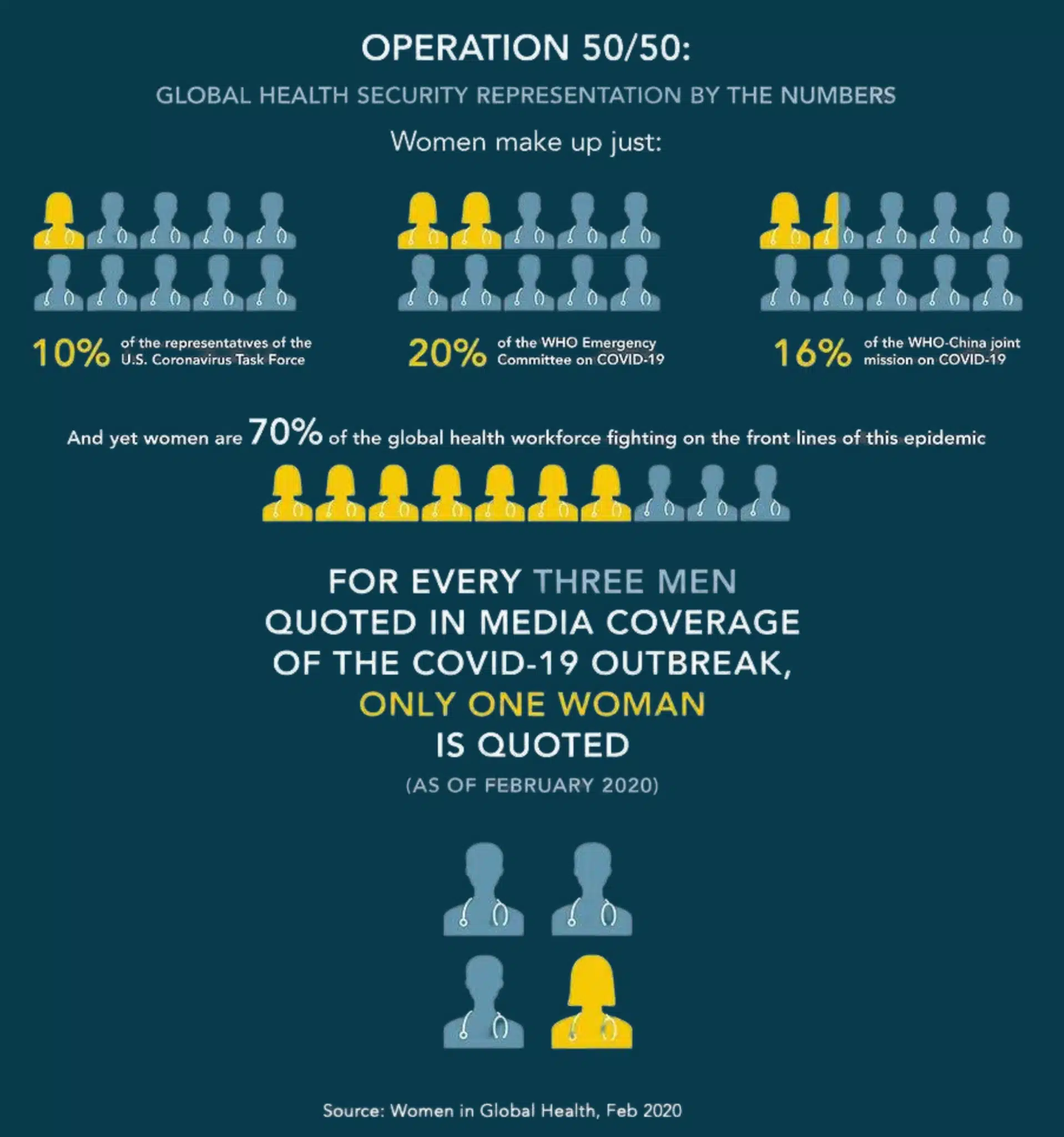
Despite being the backbone of the global health workforce, women remain vastly underrepresented in the spaces where decisions are made. This snapshot highlights a persistent imbalance: women lead frontline care yet hold only a fraction of roles in global health security, expert committees, and public conversations. Closing this gap is not only a matter of fairness but a prerequisite for stronger, more effective global health systems.
100 Women in Global Health Security
When the global pandemic hit in 2020 the ‘male leadership default’ button was activated. Early in the pandemic, Women in Global Health noted that the media was not inviting expert women to comment in the same numbers as men and that COVID-19 decision-making bodies were often heavily skewed in favour of men. We wanted to challenge the assertion that ‘there were no qualified women’. In partnership with Women of Color Advancing Peace and Security, Women in Global Health compiled a list of expert women who are working to strengthen global, regional, national, and local capacities to prevent, detect, and respond to outbreaks.